Beaches of Crete
Balos or Elafonisi: Which West Crete Beach to Choose
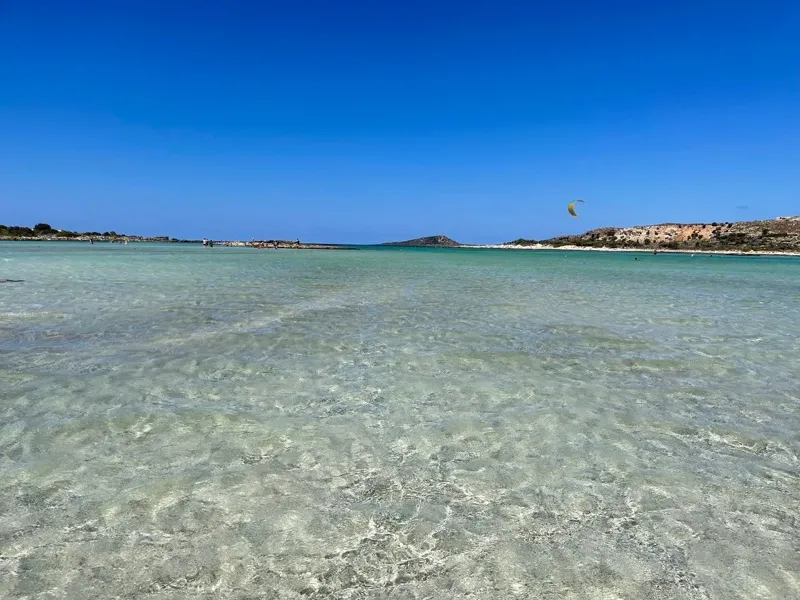
Balos or Elafonisi? Balos is a boat trip or dirt road plus steep walk to a lagoon; Elafonisi is a paved-road drive to pink-tinged shallows.
278 guides
No matching guides. Try another name or browse all guides.
Balos or Elafonisi? Balos is a boat trip or dirt road plus steep walk to a lagoon; Elafonisi is a paved-road drive to pink-tinged shallows.
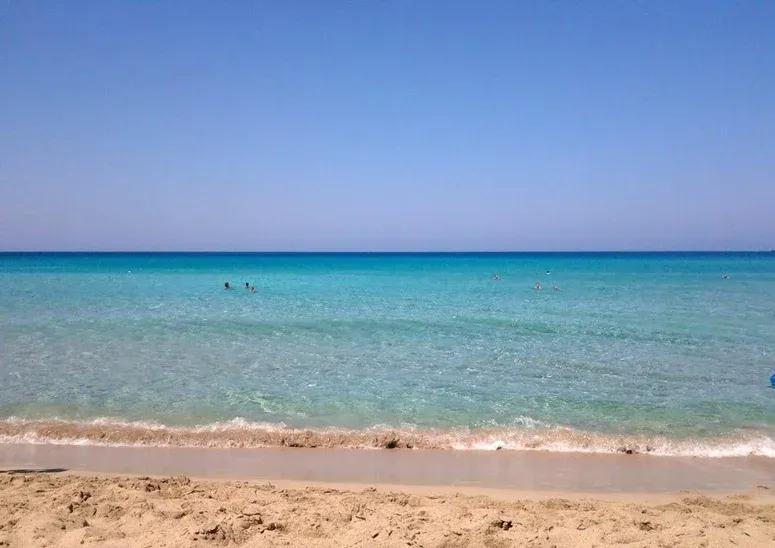
A Falasarna day from Chania or Kissamos: arrive after lunch, swim at the big sandy beach, walk to the ancient harbour and stay for the west-facing sunset.
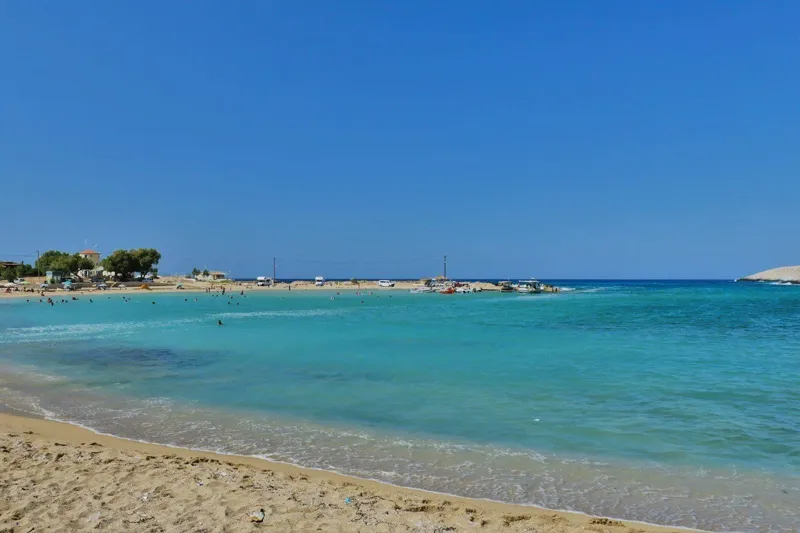
Marathi or Stavros on Akrotiri? Marathi faces sheltered Souda Bay and has harbour fish tavernas; Stavros is a round shallow bay under a mountain.
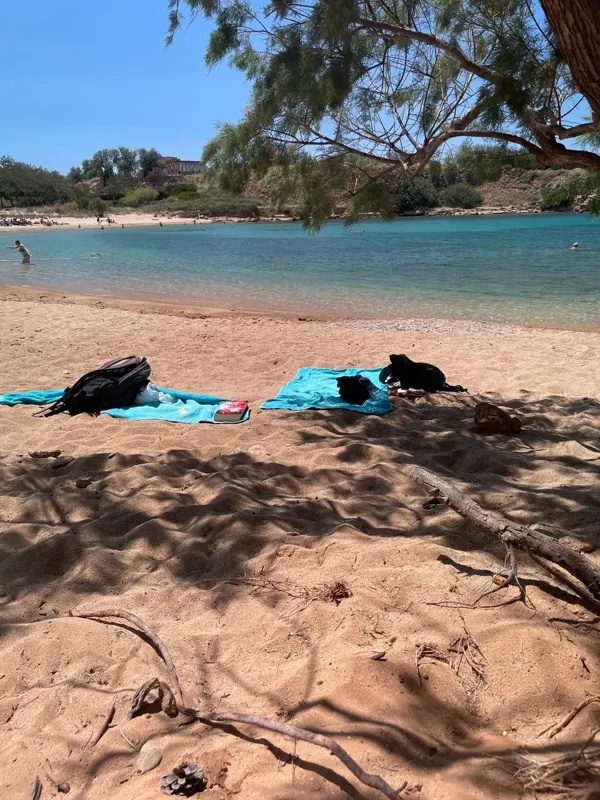
Beaches you can reach from Chania without a car: Nea Chora on foot, Agii Apostoli and Golden Beach by city bus, Kalathas and Stavros by Akrotiri bus.
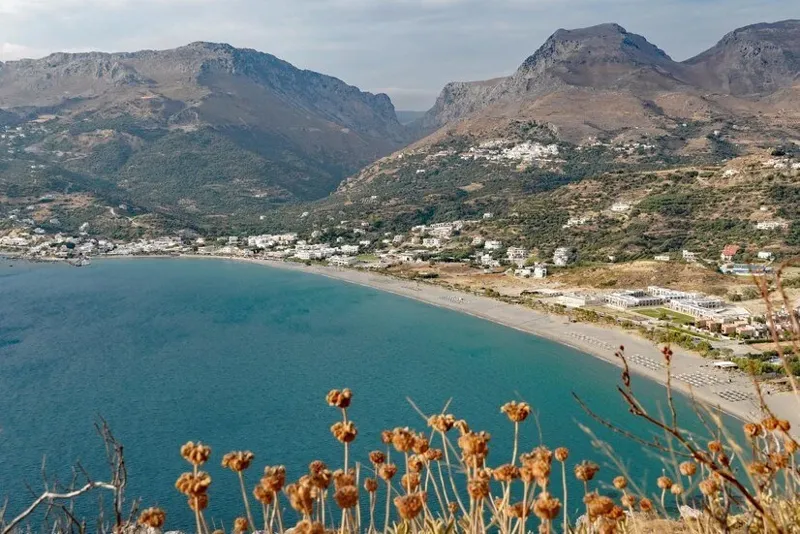
Plakias, Damnoni or Ammoudi? Plakias is the long town beach, Damnoni the calmer organised bay, Ammoudi the small green-water cove for snorkelling.
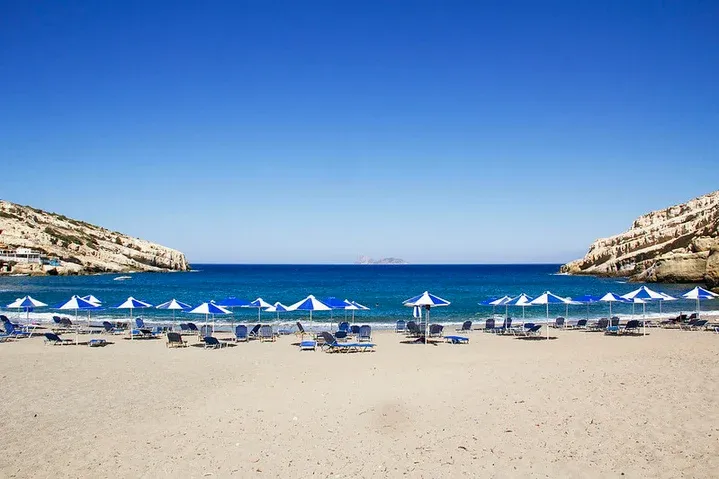
Matala, Kommos or Kalamaki? Matala has the cliff caves and a village, Kommos is long wild sand by a Minoan port, and Kalamaki is a quiet resort beach.
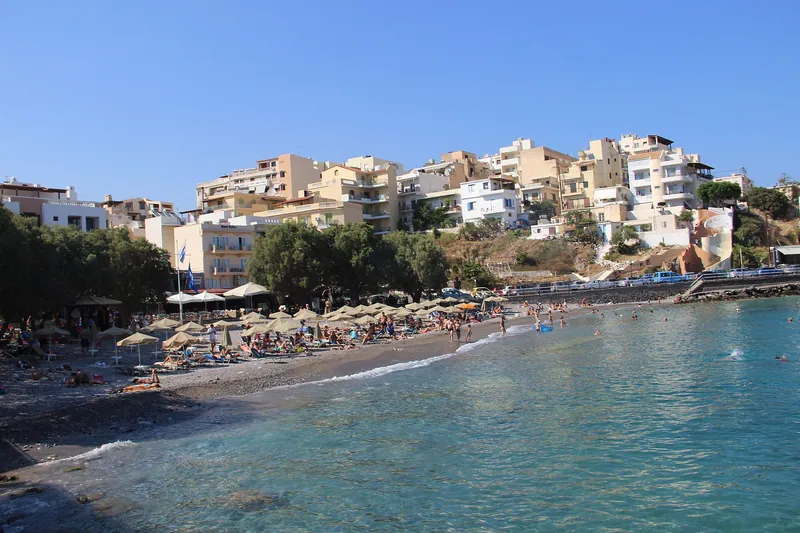
Kitroplatia in Agios Nikolaos or Voulisma near Istro? Kitroplatia is a small town cove you can walk to; Voulisma is white sand and turquoise water 12 km east.
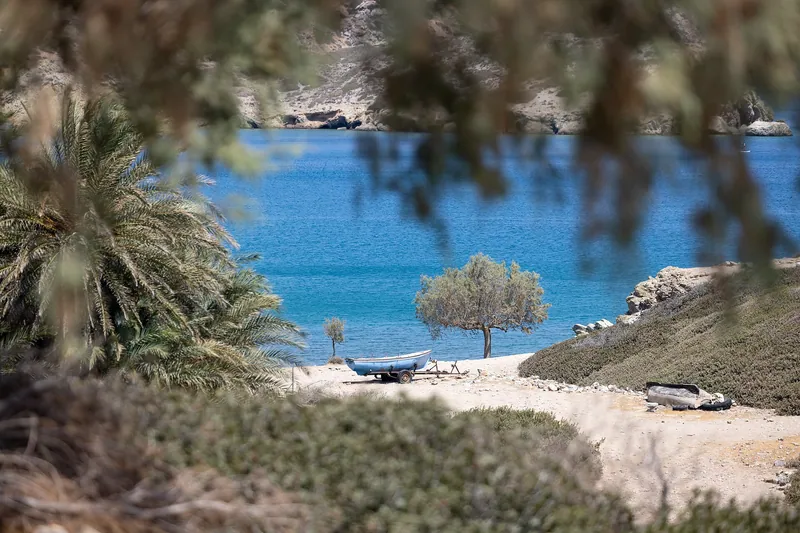
Vai, Itanos or Kouremenos? Vai has Europe's largest native palm forest, Itanos quiet coves by an ancient city, Kouremenos steady wind for windsurfing.
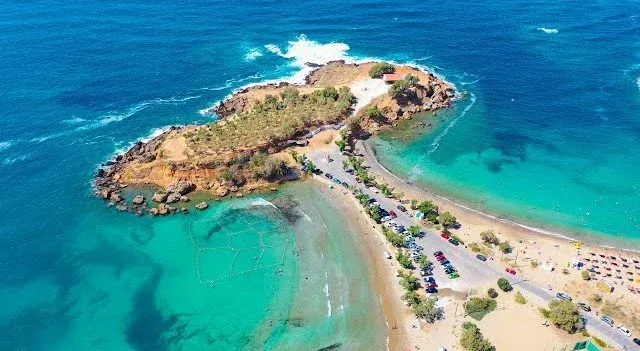
A practical Crete beach packing list: water shoes for pebbles, shade for unorganised beaches, plenty of water, snorkel, cash and what to leave at home.
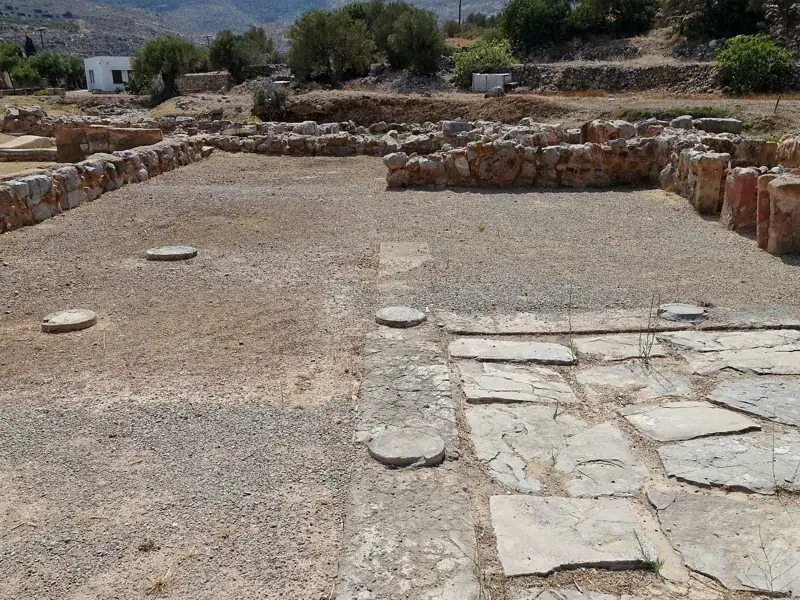
Five easy Crete pairings of beach and ancient site: Phaistos and Matala, Malia palace and Potamos, Aptera and Kalyves, Kato Zakros, Falasarna.
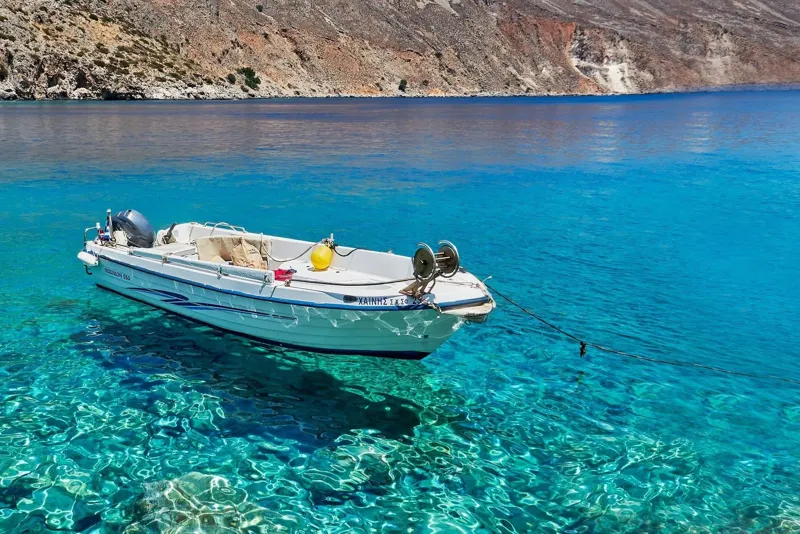
Tips for photographing Crete's beaches: when the light is best on north and south coasts, viewpoints at Balos and Matala, drones and respecting other people.
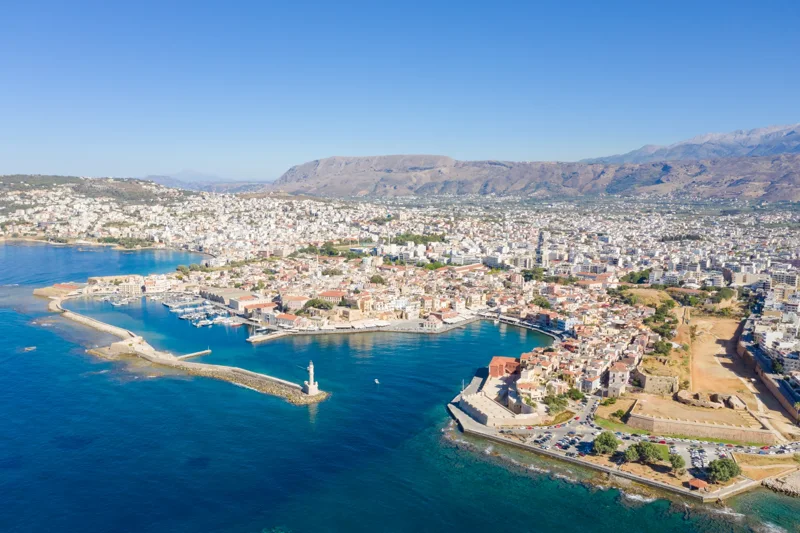
A three-day Chania plan: day one in the old town and harbour, day two on Akrotiri or the nearby coast, day three for Samaria, Balos or Elafonisi.
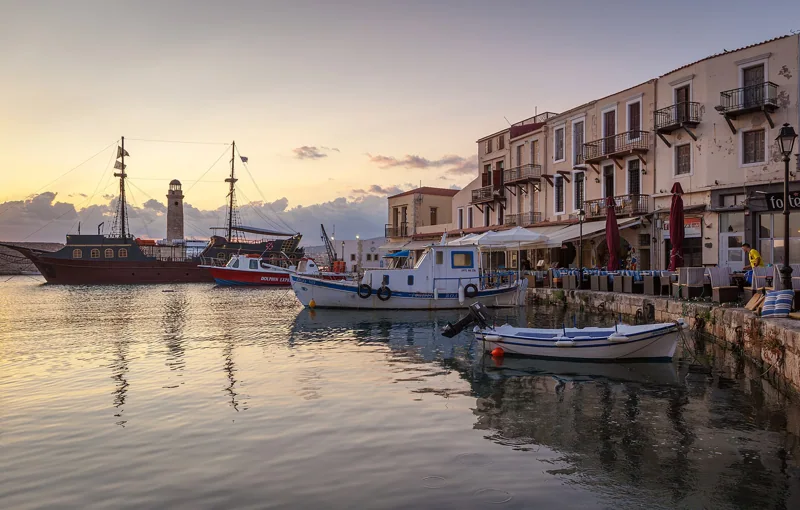
Two days in Rethymno: the Fortezza, Venetian harbour and Rimondi fountain on day one, then Arkadi or the south coast, with time on the town beach.
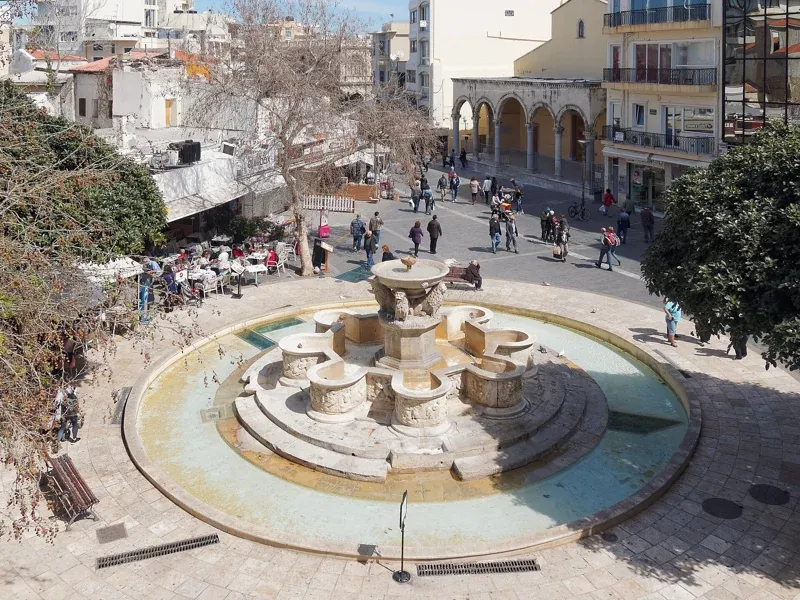
Two days in Heraklion: the Archaeological Museum and Venetian old town on day one, Knossos and lunch in Archanes on day two.
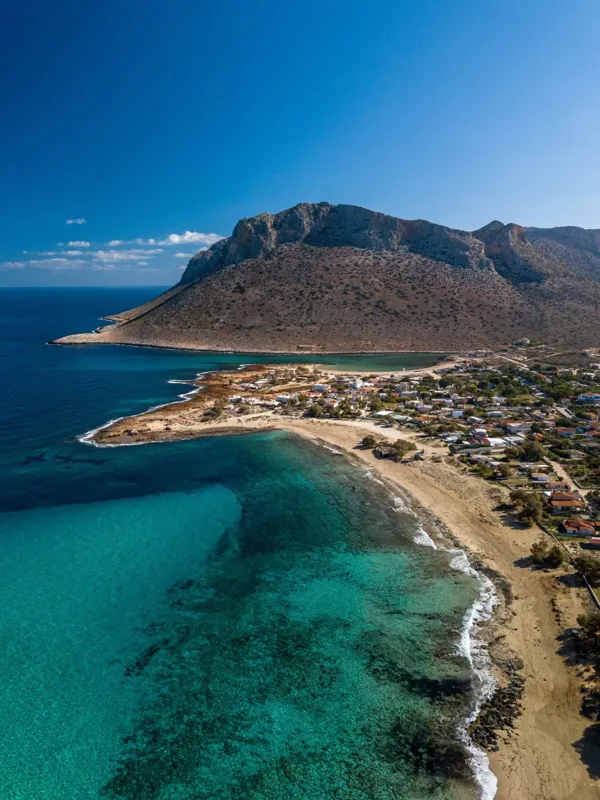
A one-day Akrotiri loop from Chania: Venizelos graves, Agia Triada and Gouverneto monasteries, a swim at Stavros or Marathi, and a fish lunch.
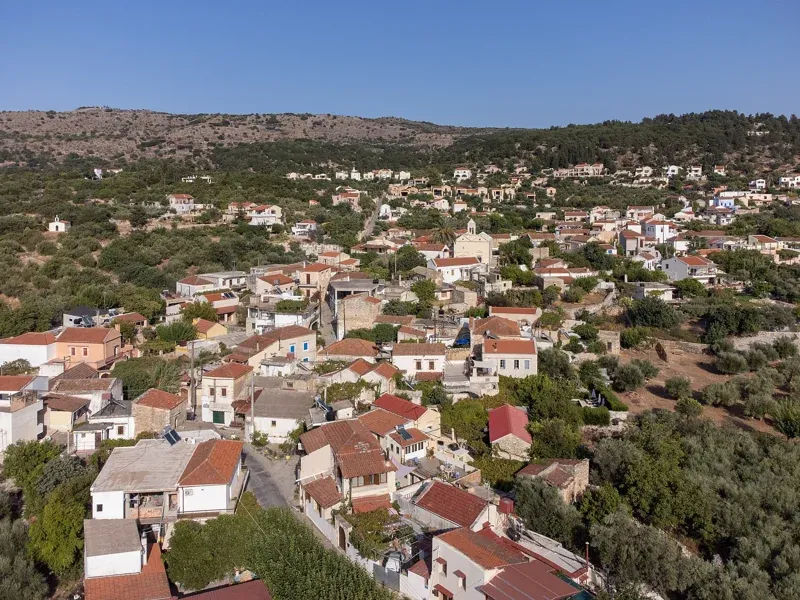
One day in Apokoronas from Chania: Aptera's ruins, Vamos and Gavalochori villages, a taverna lunch and a late swim at Almyrida or Kalyves.
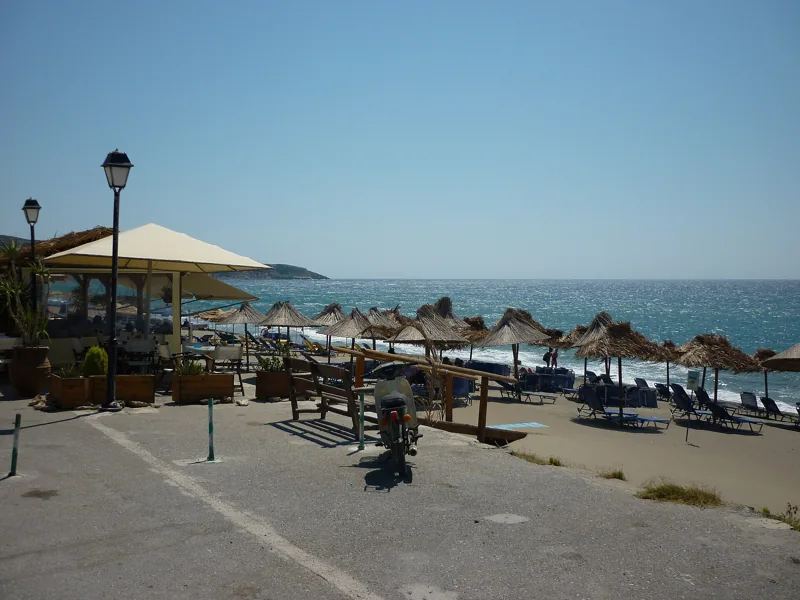
A day in the Messara: Gortyn's Law Code and Phaistos palace in the morning, lunch nearby, then a swim at Matala or Kommos and sunset on the coast.
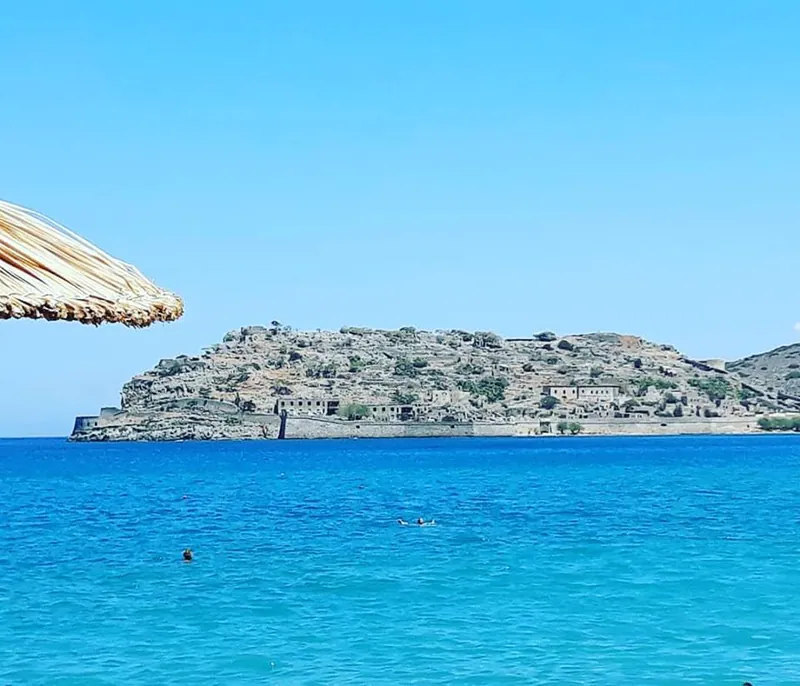
A Mirabello Gulf day: morning in Agios Nikolaos, Elounda and the Poros canal, the short boat to Spinalonga from Plaka and a fish lunch by the water.
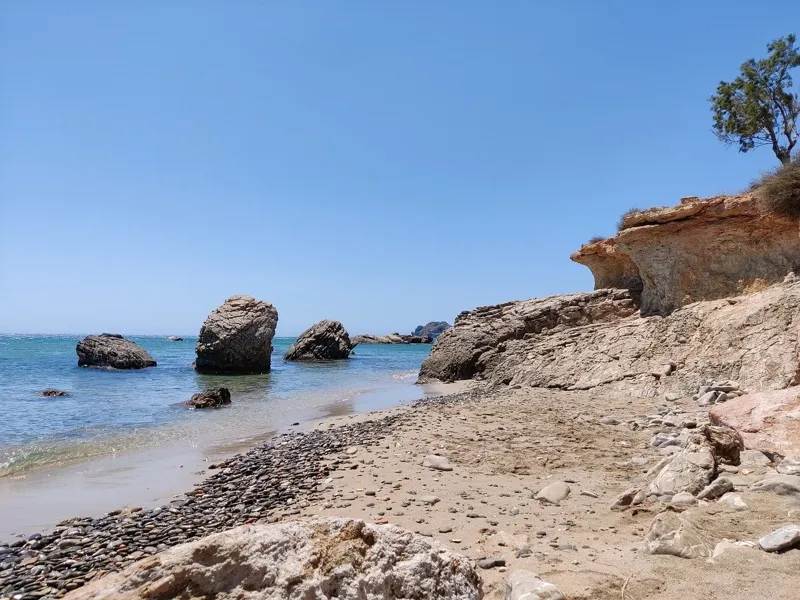
Two road-trip days in the Sitia UNESCO Global Geopark: Toplou, Vai and Itanos in the north, or Zakros, the Gorge of the Dead and Xerokampos in the south.
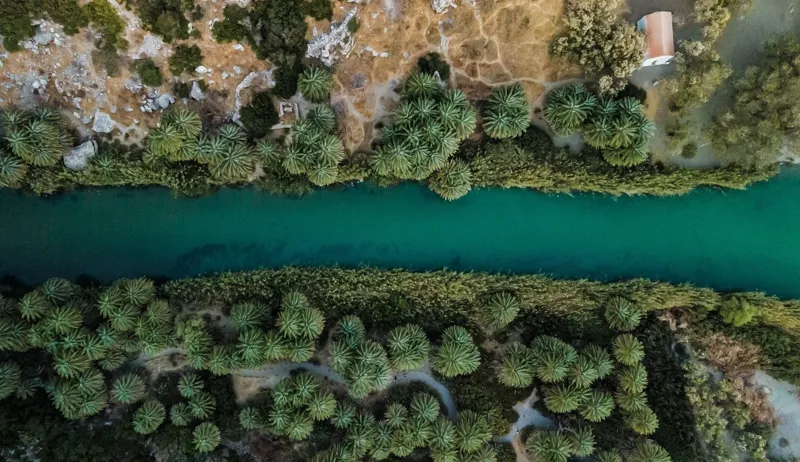
A one-day loop from Rethymno: coffee by the Spili fountain, the Kourtaliotiko gorge, Preveli monastery and palm beach, then a late swim in Plakias.
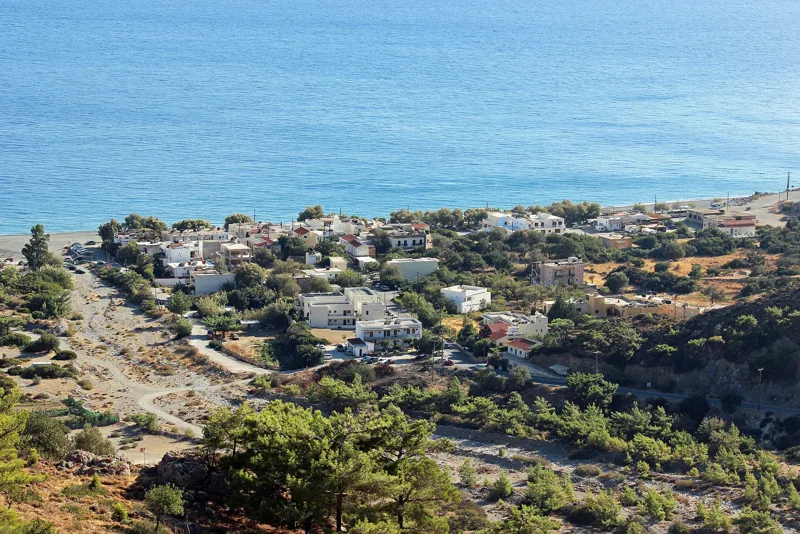
Paleochora or Sougia? Paleochora is a small town with two beaches, shops and nightlife; Sougia is a quiet village with one long beach and gorge walks.
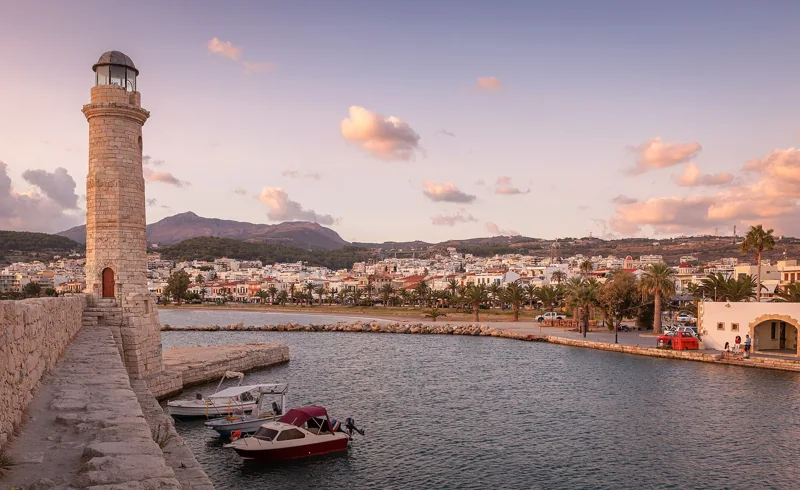
Chania or Rethymno as a base? Chania has the airport, a bigger old town and west Crete's famous beaches; Rethymno is central, smaller and has a long town beach.
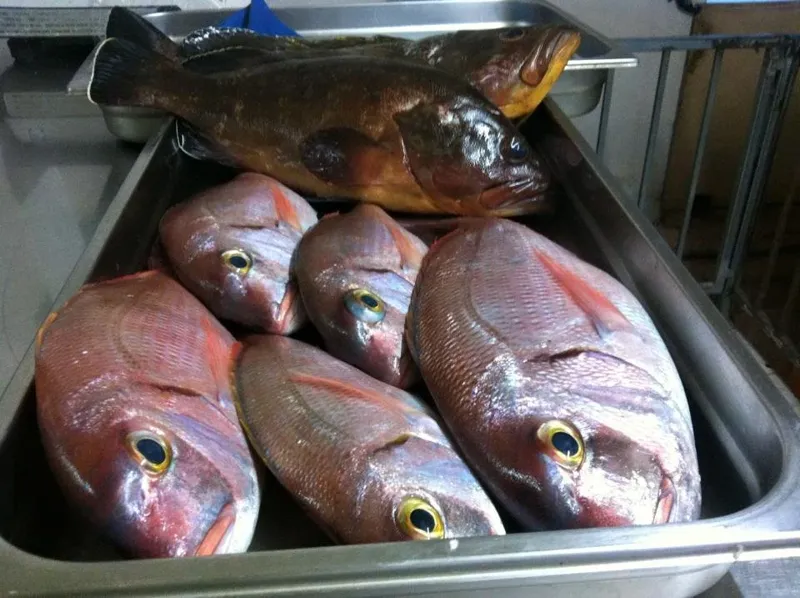
How to order seafood in a Cretan taverna: fish priced per kilo, checking fresh or frozen, which fish are in season, and dishes worth asking for.
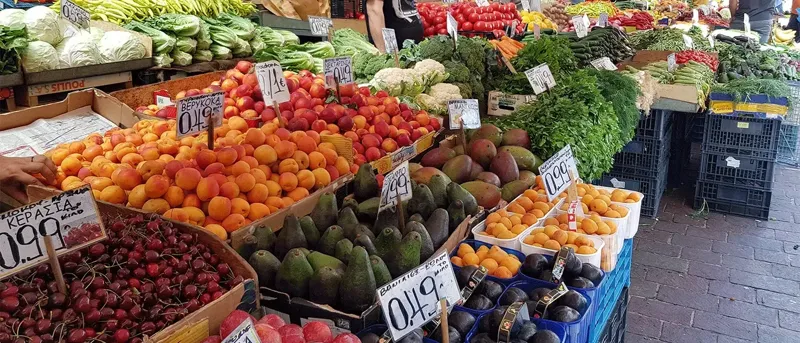
Eating vegetarian in Crete: dakos, wild greens, gemista, boureki, fava and pies, plus Lent 'nistisima' dishes for vegans and what to ask the kitchen.
How Cretans eat breakfast: yoghurt with thyme honey, bougatsa, cheese pies, eggs with staka, rusks and fruit, plus where to find each.
How to taste Cretan olive oil: warm it, smell, sip and notice fruit, bitterness and pepper, plus PDO regions, Koroneiki olives and booking a tasting.
A guide to Cretan cheeses: graviera, xinomyzithra and pichtogalo Chanion (all PDO), plus myzithra, anthotyros, staka and how to taste them.
How raki and meze work in Crete: small glasses of tsikoudia, shared plates, the free raki and dessert after meals, toasts and drinking at your own pace.
How to plan a Cretan village taverna lunch: when locals eat, calling ahead, ordering dishes of the day and slow-cooked meat, paying and the drive back.
Chania or Heraklion for food? Chania has harbour and Nea Chora seafood and bougatsa; Heraklion has farm-to-table Cretan kitchens and wine country nearby.
What to buy in a Cretan bakery: barley rusks for dakos, kalitsounia cheese pies, bougatsa, Sfakian pies with honey and festive xerotigana.
How to make taverna meals easier with children in Crete: eat earlier, share plates, dishes kids usually like, asking for small portions and outdoor tables.
What to order in Crete by season: wild greens and snails in winter and spring, artichokes and lamb at Easter, summer vegetables, autumn chestnuts and raki.
Nea Chora, 1 km west of Chania's old harbour: shallow sand sheltered by offshore rocks, Blue Flag, fish tavernas and a September sardine festival.
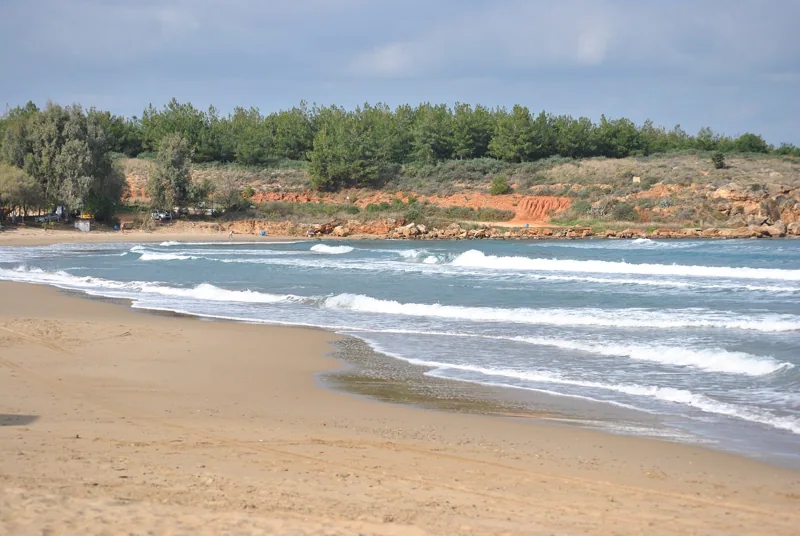
Golden Beach (Chrissi Akti) 2.5 km west of Chania: 500 m of fine sand, shallow sheltered water, lifeguard, playground and a city bus from town.
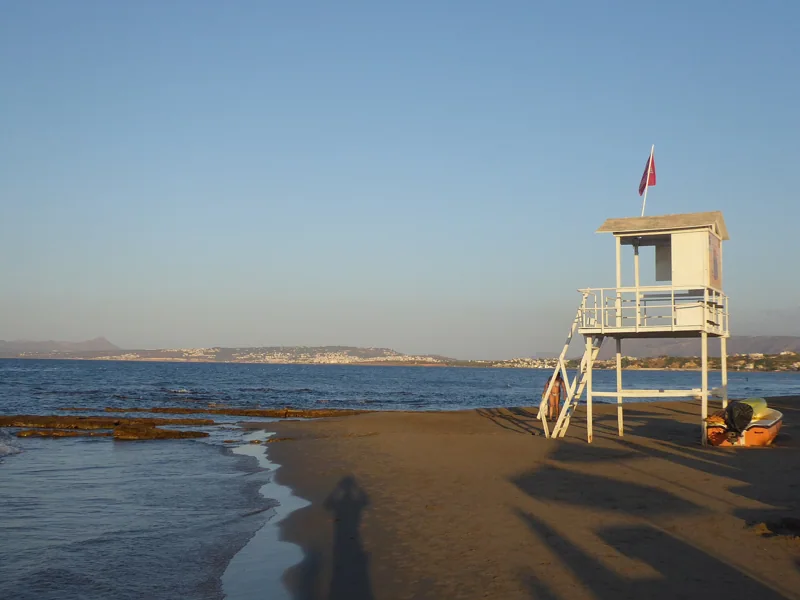
Agia Marina beach 9 km west of Chania: long organised sand, shallow water, Blue Flag, buses from town and views of the protected Thodorou islet.
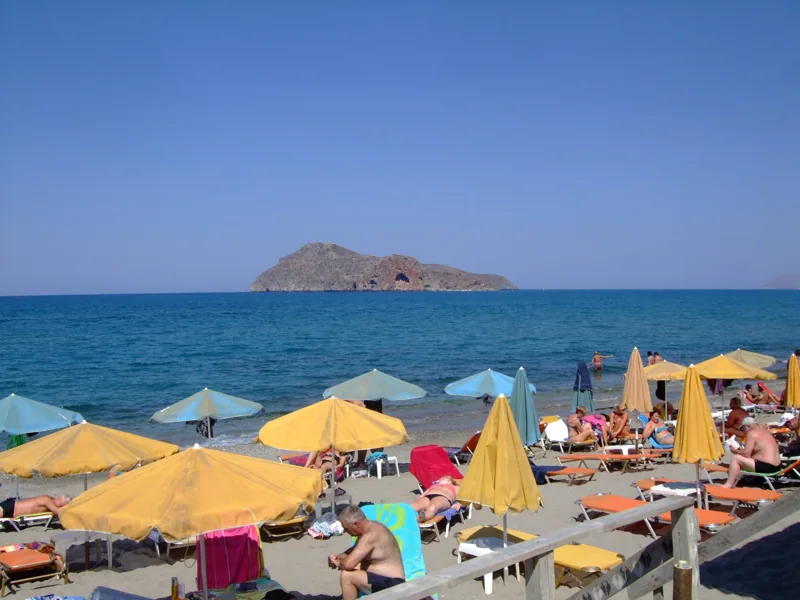
Platanias, 11 km west of Chania: long organised sand, water sports and nightlife, an old hilltop village with views of Thodorou and WWII tunnels.
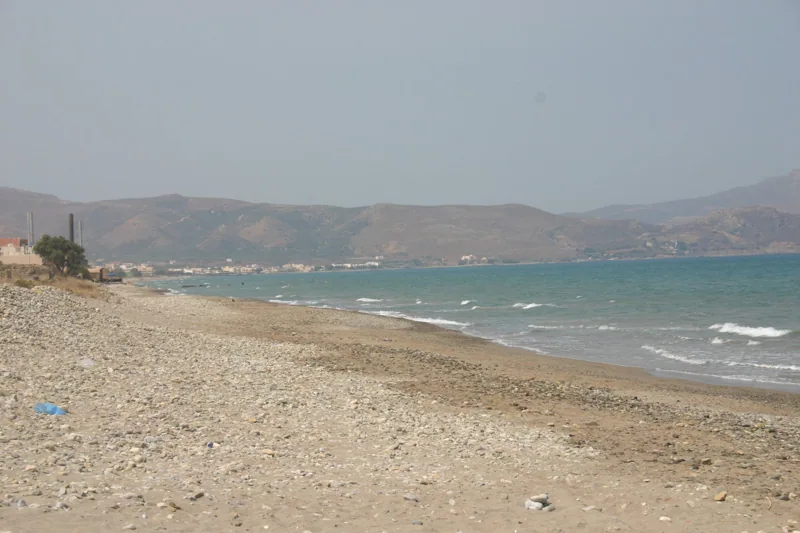
Gerani, 13 km west of Chania between Platanias and Maleme: about 2.5 km of sand and fine pebbles, Blue Flag, beach bars and a quieter pace.
Maleme, 18 km west of Chania: sand and fine pebbles, a quieter west end, and the airfield and German war cemetery from the 1941 Battle of Crete.
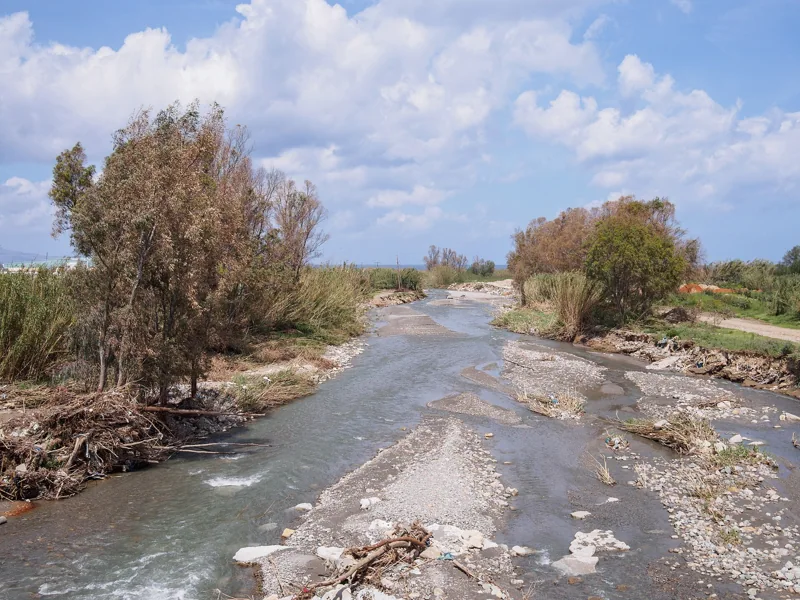
Tavronitis beach, 20 km west of Chania: long fine pebbles and sand beside the river mouth, quiet on calm days, near Maleme and the Vouves olive tree.
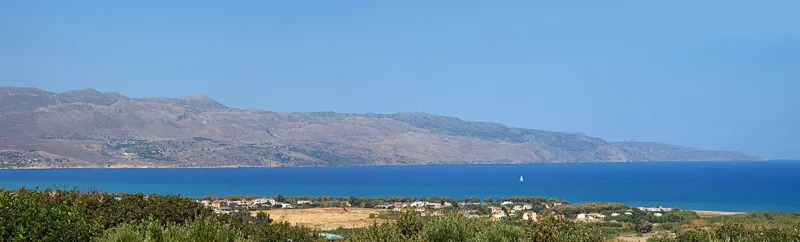
Kolymbari, 24 km west of Chania: a long sand-and-pebble beach, fish tavernas, the fortified Gonia monastery and boats to the Rodopos coves.
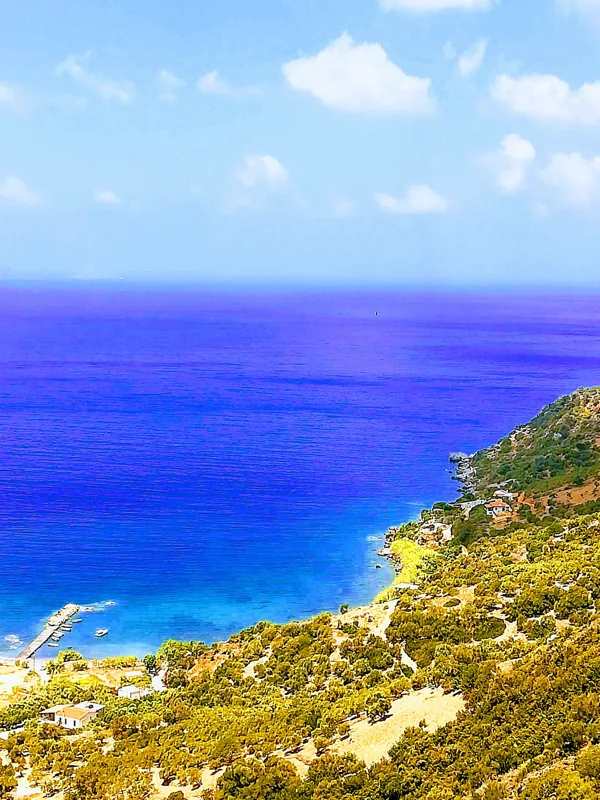
Ravdoucha, 21 km west of Chania on the west coast of Rodopos: pebble and rock coves, no sunbeds, fish tavernas and cave chapels on the drive down.
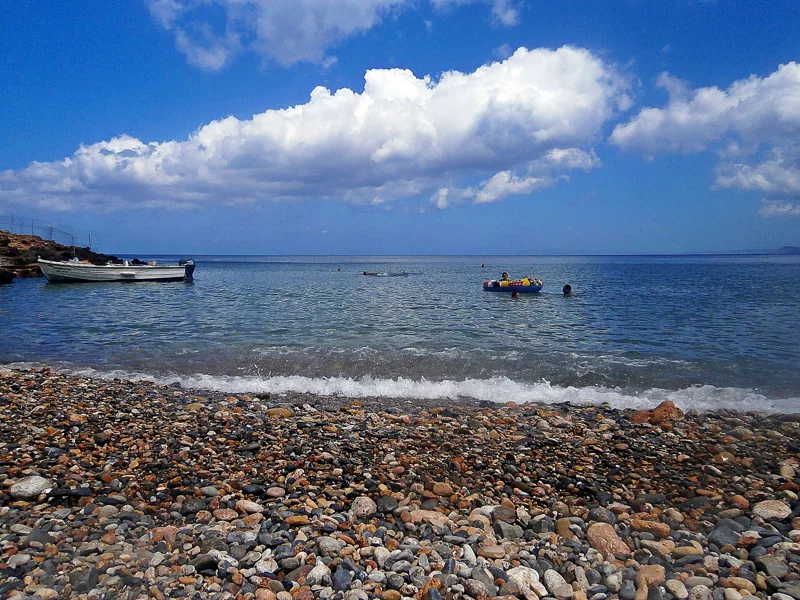
Afrata beach on the Rodopos peninsula: a sheltered pebble cove 3.5 km north of Kolymbari with calm, clear water, a small canteen and a cave nearby.
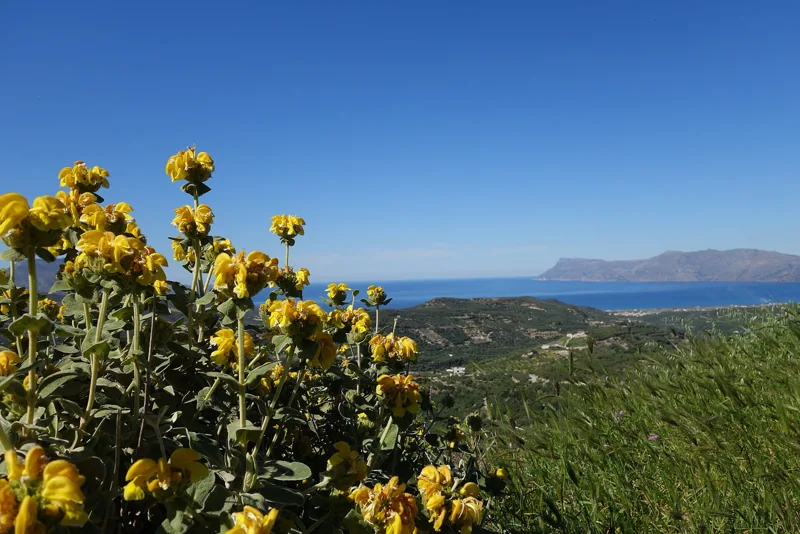
Nopigia, 6 km east of Kissamos: a long sand-and-pebble beach, rockier coves to the east, an open-air seaside theatre and an underground river cave.
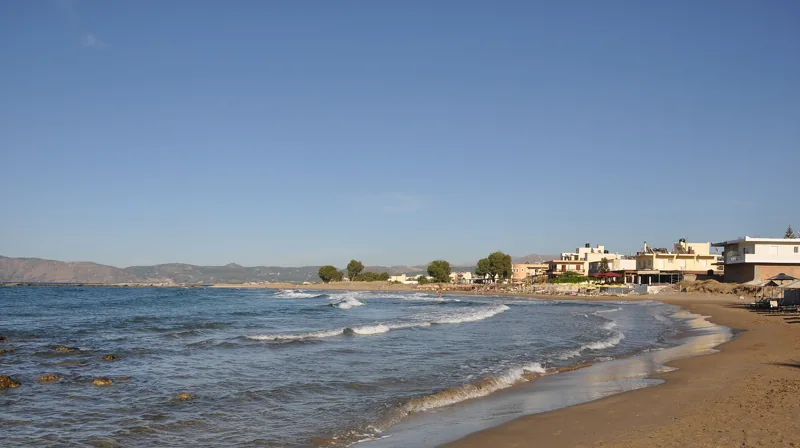
Mavros Molos, the main beach of Kissamos: long fine sand, shallow calm water, tamarisk shade, Blue Flag and the town's museum a short walk away.
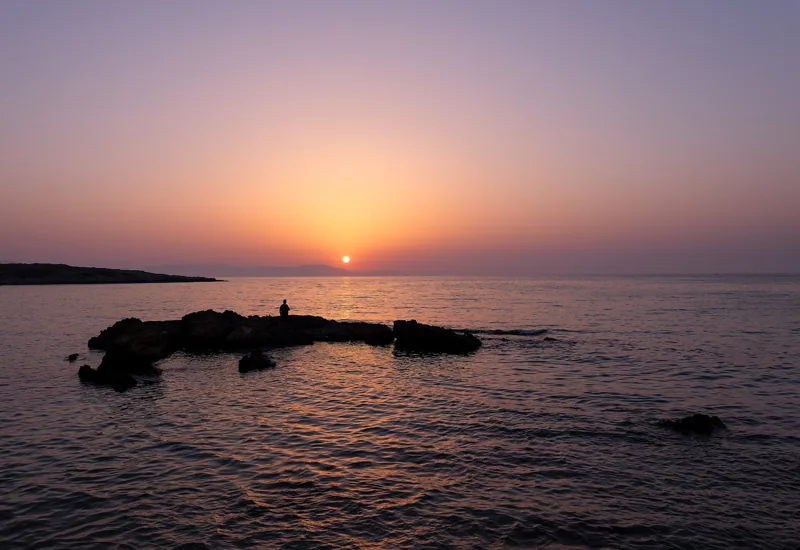
Kalathas beach on Akrotiri, 12 km from Chania: fine sand, shallow water, a small islet you can swim to, Blue Flag facilities and a quieter cove next door.
Tersanas on Akrotiri, 13 km from Chania: a small natural harbour of fine white sand and shallow, calm water, popular with families and busy at weekends.
Agios Onoufrios on Akrotiri, about 8 km from Chania: a calm sandy bay used mostly by locals, with a chapel, a few umbrellas and a taverna.
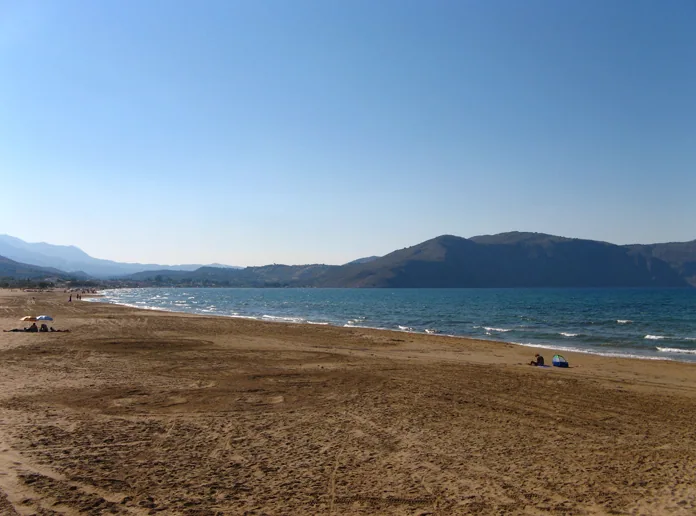
Georgioupolis, 38 km east of Chania: the west end of 10 km of sand, a river harbour, the sea chapel of Agios Nikolaos and Lake Kournas 4 km away.
Episkopi beach, 14 km west of Rethymno: about 3.5 km of shallow sand, organised at the west end, quiet toward Petres, with frequent buses.
Petres, 13 km west of Rethymno: sand and rock where the Petres gorge meets the sea, a rocky seabed for snorkelling and a quiet end to the long beach.
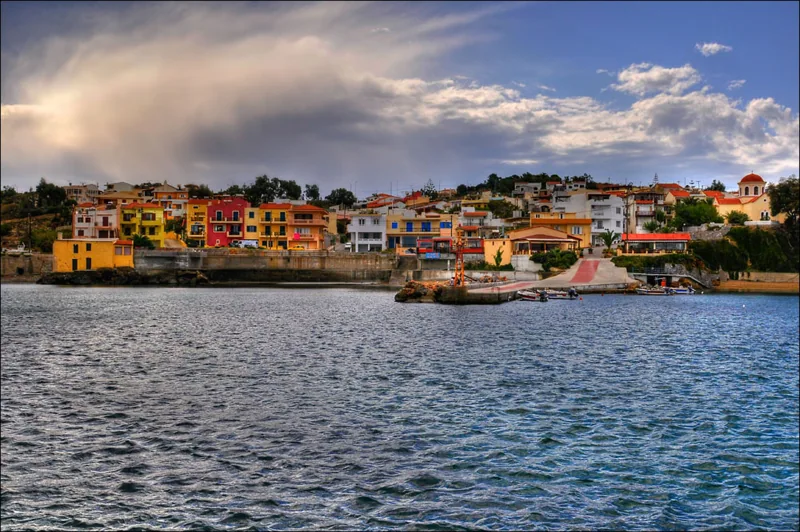
Panormo, 20 km east of Rethymno: a sheltered harbour beach for children, Limni beach next door, a Genoese-Venetian fort and a 6th-century basilica.
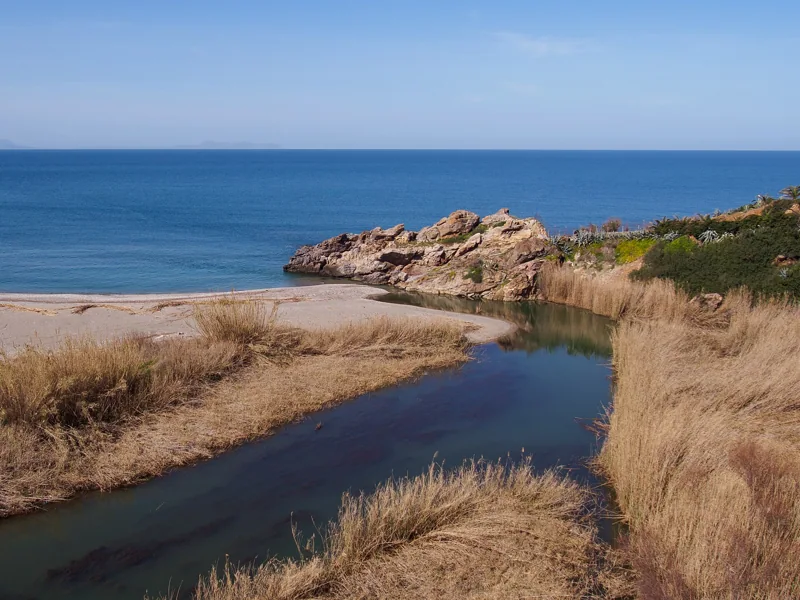
Geropotamos, 18 km east of Rethymno: a small beach cooled by a year-round river, a wetland behind it and the Kamara rock arch just to the west.
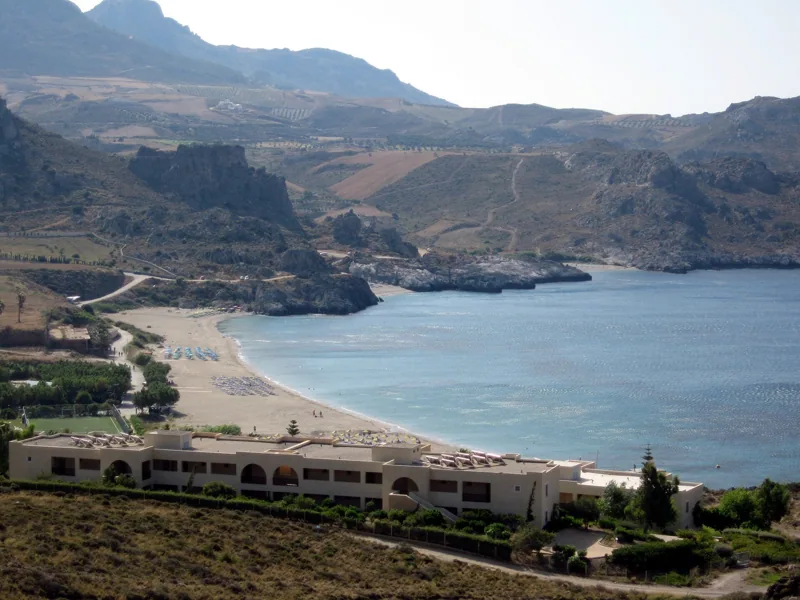
Damnoni, about 5 km east of Plakias: a long bay of whitish sand and calm turquoise water, fully organised, with a quieter east end and Ammoudi next door.
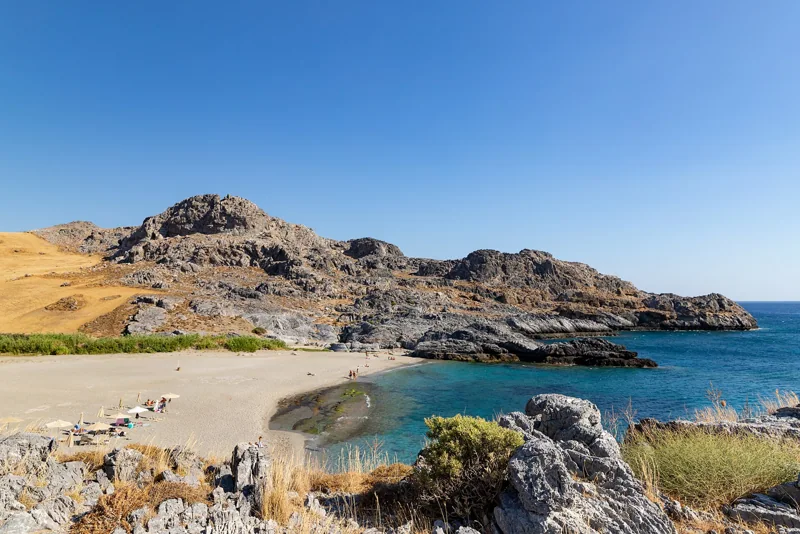
Ammoudi, 4 km east of Plakias: thick white sand, bright green water and a rocky seabed, plus Klisidi and Ammoudaki coves, Schinaria and Preveli nearby.
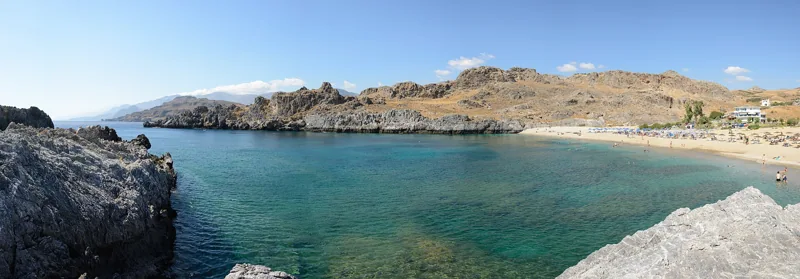
Schinaria, 33 km south of Rethymno: a small beach with a rocky seabed, often over 40 m visibility, moray eels and octopus, and a taverna above.
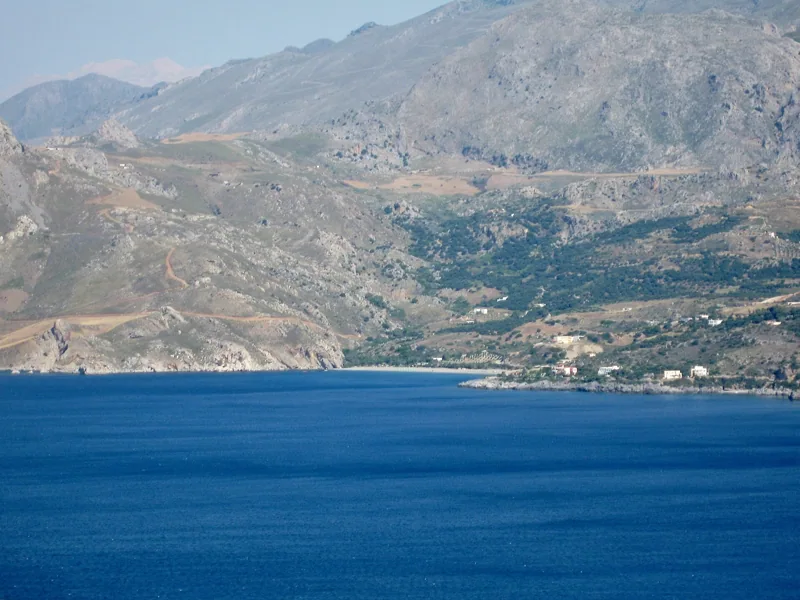
Souda, about 3 km west of Plakias: sand and fine pebbles, a year-round river with a colony of Cretan date palms, tavernas and a Blue Flag.
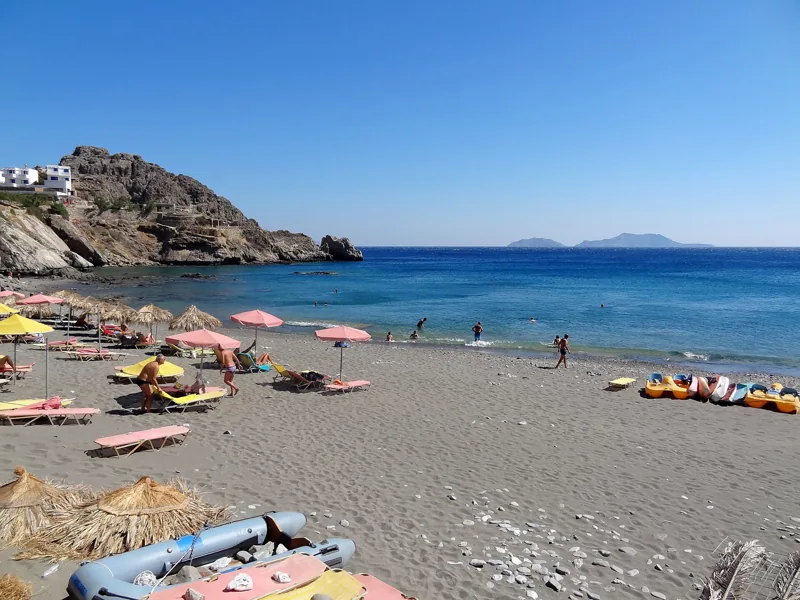
Agios Pavlos, 58 km south of Rethymno: a sheltered sandy bay with green water, a chapel of St Paul, colourful rock folds and a dune beach over the hill.
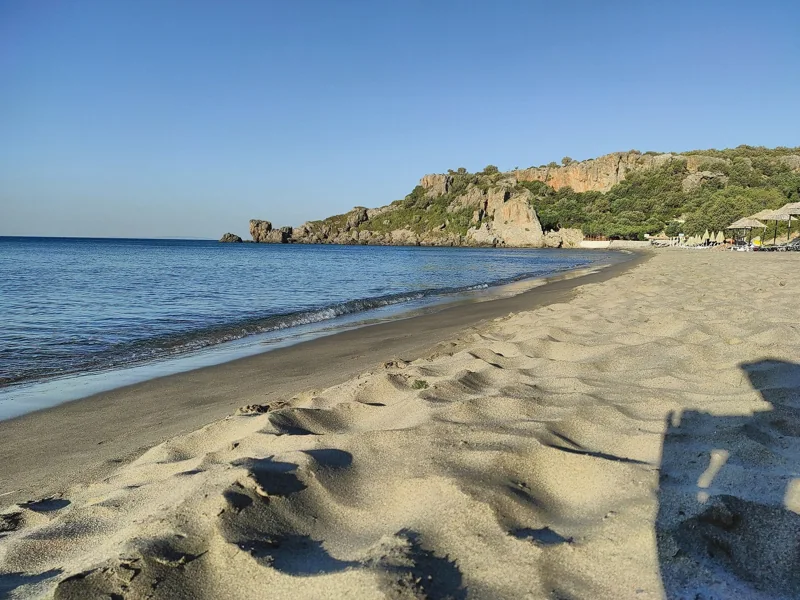
Korakas, Rodakino's main beach about 45 km from Rethymno: fine grey pebbles, clear calm water, caves at the east end, tavernas and the E4 nearby.
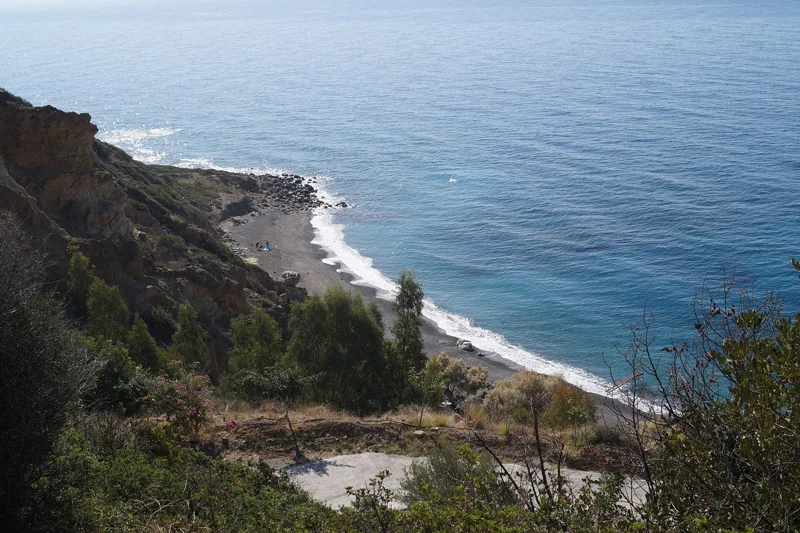
Agios Georgios, 3 km west of Agia Galini: two small pebbly bays, Lichnistis with a taverna and Kolimbistiri for quiet snorkelling, by road or boat.
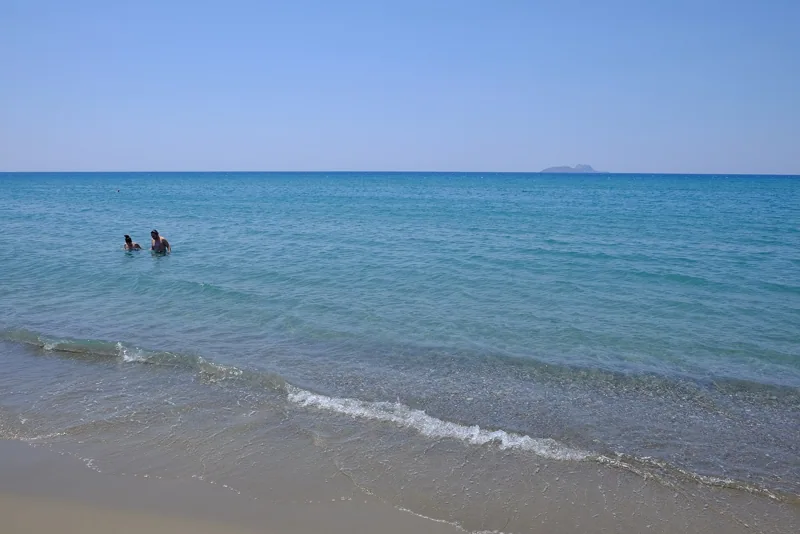
Kokkinos Pyrgos near Tymbaki: a very long sandy beach, an organised east section, a seafront of fish tavernas and nesting turtles in summer.
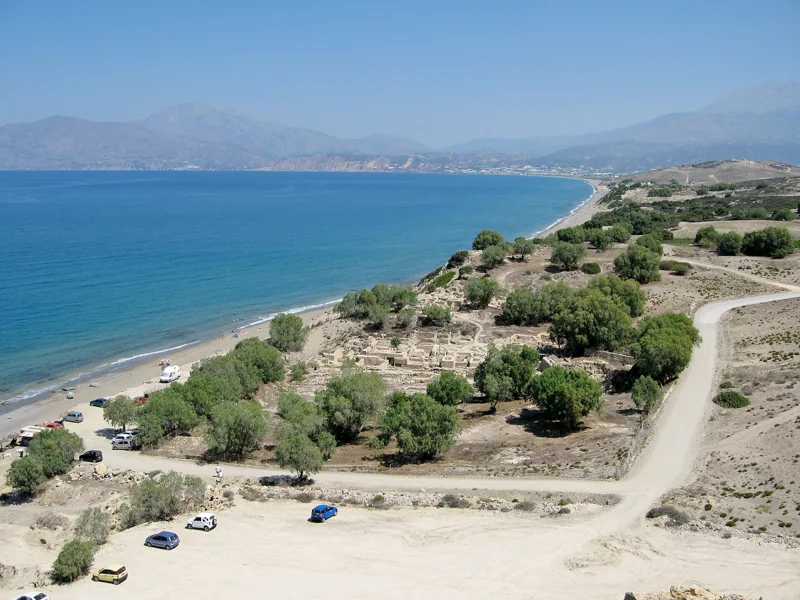
Kommos, 2 km north of Matala: a long, often wavy sandy beach, dunes where turtles nest, and the fenced Minoan harbour of Phaistos beside it.
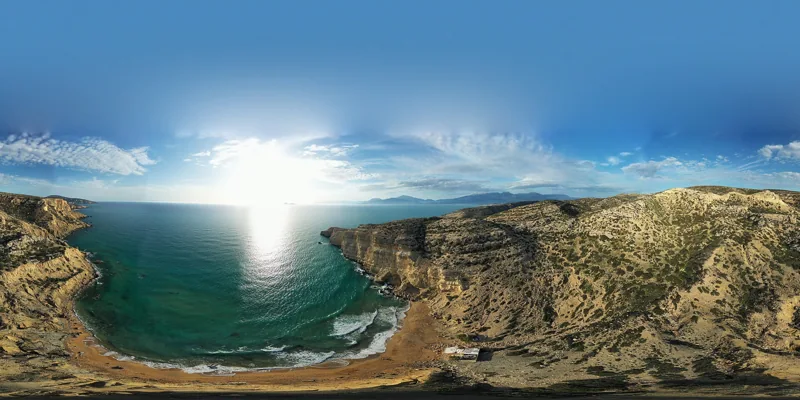
Red Beach (Kokkini Ammos), 800 m south of Matala: a 15–25 minute path over the hill to reddish sand, little shade, naturists and summer boats.
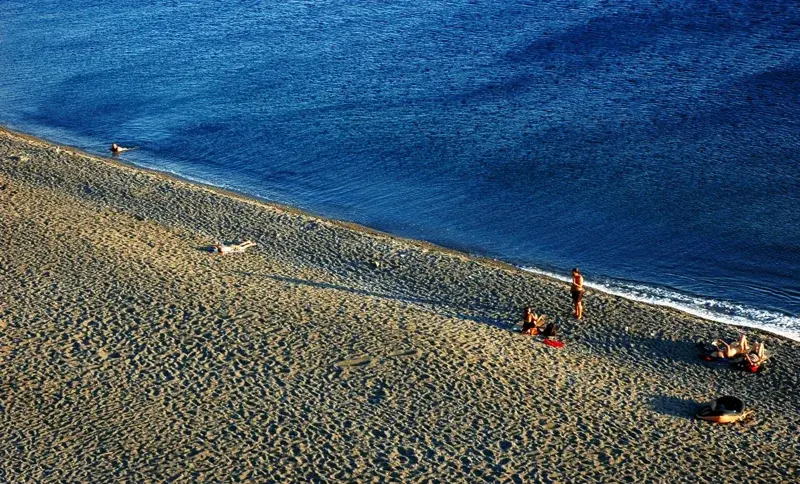
Dyskos, 1–2 km west of Lentas past Cape Lion: a long fine-pebble beach, calm water, a few tavernas at its east end and quiet, naturist-friendly space.
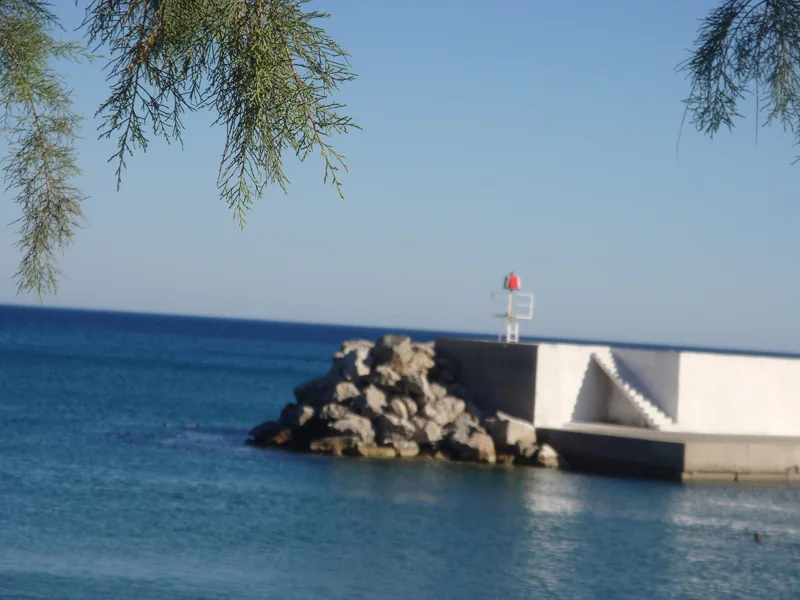
Tsoutsouros, 63 km south of Heraklion: sandy bays either side of a small harbour, clear shallow water, and the ancient cave of Eileithyia in the village.
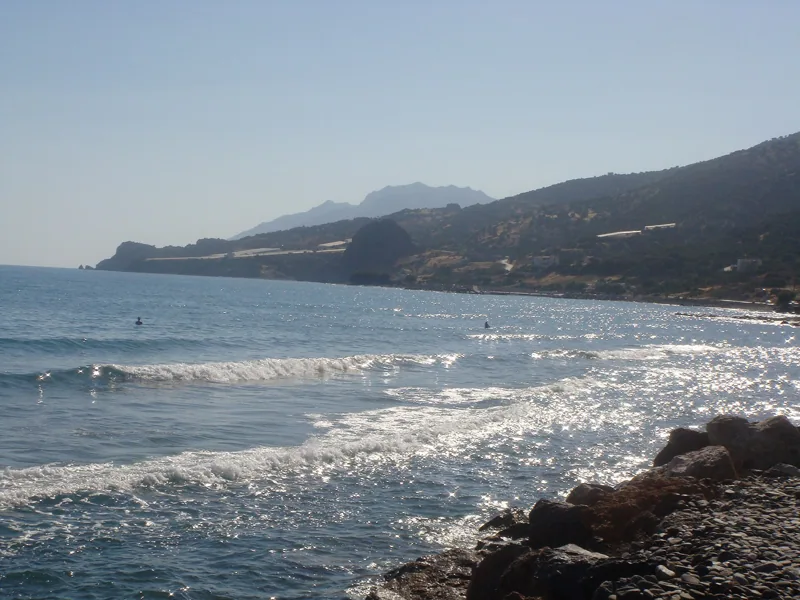
Keratokampos, about 72 km south-east of Heraklion: kilometres of sand and pebbles, shallow calm water, village tavernas and Arvi just along the coast.
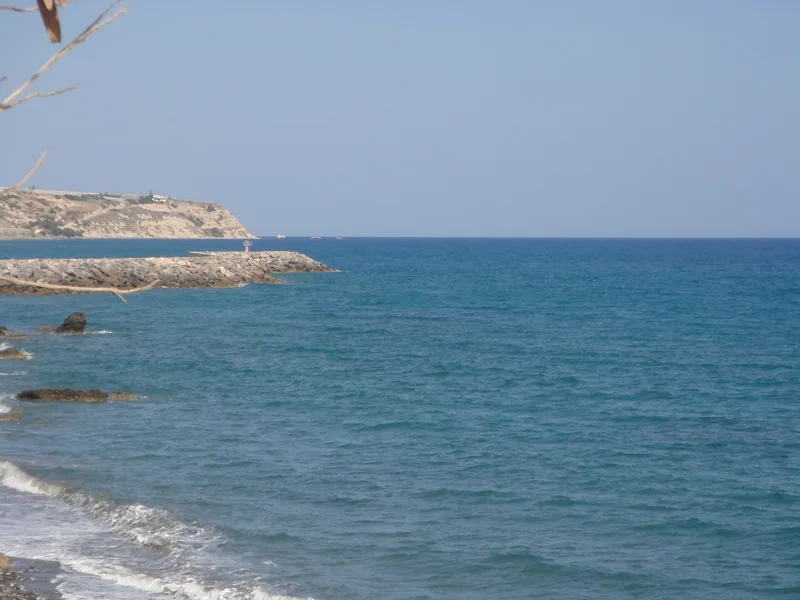
Arvi, 79 km south-east of Heraklion: a warm sheltered valley where bananas grow, a sand-and-pebble beach, quieter coves and the Agios Antonios monastery.
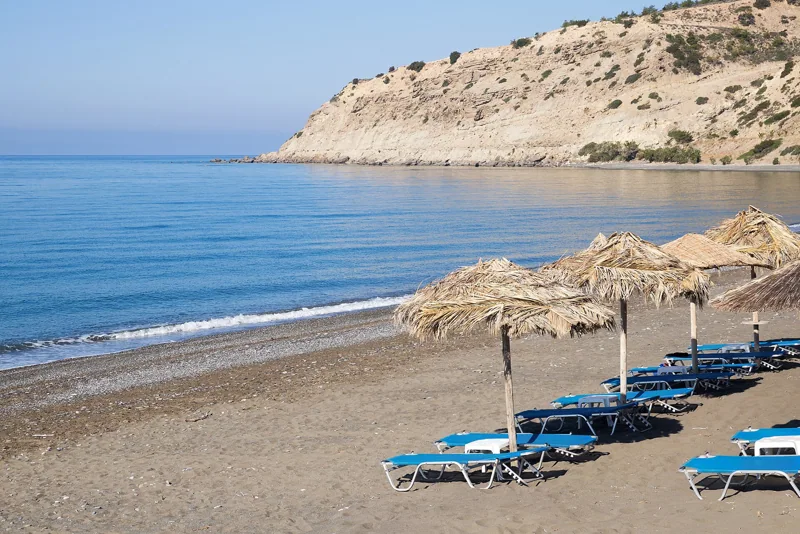
Myrtos, 13 km west of Ierapetra: a calm grey-sand and pebble beach, a whitewashed village of tavernas, two Minoan sites and the Sarakina gorge nearby.
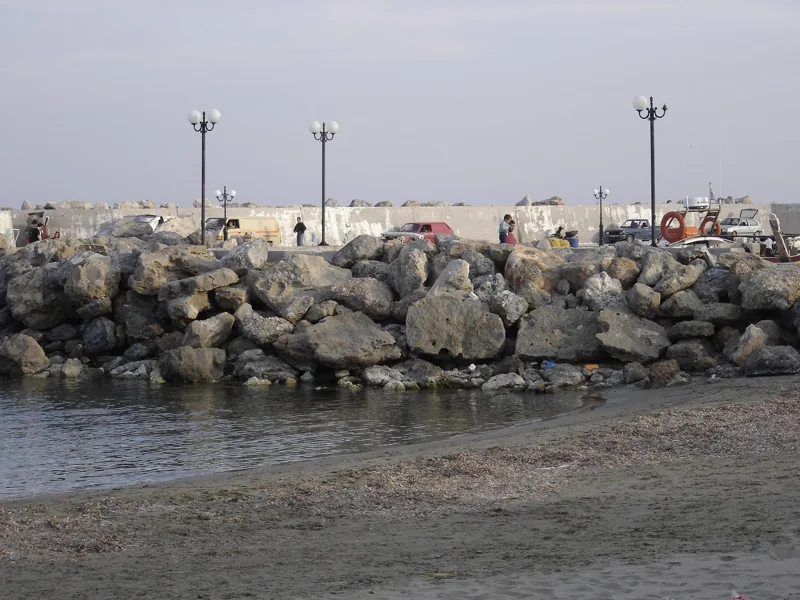
Makrigialos, 23 km east of Ierapetra: about 1 km of fine golden sand, very shallow warm water for families, cafés on the shore and a Roman villa.
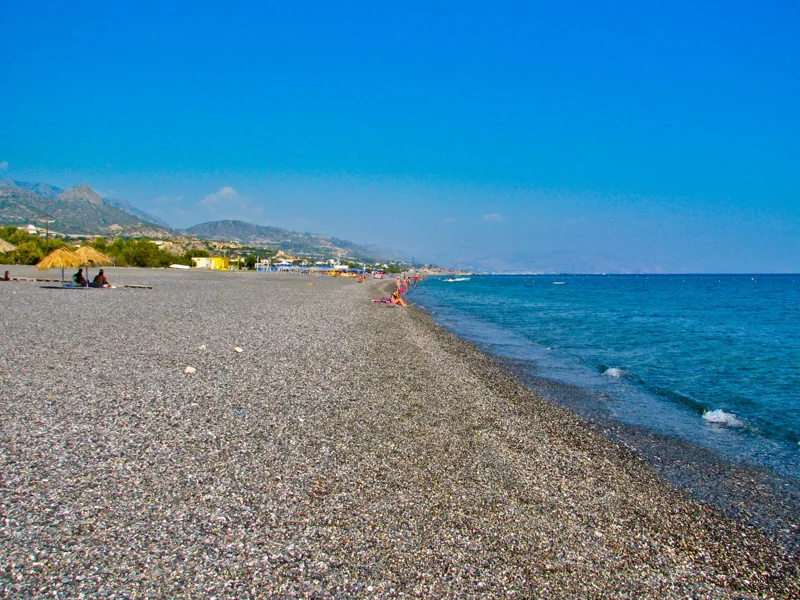
Koutsounari, about 6 km east of Ierapetra: some 5 km of coarse grey sand, wide and quiet, with sheltered coves at each end and a campsite.
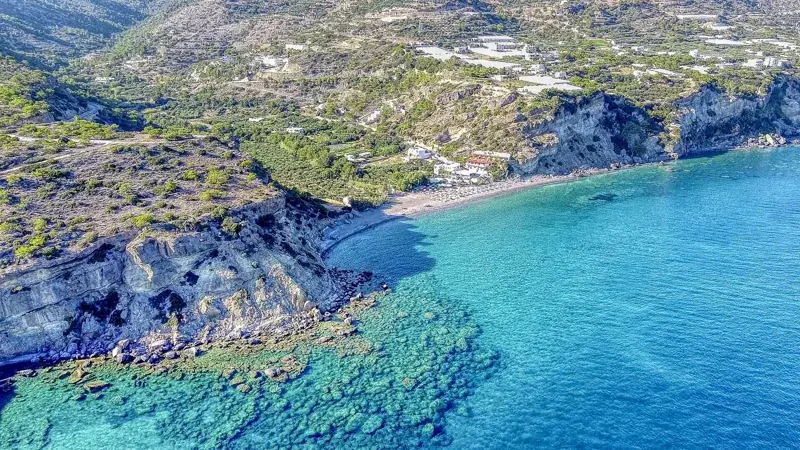
Agia Fotia, 12 km east of Ierapetra: a small bay of coarse sand and pebbles under conglomerate cliffs, crystal water, beach bars and a Blue Flag.
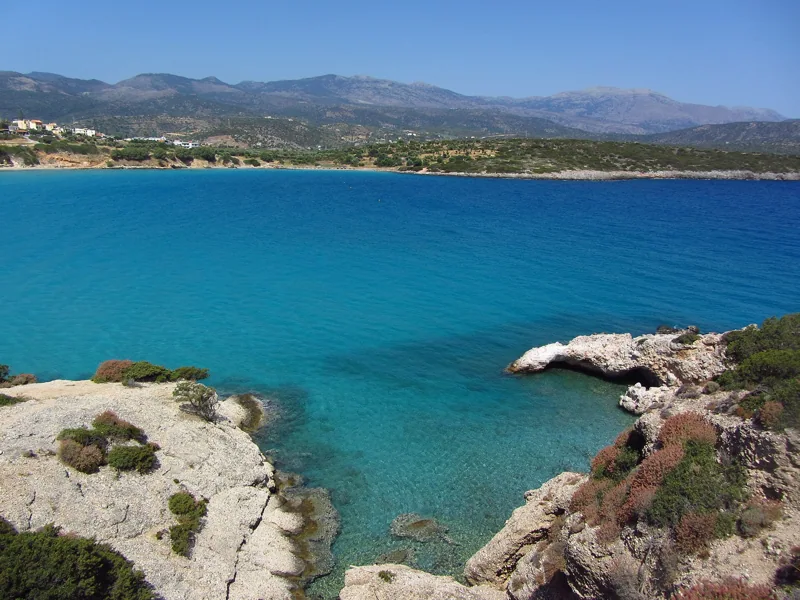
Voulisma near Istro, 12 km east of Agios Nikolaos: white sand, very clear shallow turquoise water, Blue Flag facilities and summer crowds.
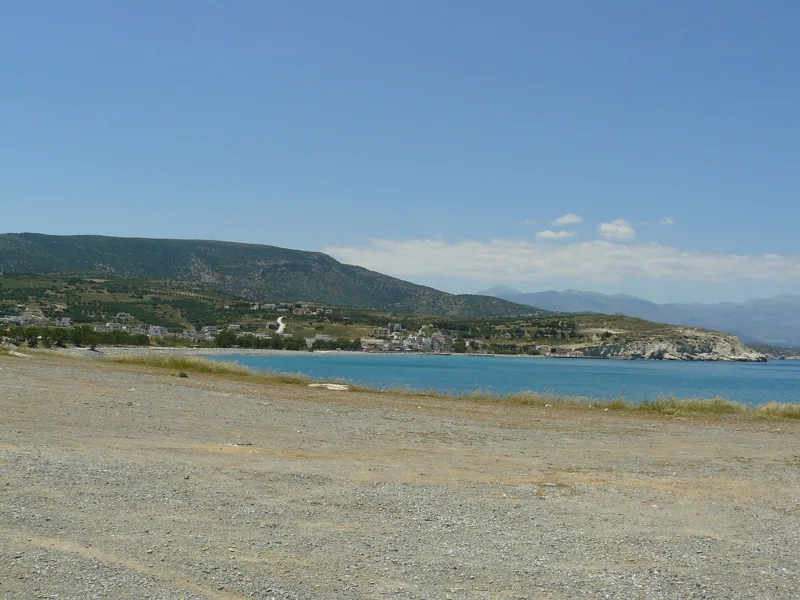
Pachia Ammos, 20 km east of Agios Nikolaos: a sandy western beach and pebbly east, on Crete's narrowest point, near Minoan Gournia.
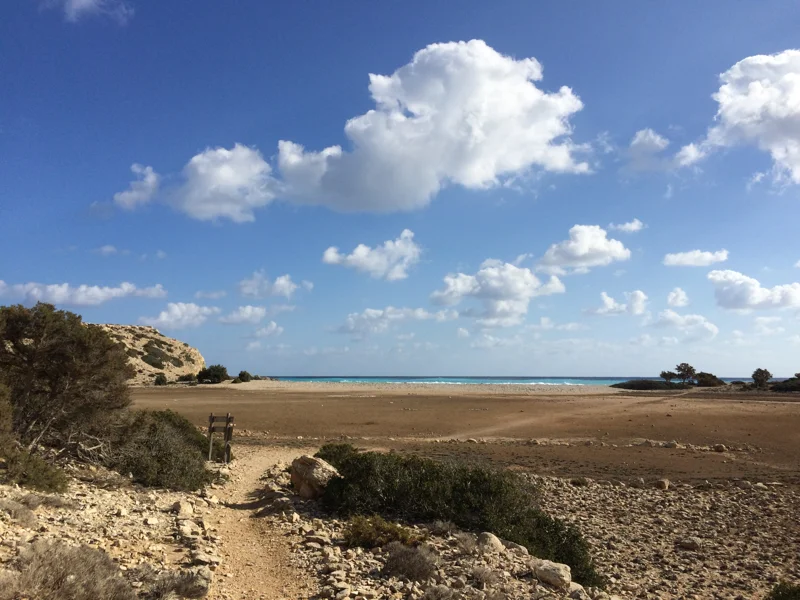
Gavdos, about 40 km south of Crete: Europe's southernmost point, 150 winter residents, Sarakiniko and Tripiti beaches, and ferries from Sfakia or Paleochora.
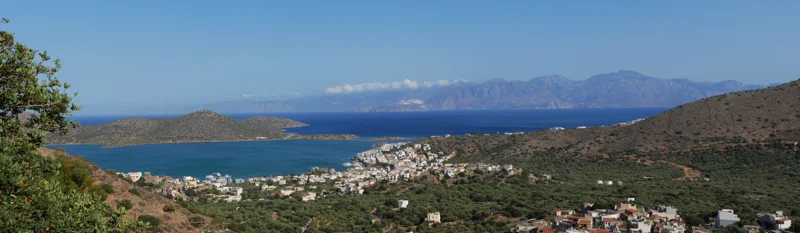
Elounda, 10 km north of Agios Nikolaos: boats to Spinalonga, the Poros canal and windmills, the sunken city of Olous and Kolokytha beach.
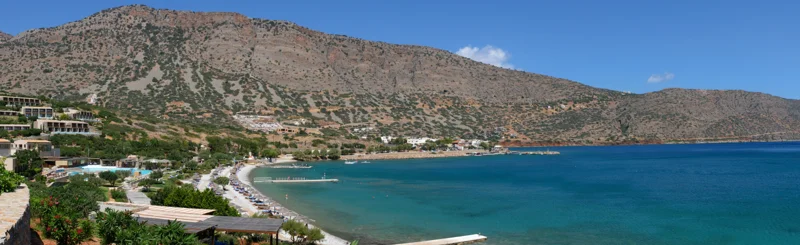
Plaka, 16 km north of Agios Nikolaos: a small village directly opposite Spinalonga, with pebble beaches, fish tavernas and the shortest boat crossing.
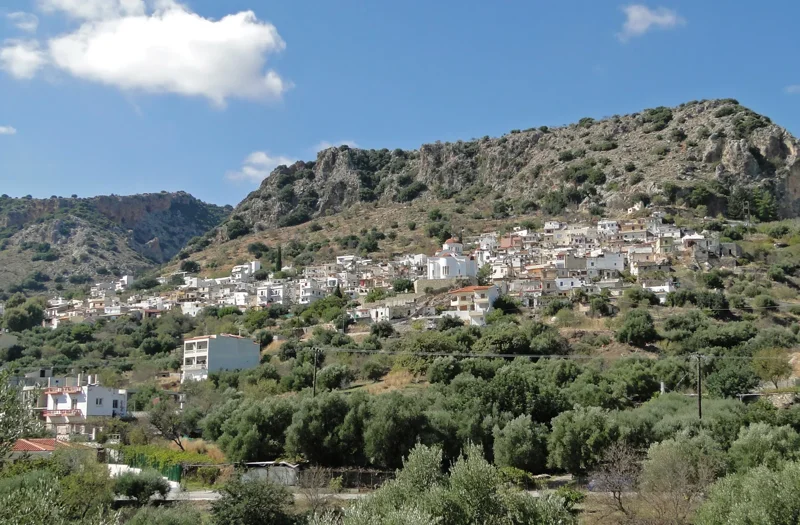
Kritsa, 10 km from Agios Nikolaos: the Byzantine Panagia Kera church with 13th–14th-century frescoes, weaving shops and the ancient city of Lato.
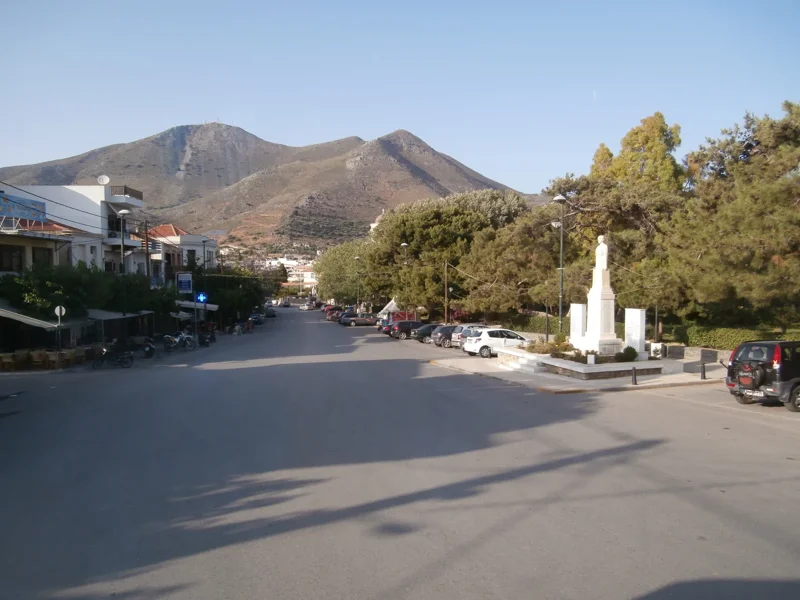
Neapoli, 15 km west of Agios Nikolaos: capital of Lasithi from 1868 to 1904, with a large cathedral, a folklore museum and soumada almond drink.
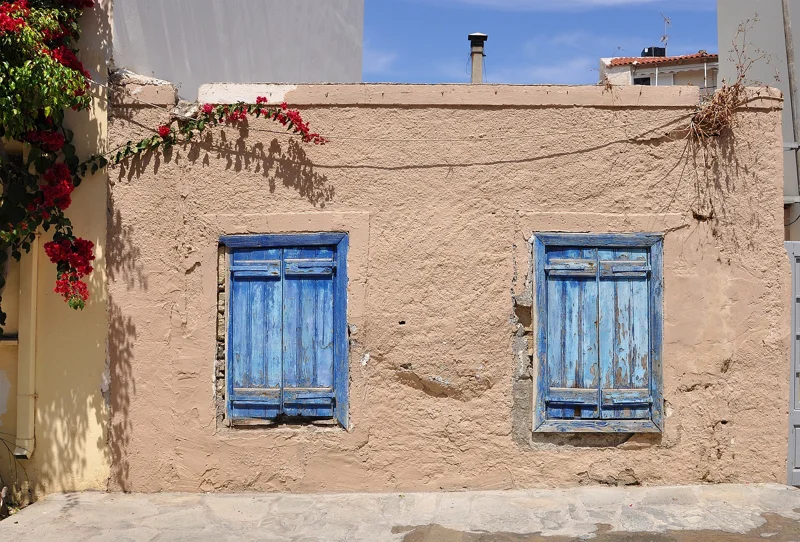
Ierapetra on the south coast: the Venetian Kales fortress, the Kato Mera old quarter, a long town beach and summer boats to Chrysi island.
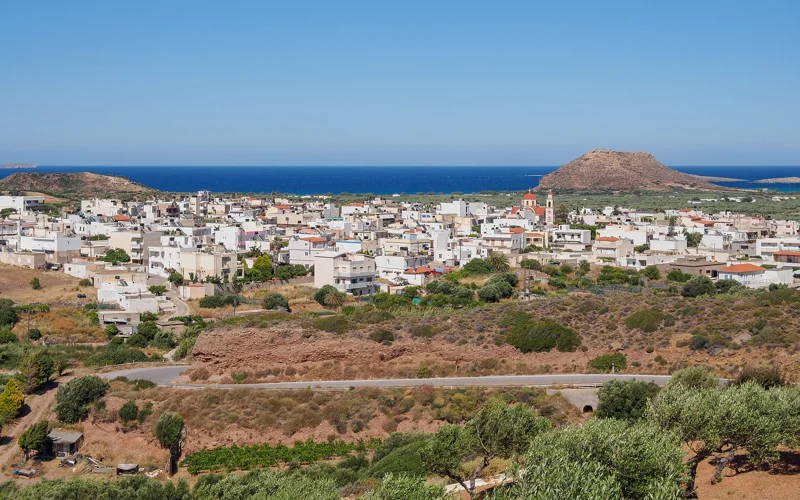
Palekastro in far east Crete: a farming village near Kouremenos and Chiona beaches, the Minoan town of Roussolakos and Toplou monastery 6 km away.
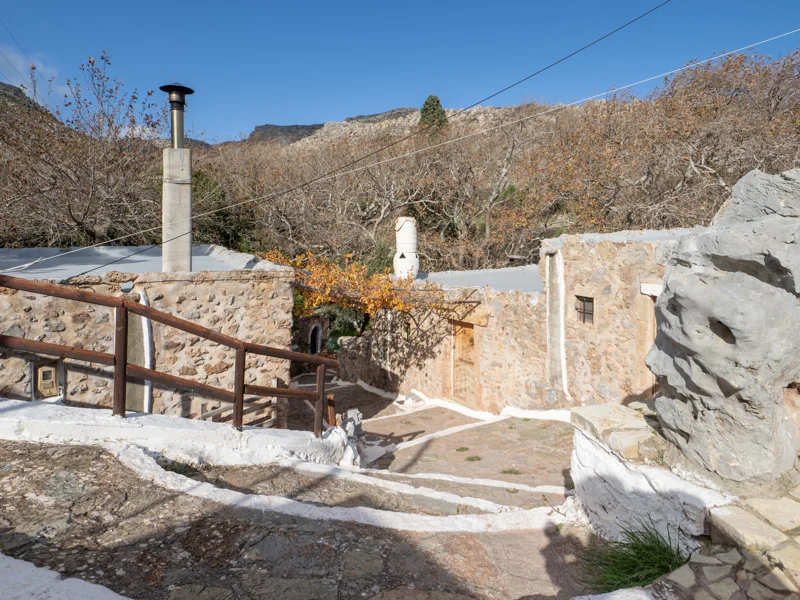
Ano Zakros, about 38 km from Sitia: a village of springs and old watermills, a water museum, a Minoan villa and the start of the Gorge of the Dead.
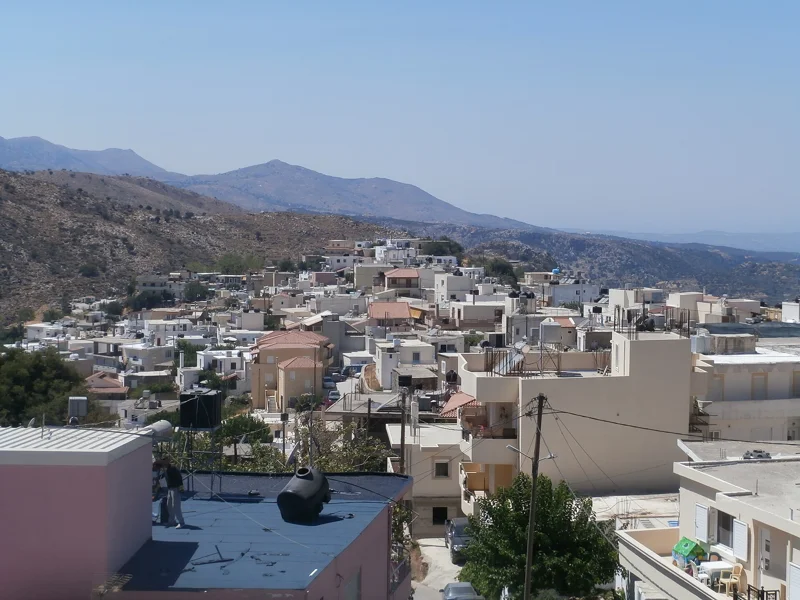
Anogia, 738 m up on Psiloritis: a village of lyra music, weaving and grilled lamb, rebuilt after 1944, and the road to the Nida plateau and Ideon cave.
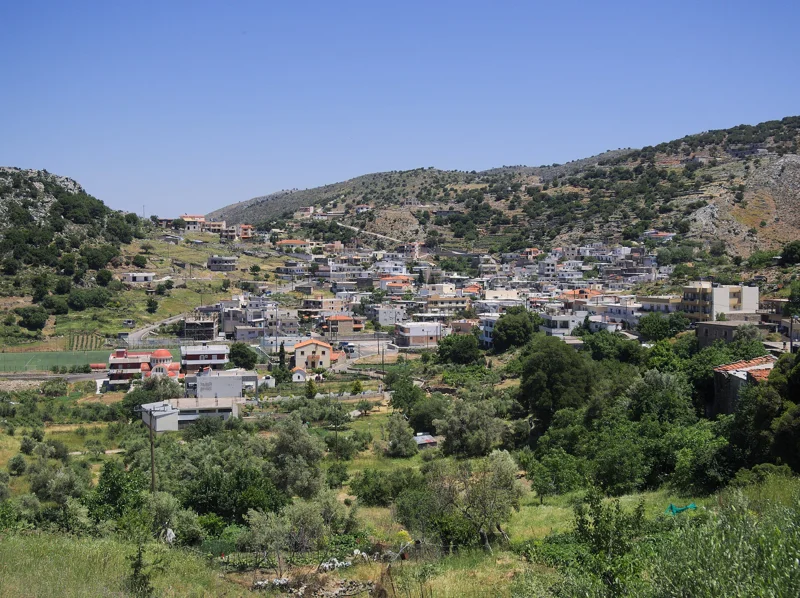
Zoniana, 630 m up on Psiloritis: a shepherding village of about 1,100 people, home to the Sfendoni cave, with Anogia and Axos a short drive away.
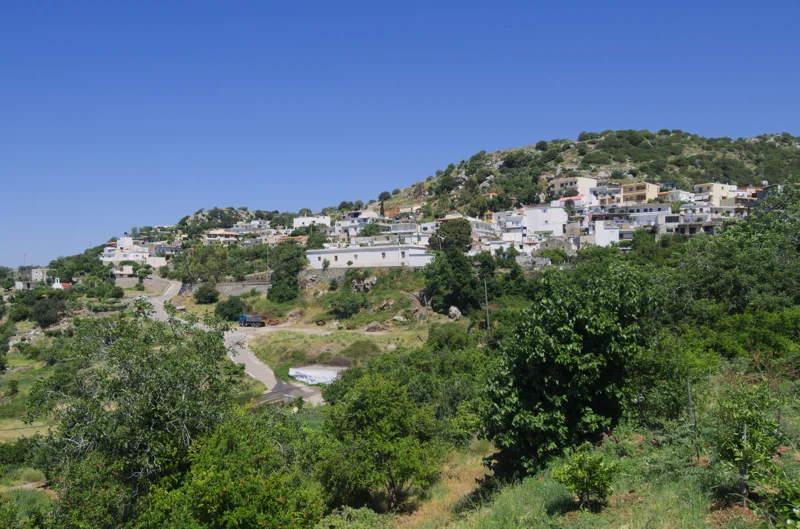
Axos in Mylopotamos: the site of ancient Oaxos, acropolis walls above the village, Byzantine churches and craft workshops on the road to Anogia.
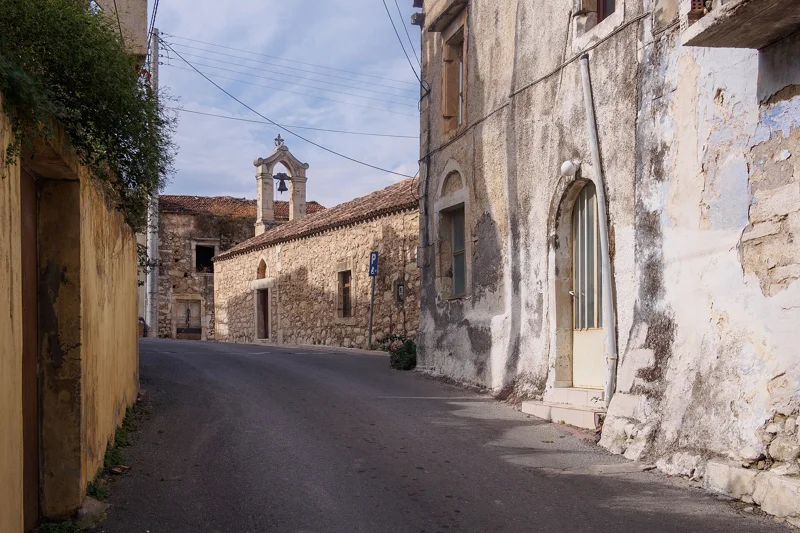
Margarites in Rethymno: one of Crete's two main pottery centres, with dozens of workshops, Venetian-era frescoed churches and Eleutherna nearby.
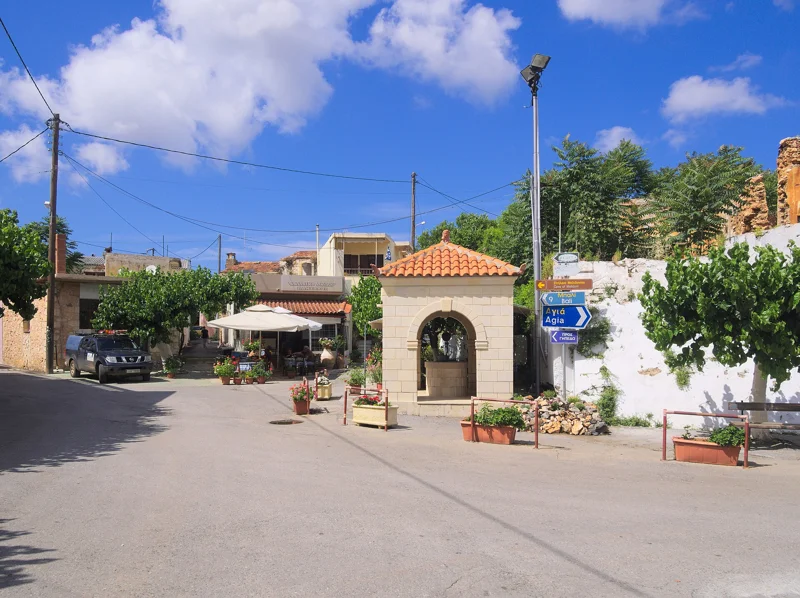
Melidoni, about 30 km east of Rethymno: a Mylopotamos olive village on the slopes of Kouloukonas, with its royal well, square and famous cave.
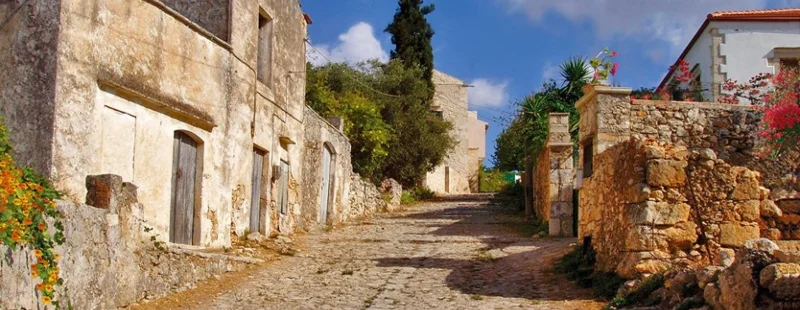
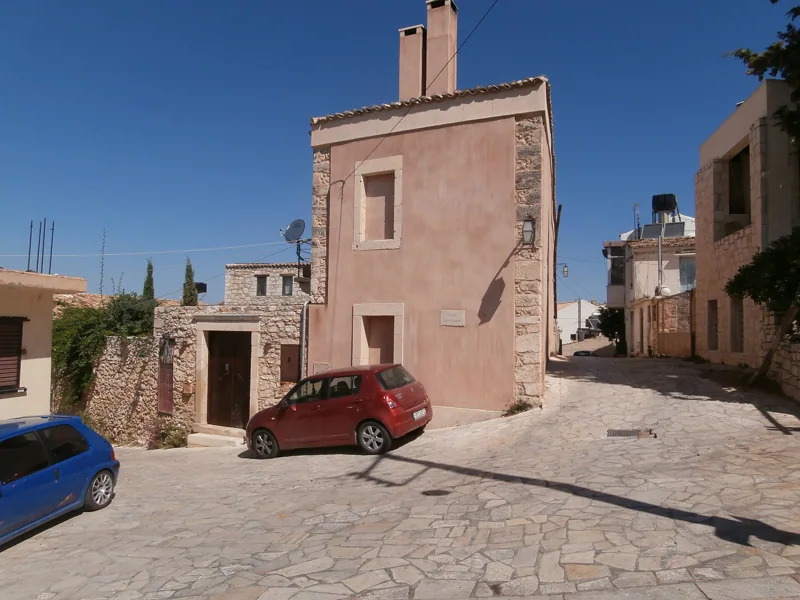
Vamos in Apokoronas, 25 km from Chania: a preserved stone neighbourhood, restored guesthouses, Karydi monastery's arched olive press and village tavernas.
Gavalochori in Apokoronas: 24 Venetian wells, a folklore museum, kopaneli lace, stone houses and Almyrida beach a few kilometres below.
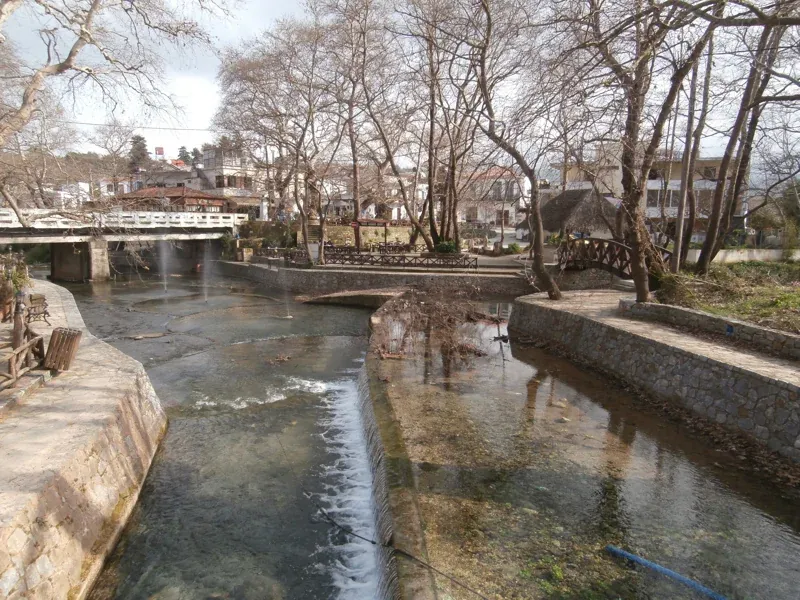
Vryses in Apokoronas: springs, a shaded river with tavernas under plane trees, Cretan yoghurt with honey and the junction for the road to Sfakia.
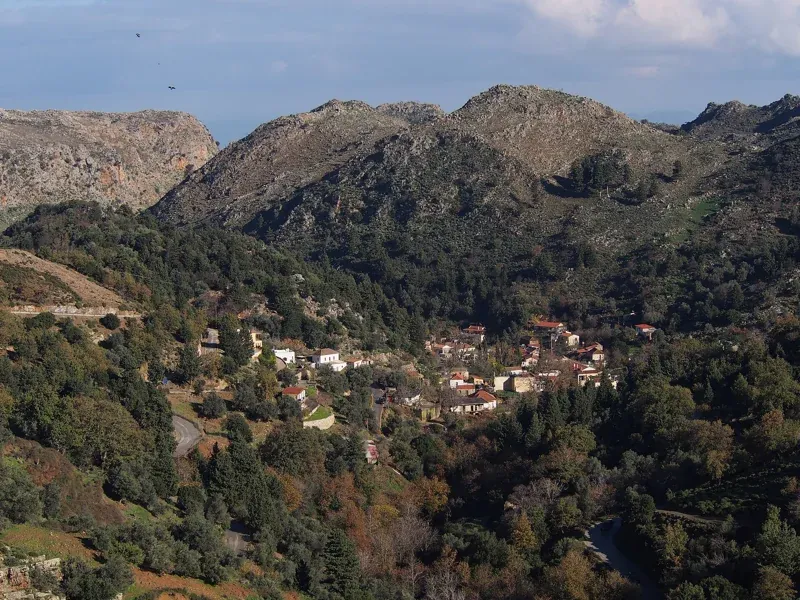
Theriso, 15 km south of Chania at 580 m: a gorge road, the 1905 Venizelos revolt, two small museums and tavernas known across Chania.
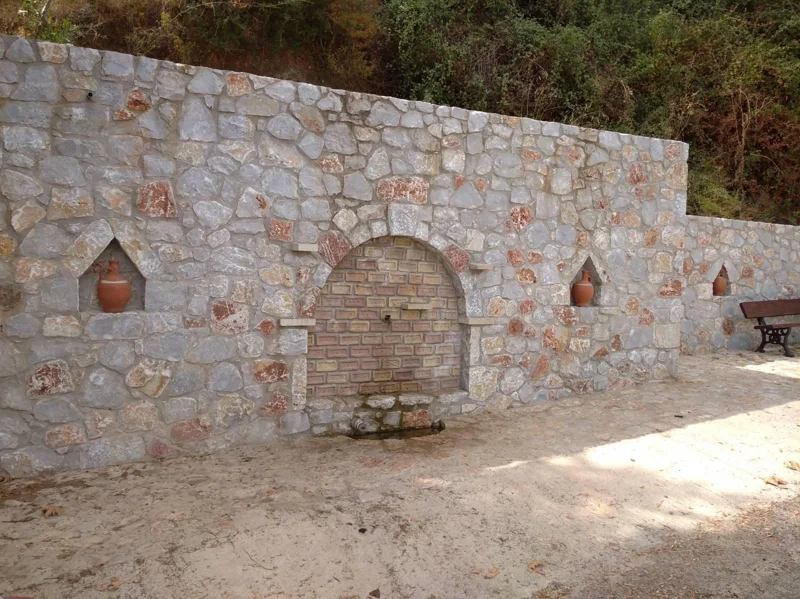
Drakona in Keramia, in the White Mountain foothills south of Chania: a quiet village of honey, olive groves and mountain views, best paired with Theriso.
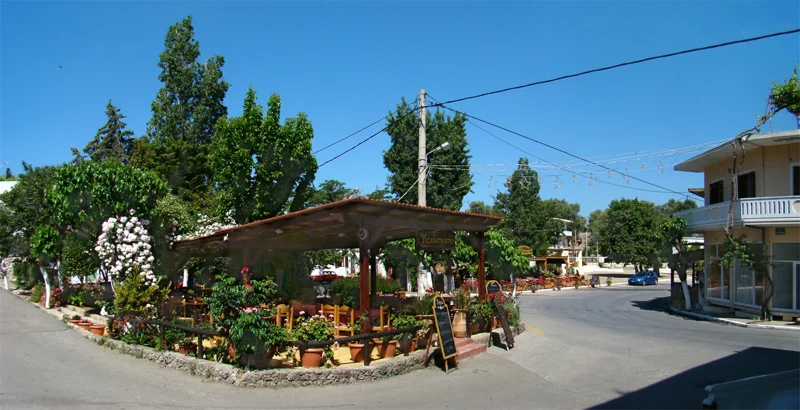
Kandanos, on the road from Chania to Paleochora: a village destroyed in 1941, now known for its memorial, Byzantine churches and a gorge walk.
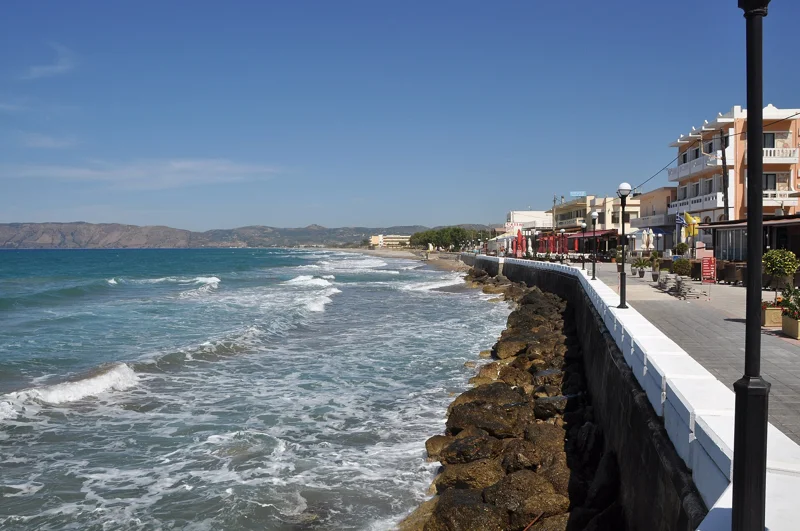
Kissamos (Kastelli), 36 km west of Chania: sandy town beaches, Roman mosaics in the museum, Venetian walls and the port for Balos and Gramvousa boats.
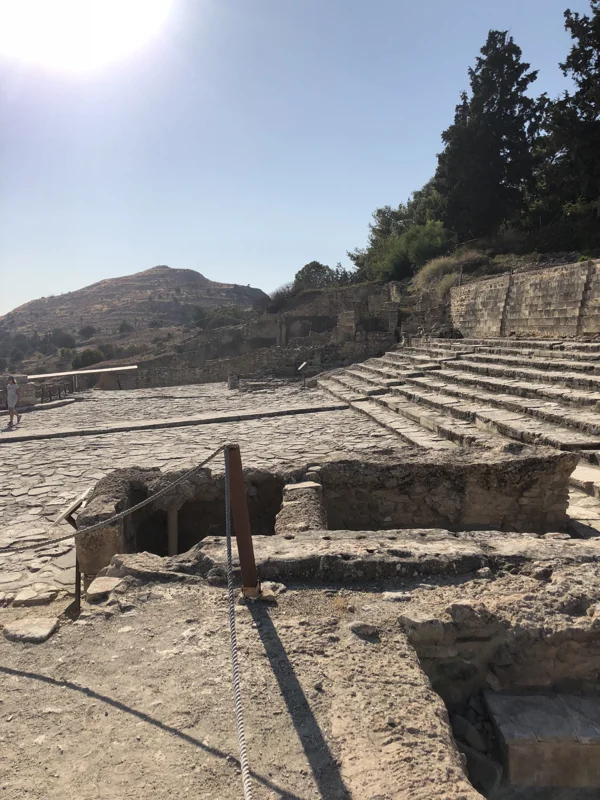
Phaistos, on a hill above the Messara: the second-largest Minoan palace, where the Phaistos Disc was found, with a theatral area and views to Psiloritis.
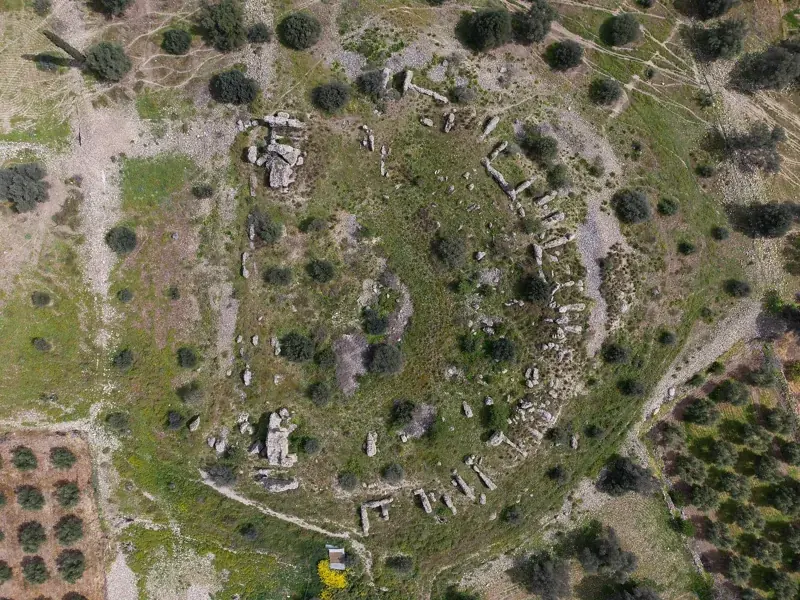
Gortyn in the Messara: the 5th-century BC Law Code, capital of Roman Crete and Cyrene, the basilica of Agios Titos and the Praetorium across the road.
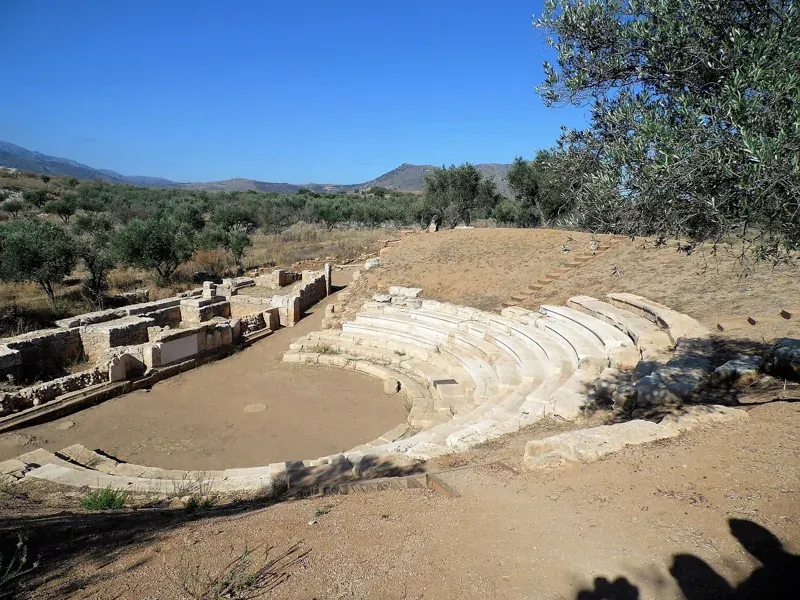
Ancient Aptera near Chania: a city named in Linear B, a 3,700-seat theatre, huge Roman cisterns, a medieval monastery and views over Souda Bay.
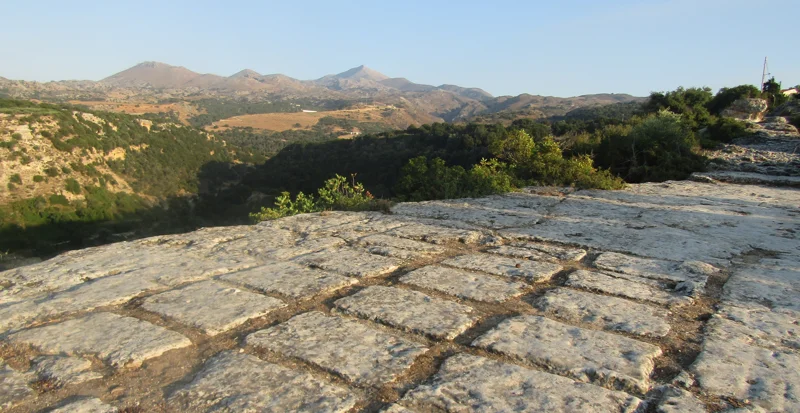
Ancient Eleutherna near Arkadi: Crete's first site museum, finds from the Orthi Petra necropolis and a city inhabited from 3000 BC to Byzantine times.
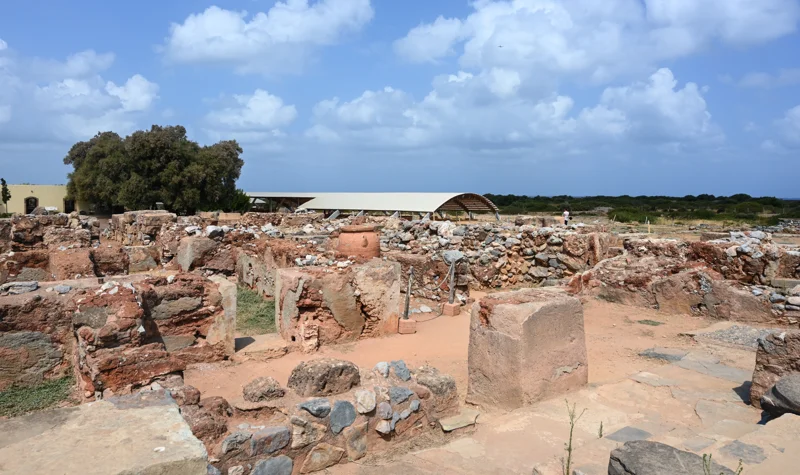
Malia, 3 km east of Malia town: the third-largest Minoan palace, its kernos stone, the Chrysolakkos cemetery of the bee pendant and a beach nearby.
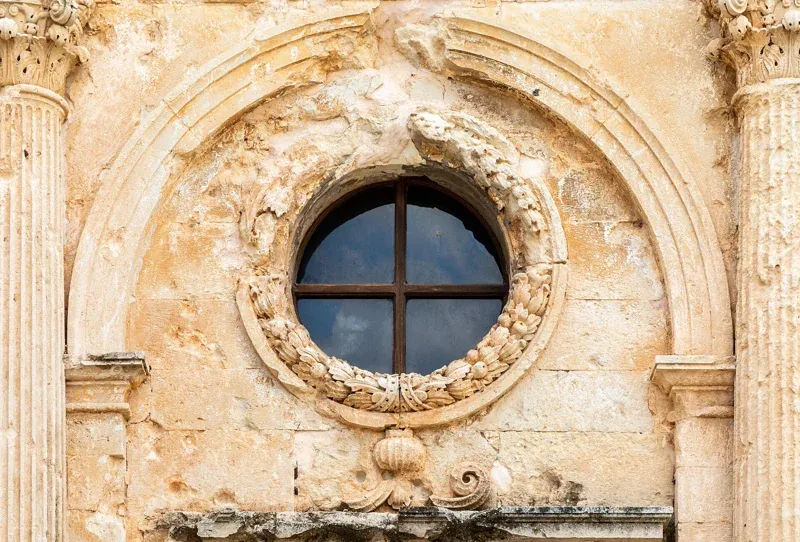
Arkadi monastery, 23 km south-east of Rethymno: a Venetian façade of 1587 and the November 1866 siege that made it a symbol of Cretan freedom.
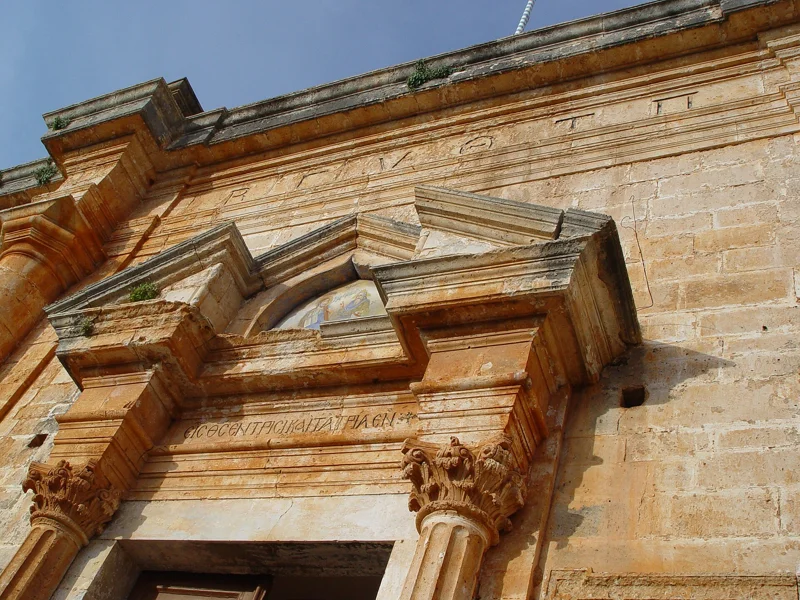
Agia Triada (Tzagarolon) monastery on Akrotiri: a 17th-century Venetian-era monastery with a museum, monks' wine and oil, and Gouverneto nearby.
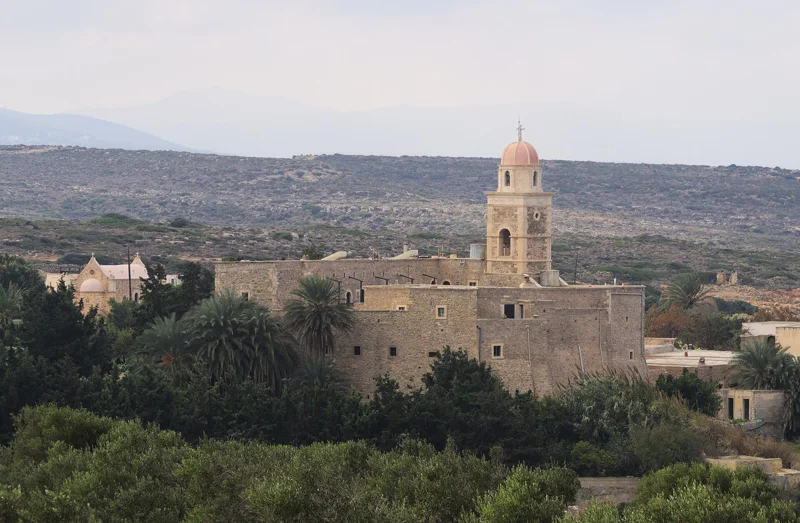
Toplou monastery between Sitia and Vai: a fortified 15th-century monastery with Kornaros's 1770 icon 'Great Art Thou, O Lord', a museum and a winery.
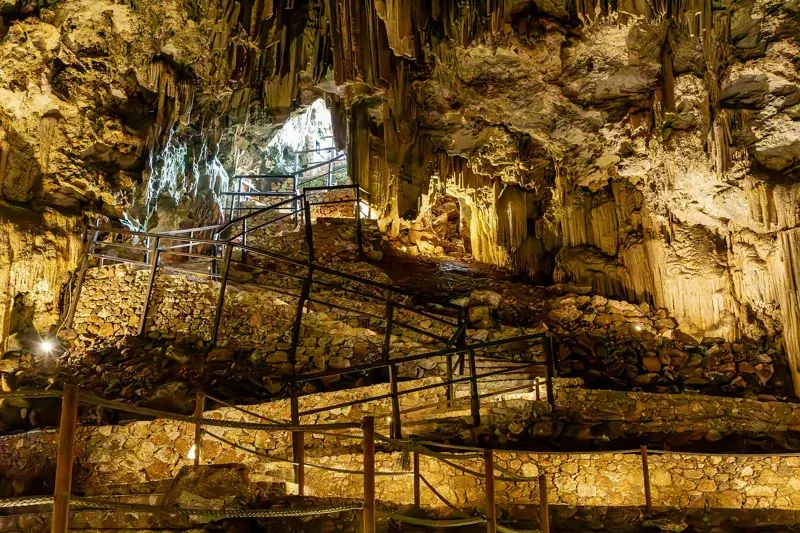
Melidoni cave near Rethymno: an ancient cult cave and the site of the 1824 tragedy, when about 400 villagers died, with an ossuary in its main hall.
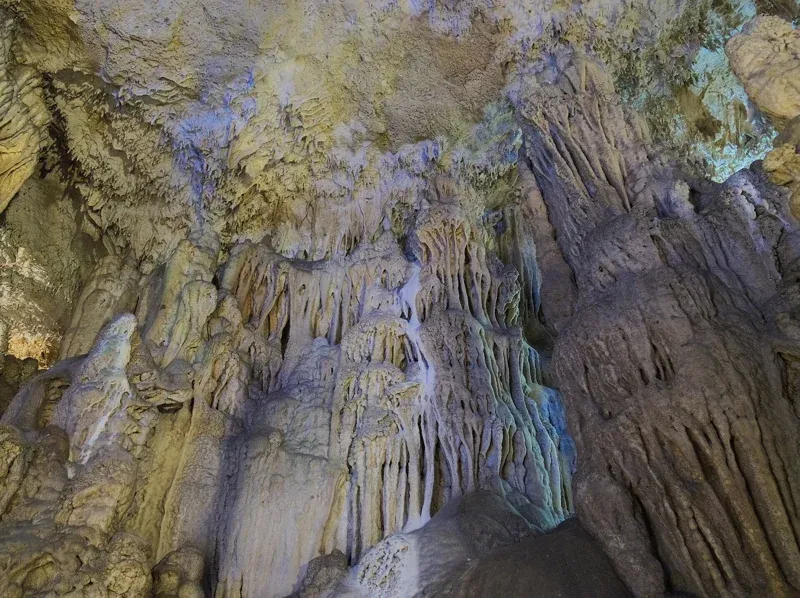
Sfendoni cave at Zoniana: 14 chambers, a lit 270 m walkway, 25–30 minute guided tours, €6 tickets, open daily mid-April to October.
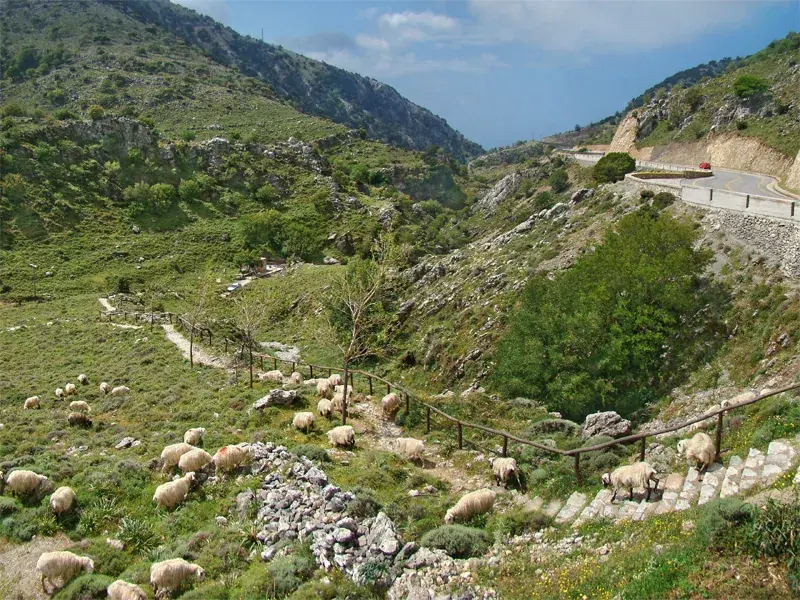
Imbros gorge in Sfakia: about 8–11 km from Imbros village (700 m) to Komitades, roughly 3 hours, with a 1.6 m-wide narrows and taxis back.
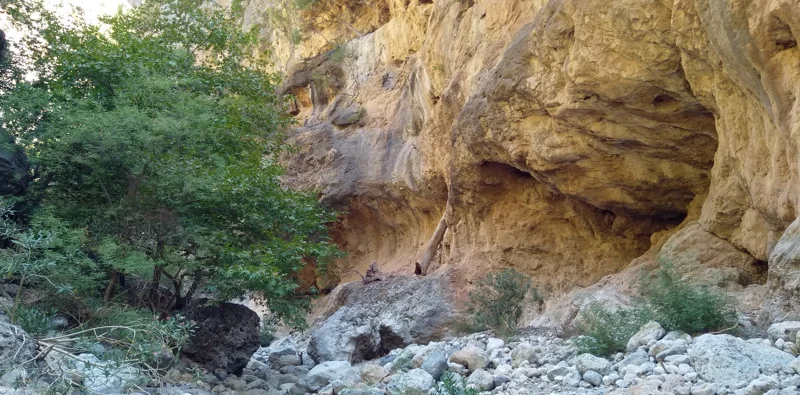
Agia Irini gorge in Selino: a 7.5 km, roughly 3-hour shaded walk from the White Mountains to the Libyan Sea, ending 45 minutes from Sougia.
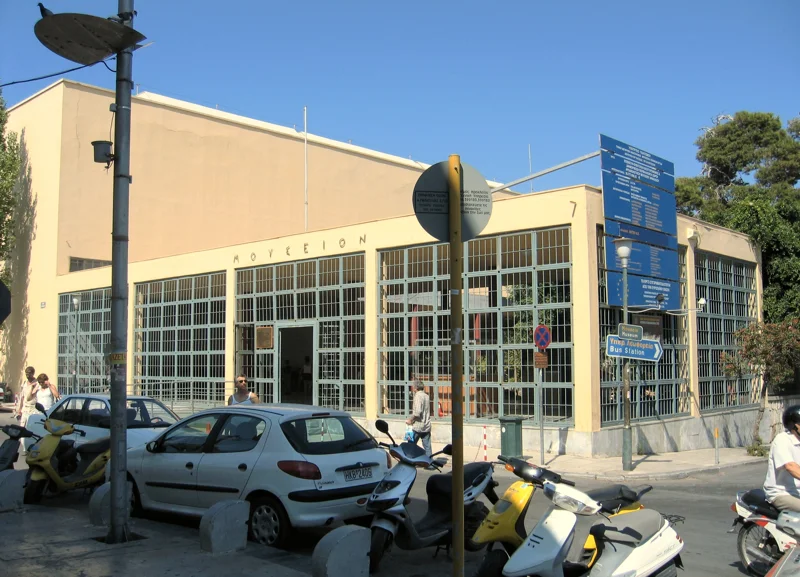
Heraklion Archaeological Museum: the Phaistos Disc, snake goddesses, bull-leaping fresco and Malia bee pendant, with a two-hour route through the galleries.
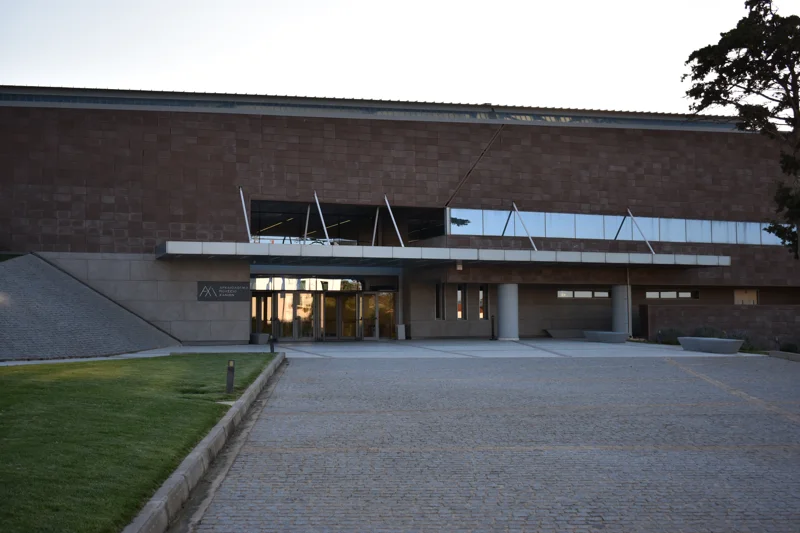
The new Archaeological Museum of Chania at 15 Skra St, Halepa: finds from prehistory to the 4th century AD, the Mitsotakis Collection, €15 tickets.
Three Heraklion restaurants for serious Cretan food: Peskesi with its own farm, Parasties cooking over fire, and Merastri's wood-oven lamb.
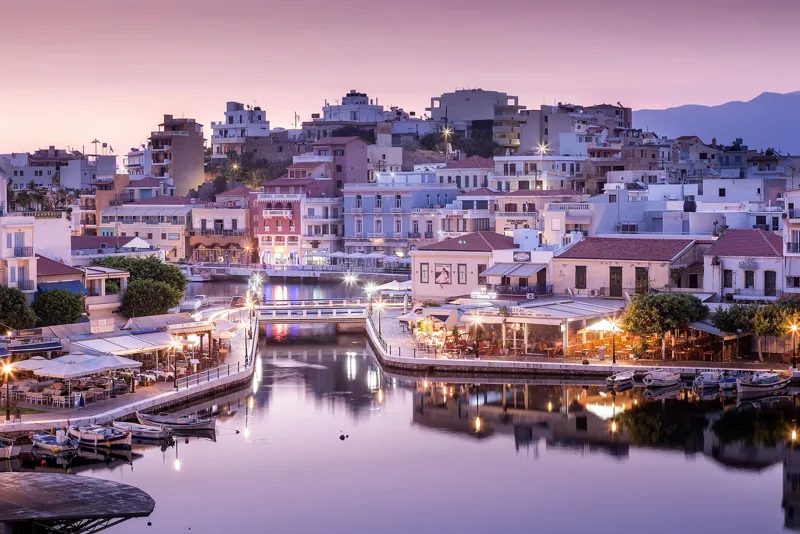
Three ways to eat in Agios Nikolaos: Piato's creative Greek cooking over the lake, Gioma Meze for fish and wine, and To Potiraki for meze and raki.
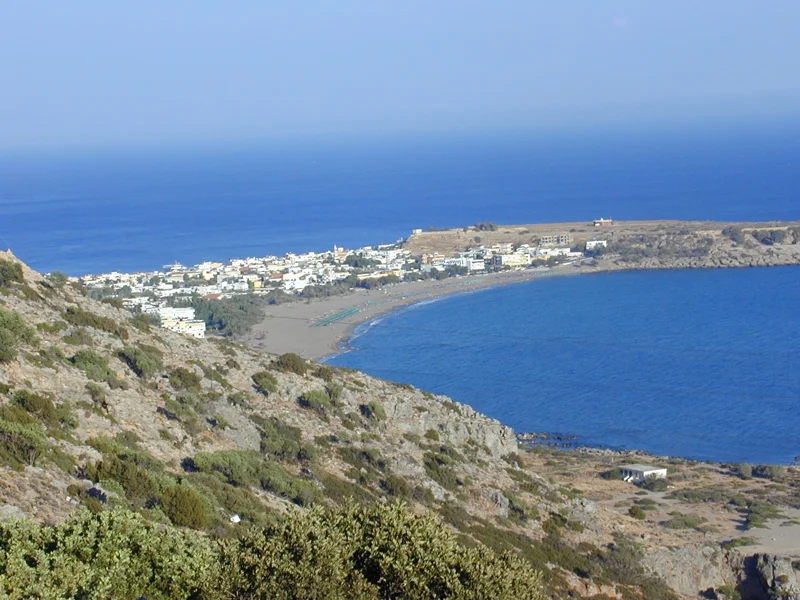
Three ways to eat in Paleochora: harbour seafood at Caravella, vegetarian cooking at Third Eye since 1990, and beachside meals at Zephyros.
Eat in the Apokoronas villages east of Chania: Heliostasi in Douliana, Chasomeri in Vamos and antikristo lamb at Kourgialis in Embrosneros.
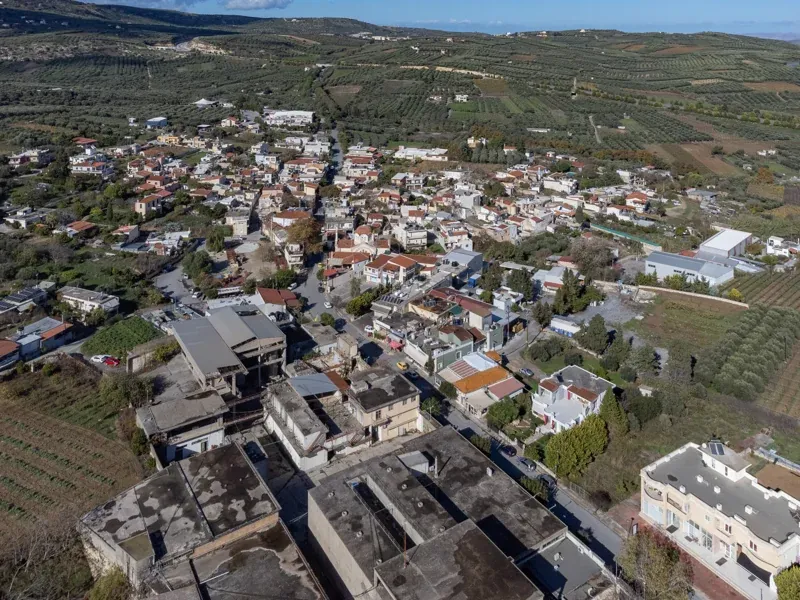
Three Heraklion wineries to visit: Lyrarakis in Alagni for rare grapes, Douloufakis in Dafnes for Vidiano and Liatiko, and organic Paterianakis in Melesses.
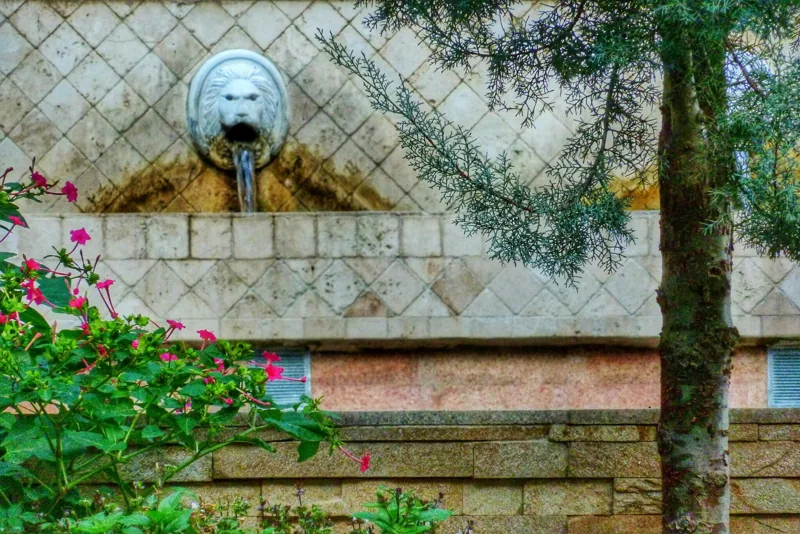
Spili, 30 km south of Rethymno at 430 m: the Kefalovrysi lion-head fountain under plane trees, old lanes and the road to Preveli and Plakias.
Archanes, 14 km south of Heraklion: a restored town with a Minoan palace, the Fourni cemetery, a museum, Mount Giouchtas walks and wineries nearby.
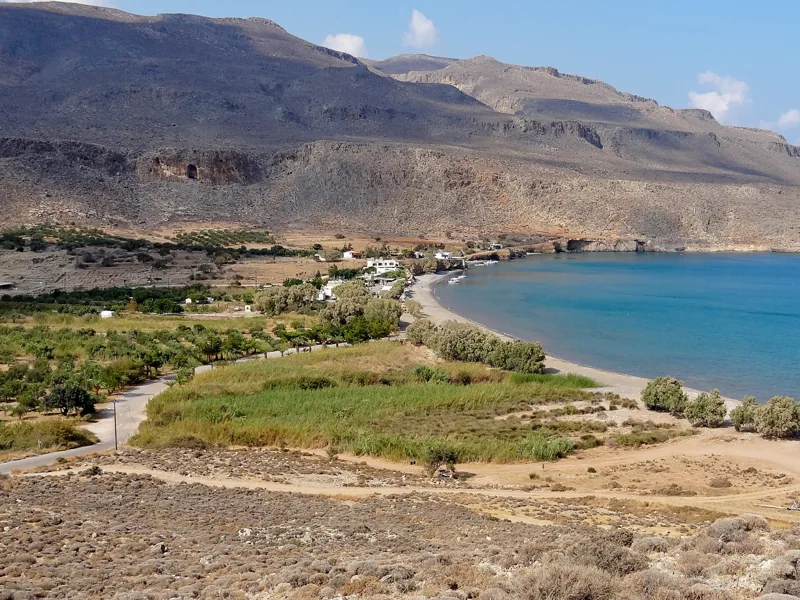
Kato Zakros in far east Crete: the fourth Minoan palace, whose treasury was found unlooted, a quiet beach, tavernas and the Gorge of the Dead walk.
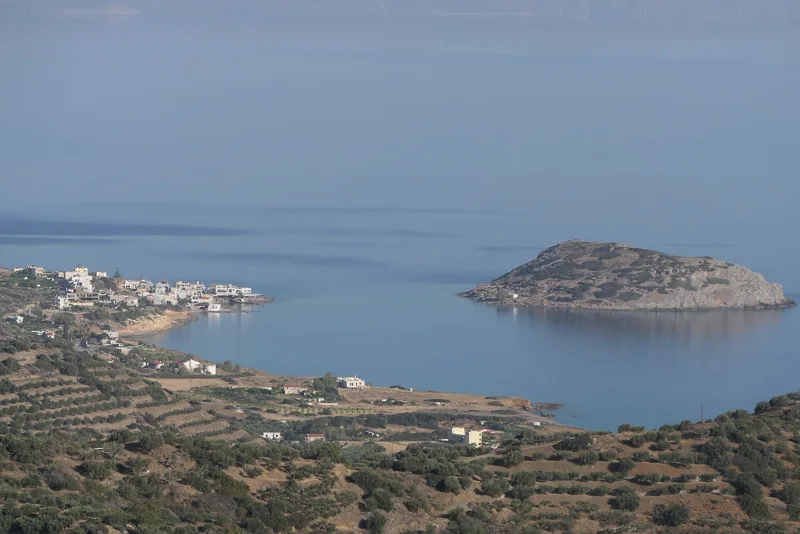
Mochlos, 35 km west of Sitia: a tiny fishing village of seafood tavernas, small beaches and a Minoan islet 150 m offshore.
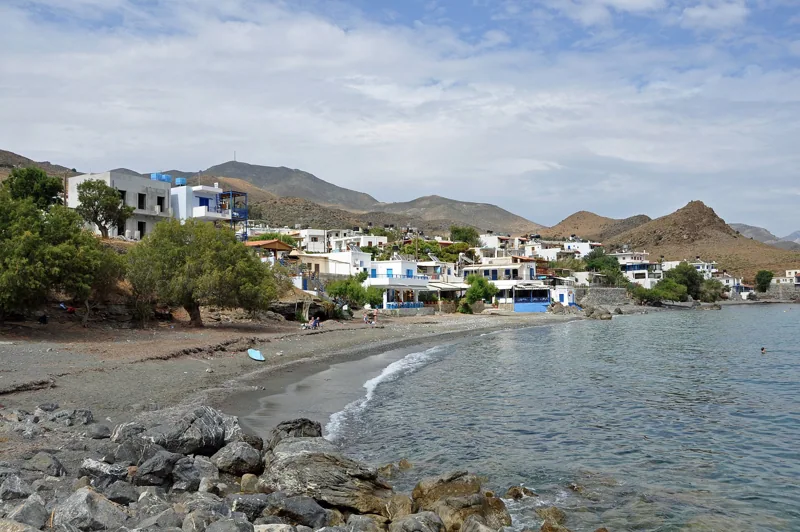
Lentas on the Asterousia coast, about 75 km south of Heraklion: a pebble-and-sand bay under the Lion headland, tavernas and the Asklepios sanctuary of Lebena.
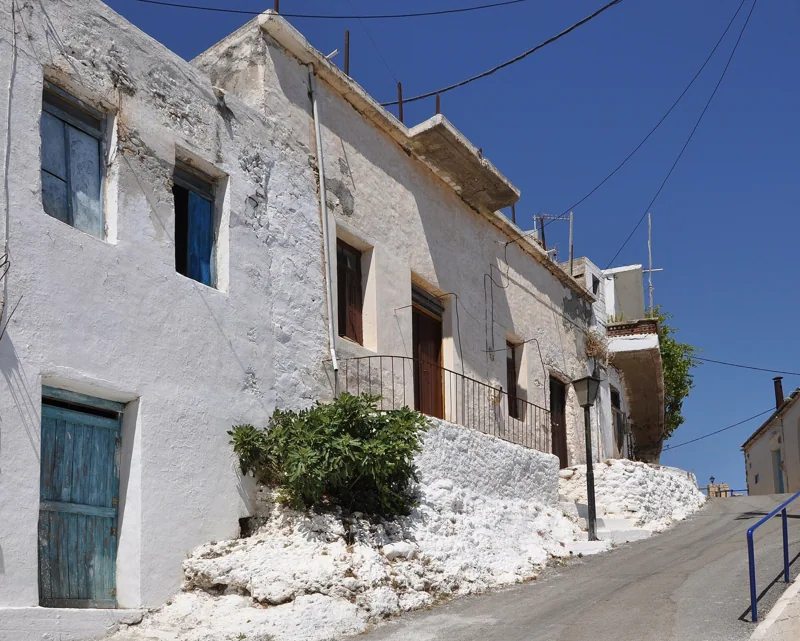
Agia Galini, 61 km south of Rethymno: a terraced harbour village on Messara Bay with a town beach, boat trips to nearby coves and the Paximadia islets.
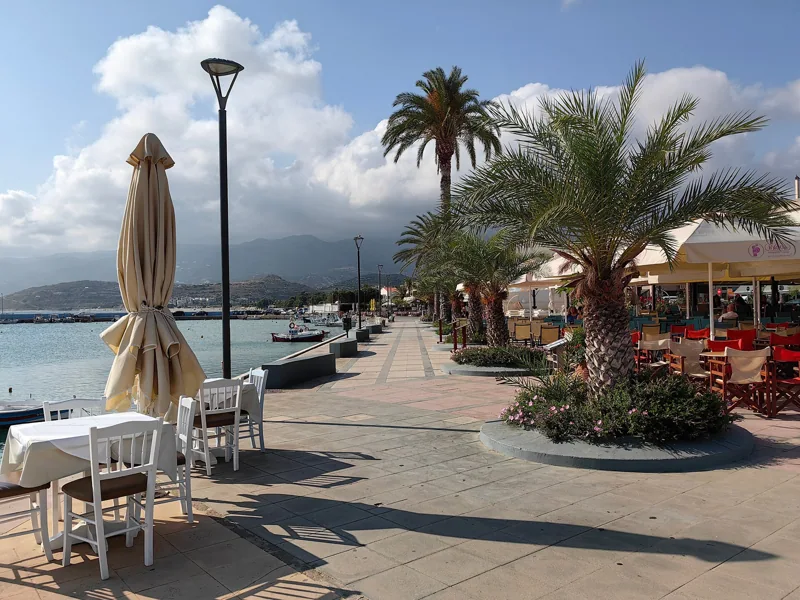
Sitia, eastern Crete's main town: a harbour promenade, the Kazarma Venetian fortress, a museum with the Palaikastro Kouros and the Petras palace.
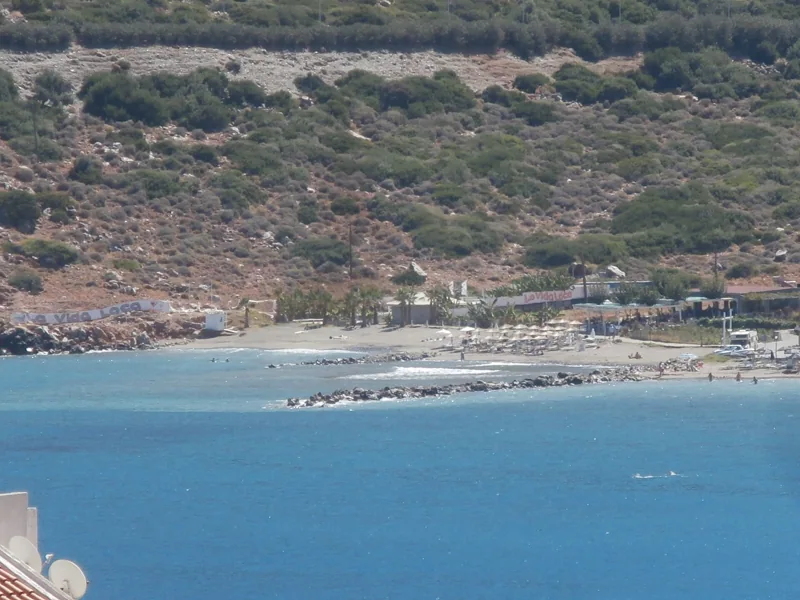
Bali, 30 km east of Rethymno: Livadi, Varkotopos, the harbour beach and sheltered Karavostasi, plus the Atali monastery on the hill above.
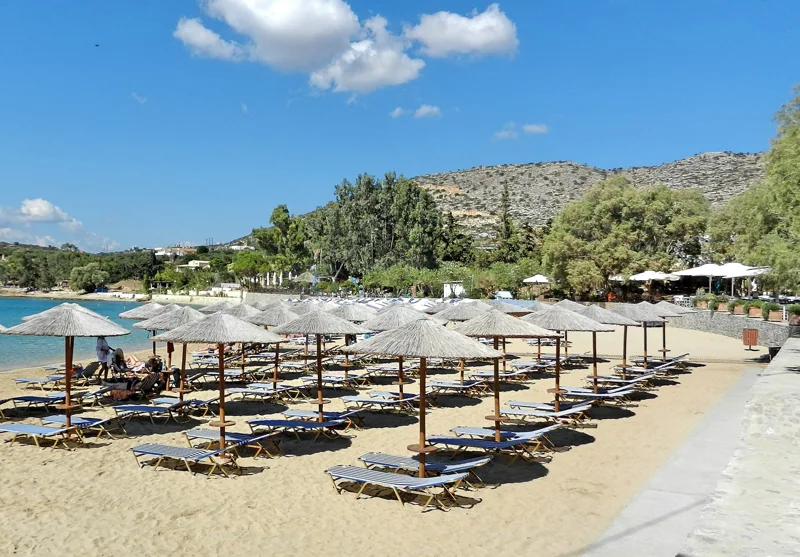
Marathi on Akrotiri, 17 km from Chania: two sheltered sandy beaches on Souda Bay, shallow water, fish tavernas by the harbour and White Mountain views.
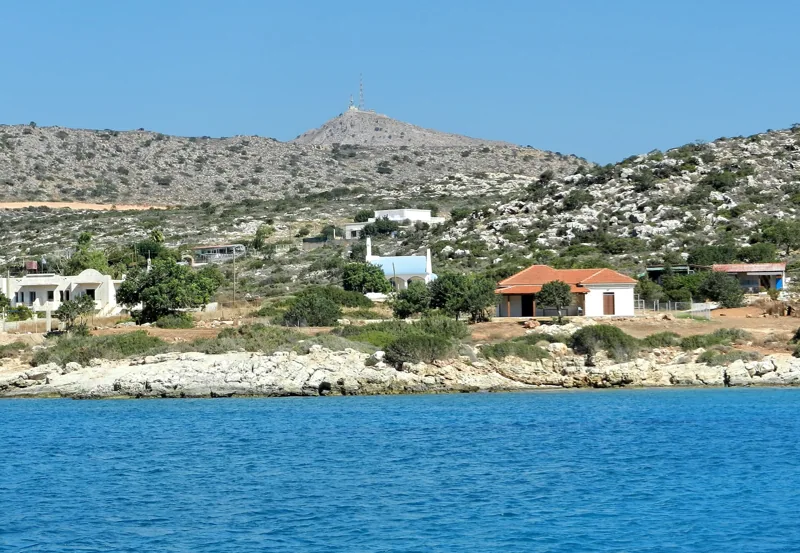
Loutraki on Akrotiri, 16 km from Chania: a sheltered sandy cove on Souda Bay with a big terrace beach bar, a lawn with sunbeds and Marathi next door.
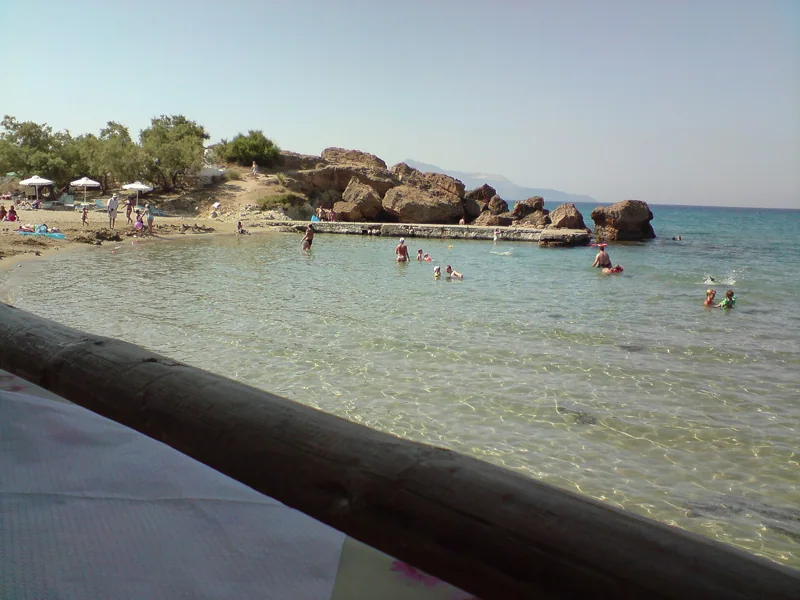
Almyrida, 22 km east of Chania: a shallow sandy beach, waterfront tavernas, the ruins of an early Christian basilica and Gavalochori a short drive up.
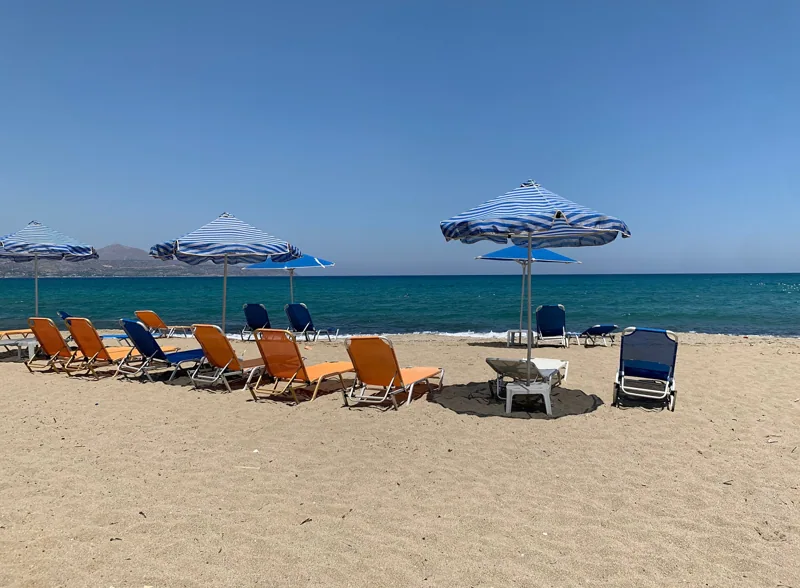
Kalyves, 19 km east of Chania: sandy Xidas and Maistrali beaches, cool river water at Kyani Akti, a plane-tree square and Aptera 5 km away.
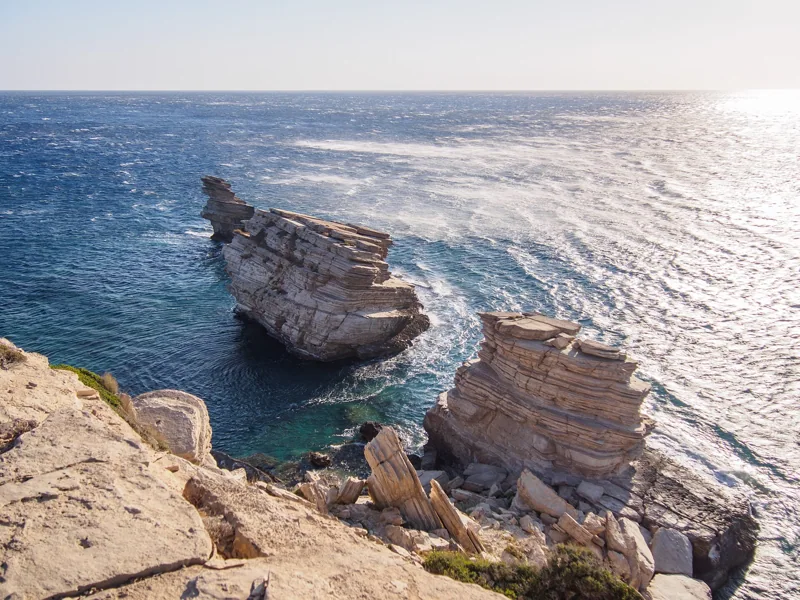
Triopetra, about 50 km south of Rethymno: a long open sand beach, a sheltered smaller beach beside three sea stacks, tavernas and big sunsets.
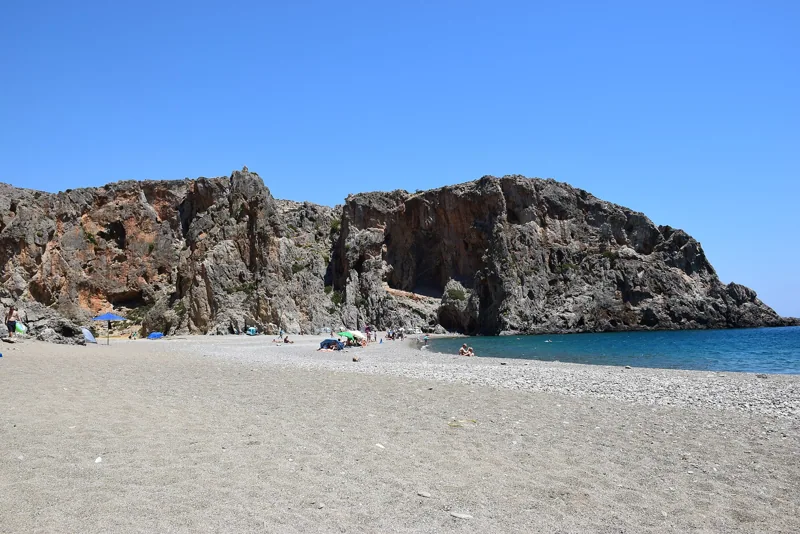
Agiofarago on the Asterousia coast: a 2 km walk through a gorge of hermit caves to a pebbly beach with deep water. No facilities and no shade.
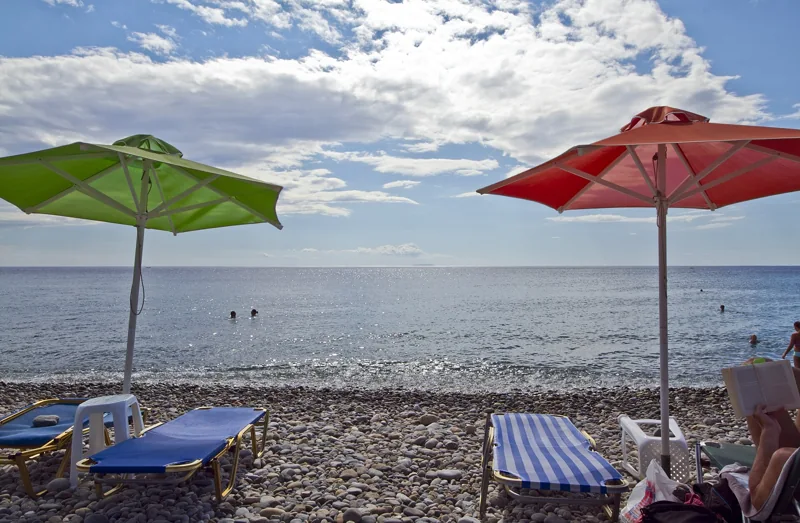
Paleochora, 77 km south of Chania: a small peninsula town with a sandy west beach, a pebbly east beach, Castel Selino ruins and south-coast ferries.
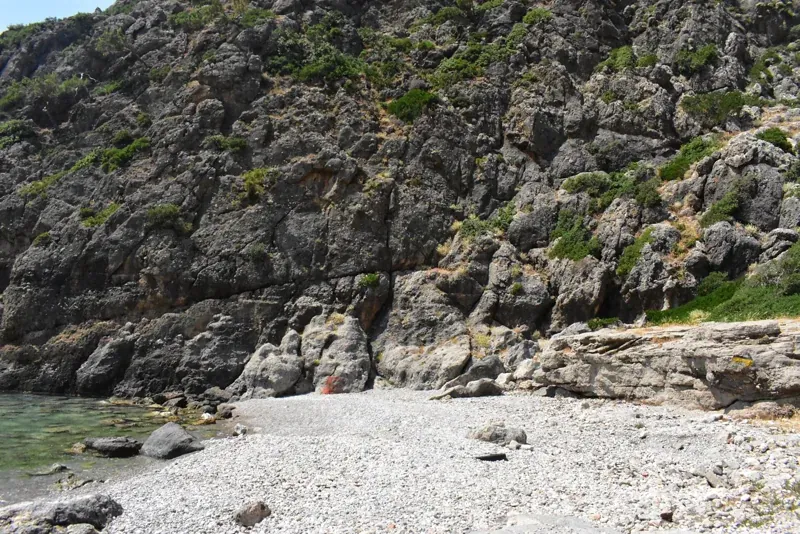
Sougia, about 70 km south-west of Chania: a long pebble beach, the end of Agia Irini gorge, a 1.5–2 hour walk to ancient Lissos and seasonal ferries.
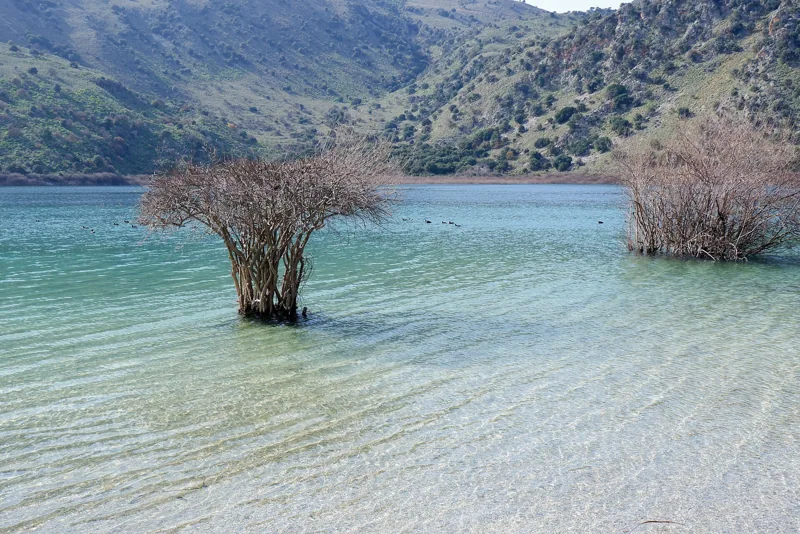
Lake Kournas, 4 km from Georgioupolis: Crete's only natural freshwater lake, 22.5 m deep, with turtles, pedal boats, tavernas and a summer sandy shore.
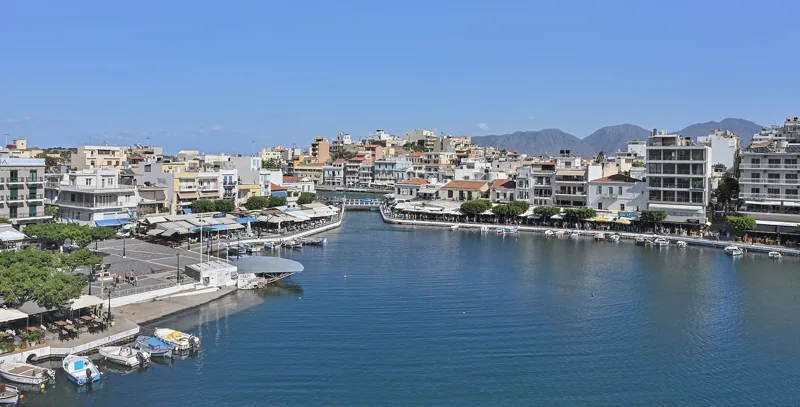
Agios Nikolaos on the Mirabello Gulf: Lake Voulismeni, linked to the sea in 1870, a small town beach and easy trips to Elounda, Spinalonga, Kritsa and Lato.
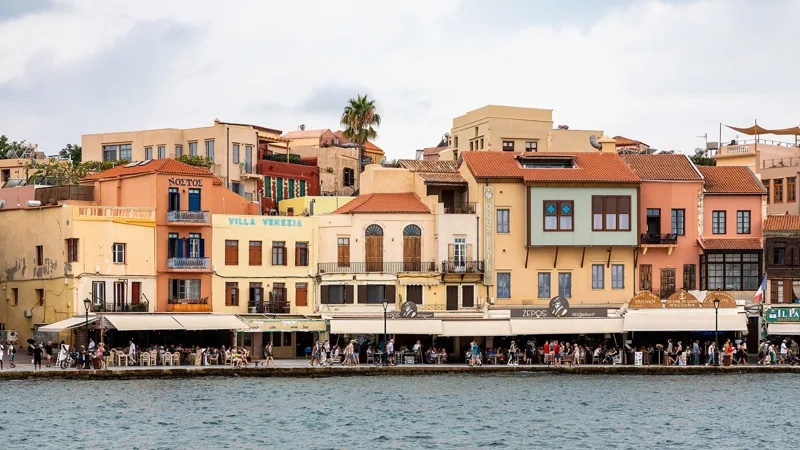
A self-guided Chania food walk: bougatsa for breakfast, the old town and harbour for lunch at Tamam or Salis, and a seafood dinner in Nea Chora.
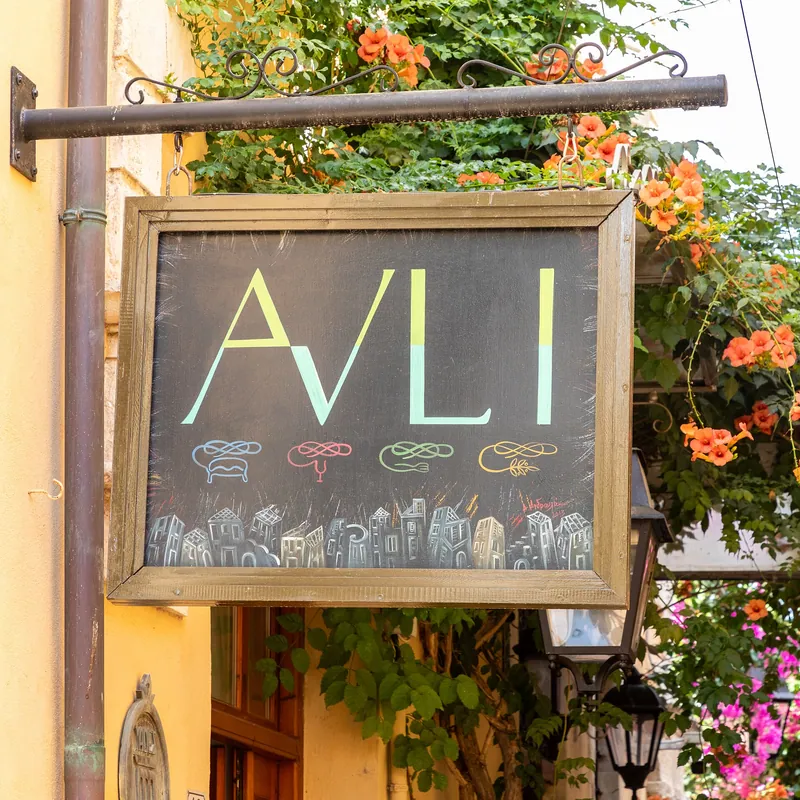
Three Rethymno old-town choices: Avli in a 16th-century Venetian villa, its sister meze bar Raki BaRaki, and Alana's flower-filled courtyard.
Road etiquette, mountain driving, insurance and parking: what to know before driving in Crete.
Seven days, one base in Chania: the best of western Crete by car.
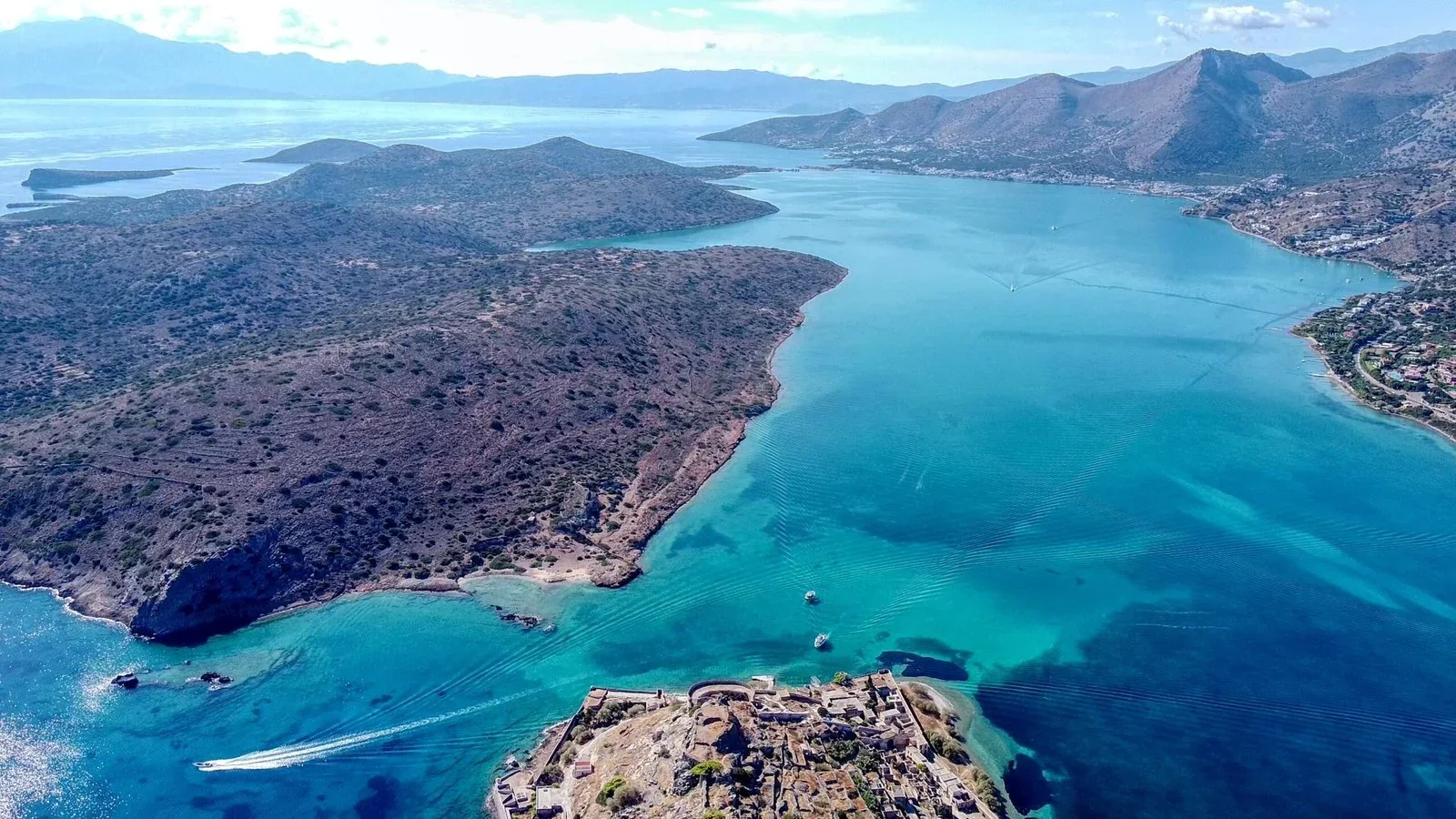
Spring flowers, summer heat or a warm autumn sea: when to go to Crete.
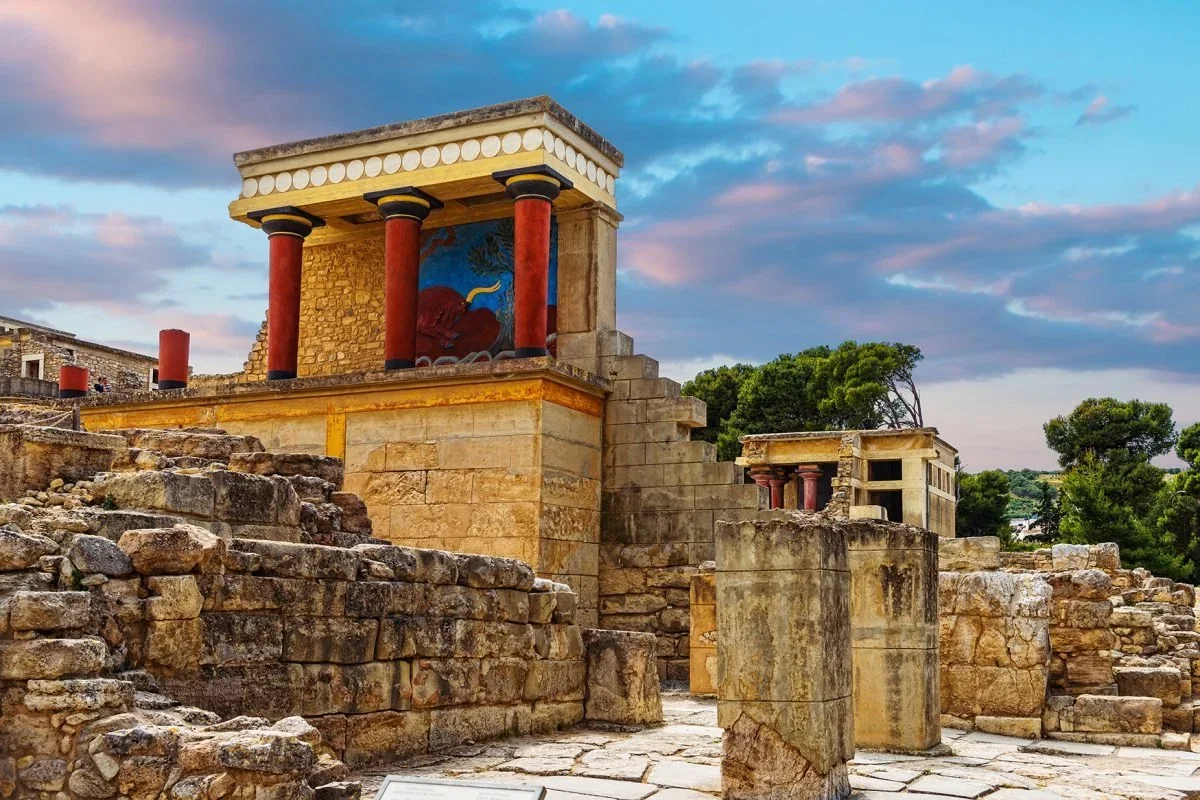
The Minoan palace near Heraklion: history, highlights and practical tips.
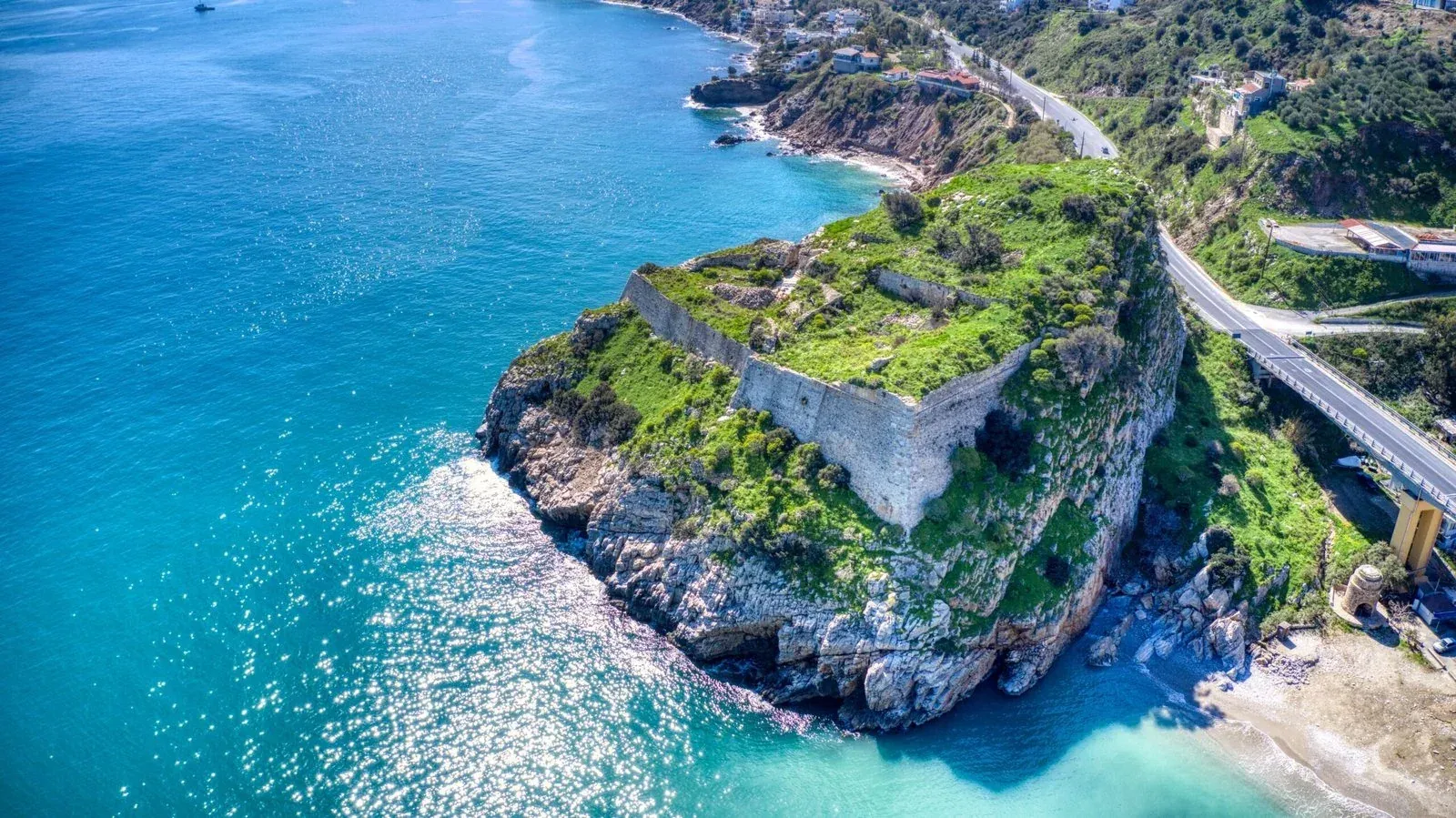
Venetian fortress, Ottoman village and leper colony: the story of Spinalonga.
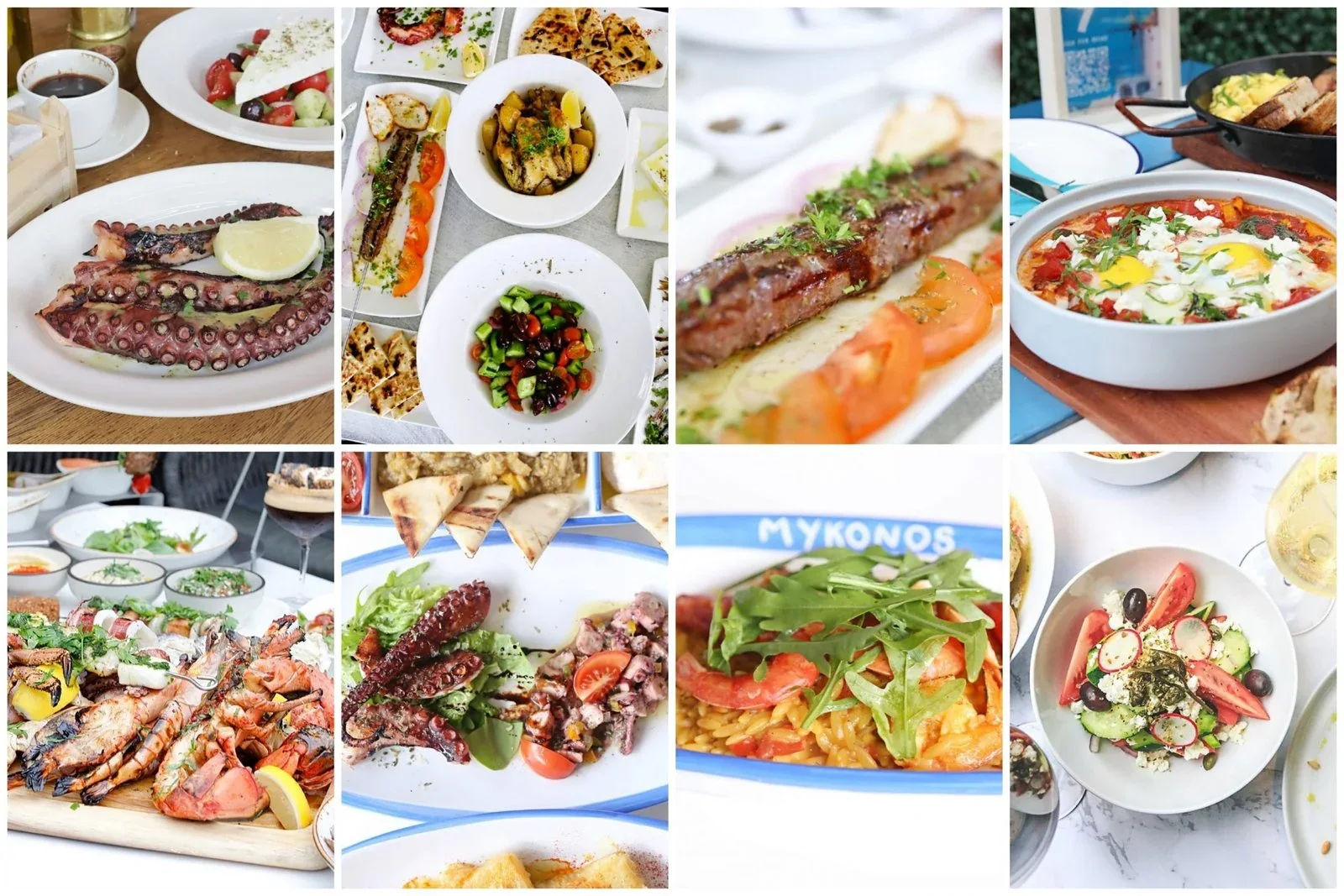
Dakos, kalitsounia, boureki and raki: what to order at a Cretan taverna.
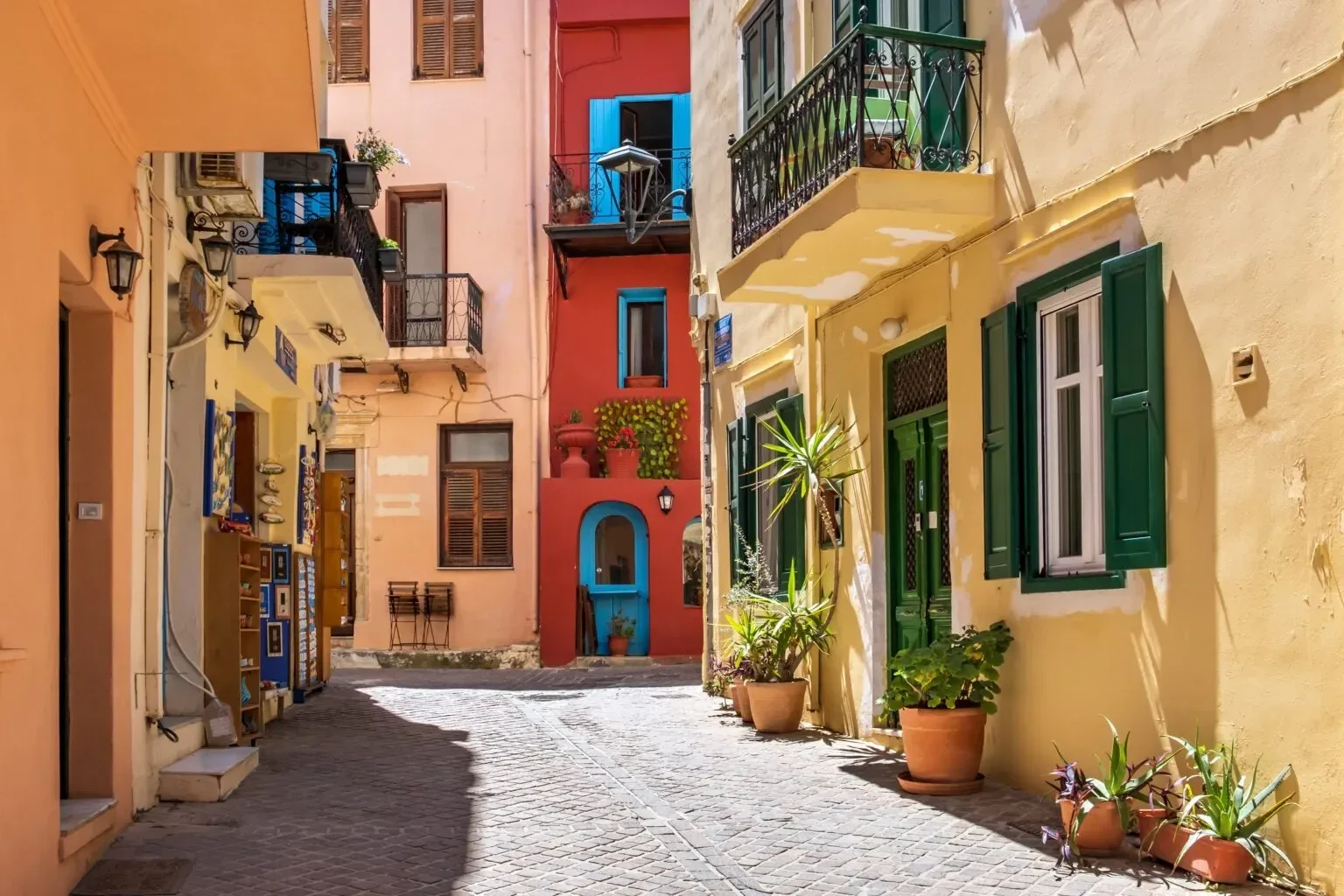
The harbour, the Old Town, markets, beaches and day trips: Chania by locals.
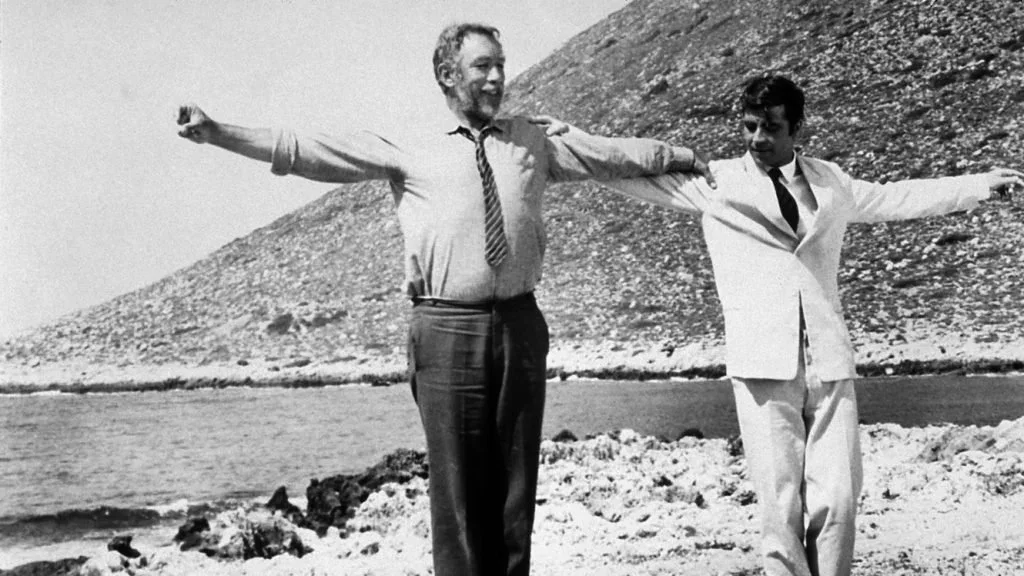
Shallow beaches, easy outings and practical tips for a family holiday in Crete.
Walking Through Chania Old Town: A Neighborhood-by-Neighborhood Guide Chania's Old Town is not one place — it's several…
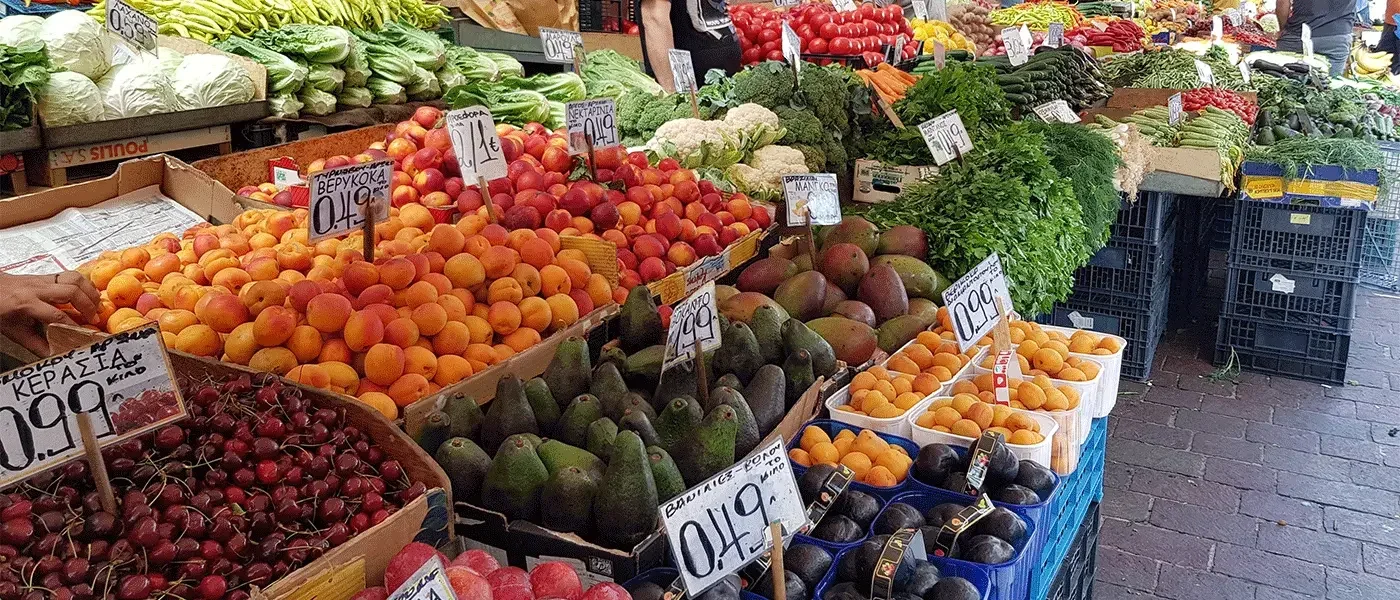
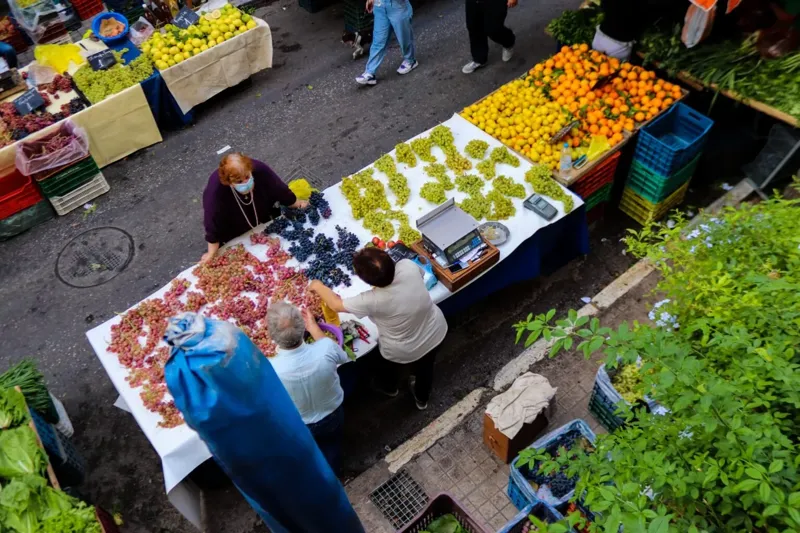
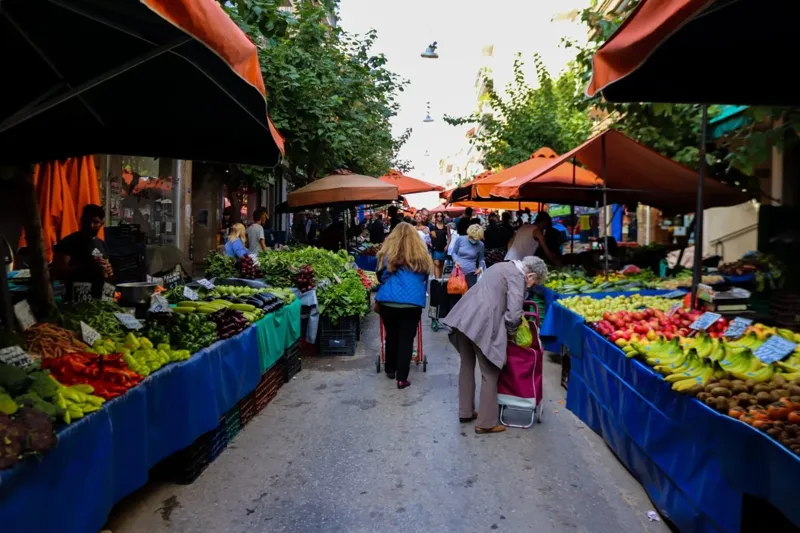
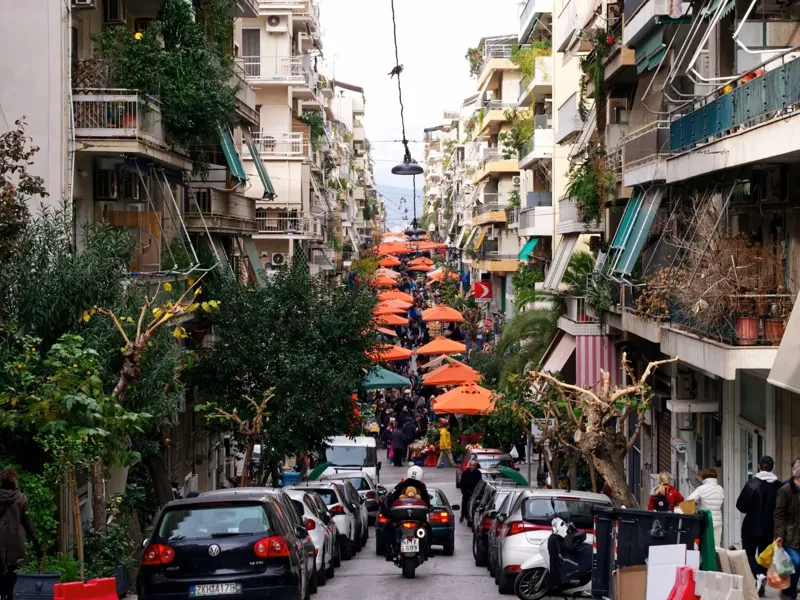
Chania Laiki Agora: Your Complete Guide to the Weekly Street Markets If you want to see the real Chania — not the postcard…
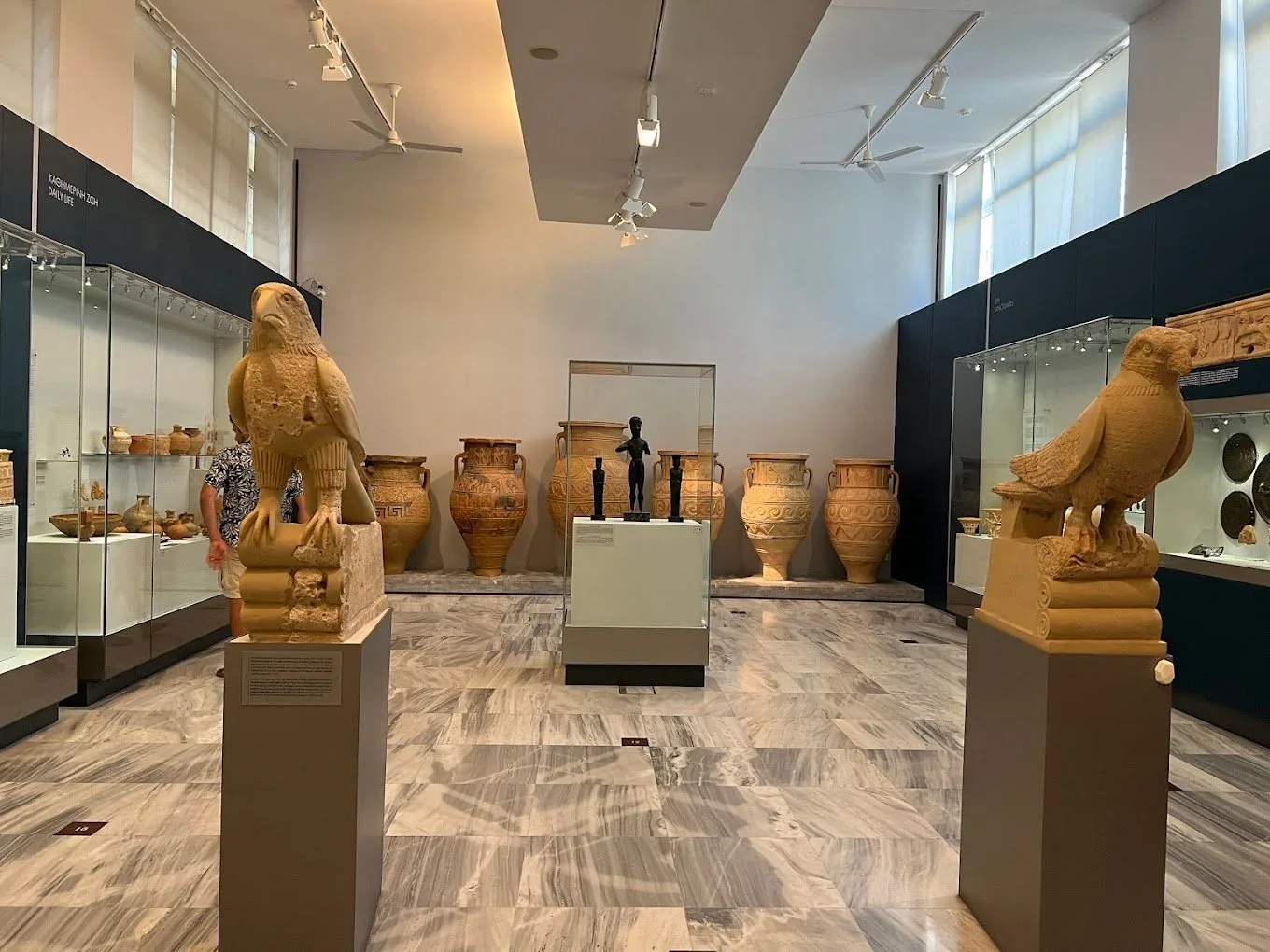
Discovering the Museums of Crete: A Journey into the Heart of the Island's History and Culture Crete, the largest of the…
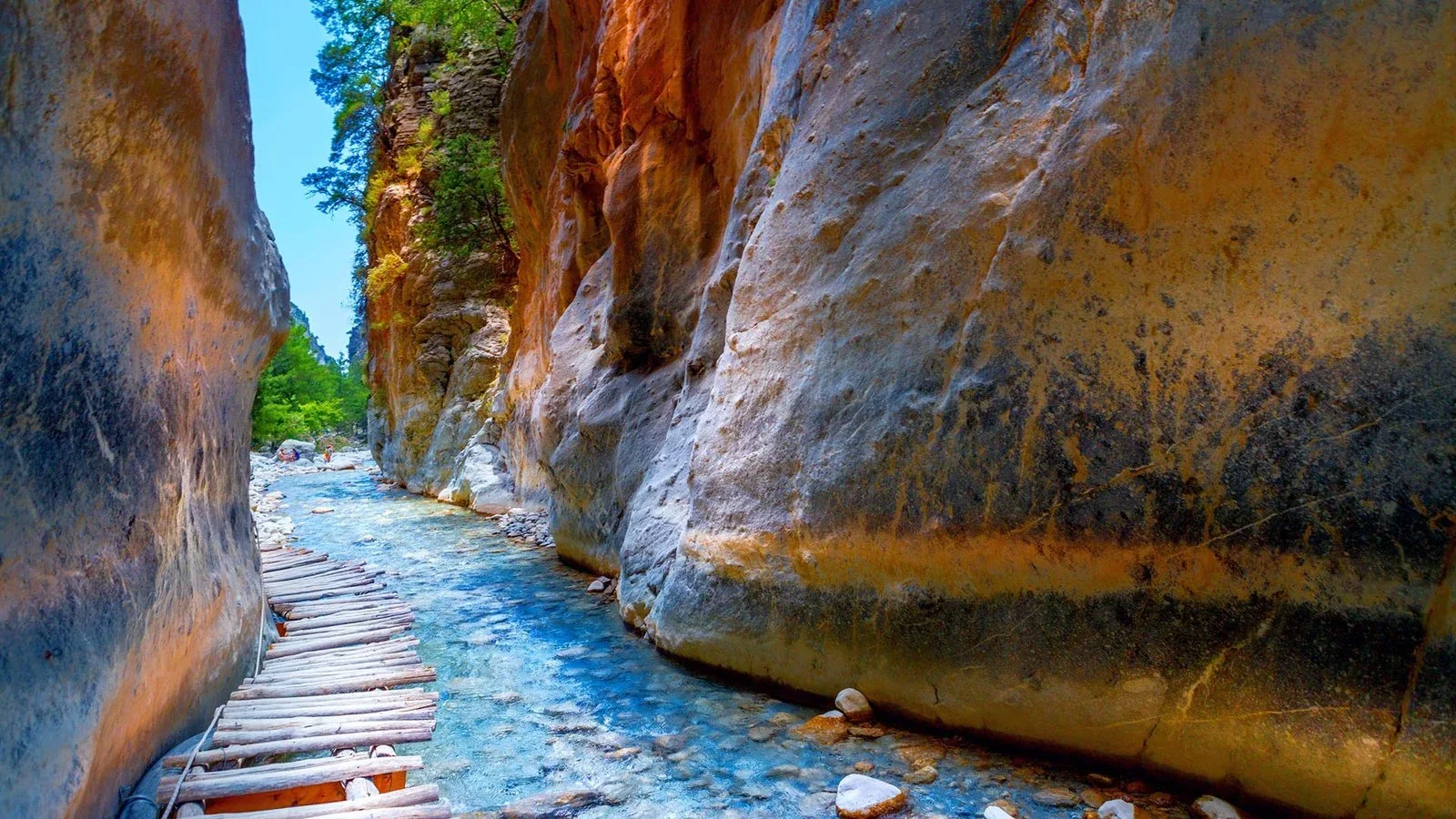
Hiking Samaria Gorge – The Ultimate Guide to Crete’s Most Famous Gorge If there’s one hike in Crete that you absolutely…
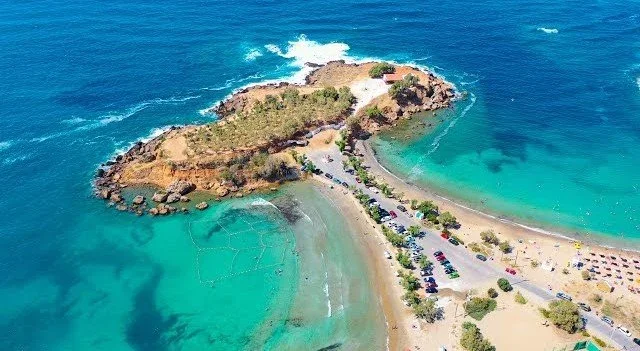
The Beauty of Agii Apostoli Beaches Near Chania Nestled just 3 kilometers west of Chania, Agii Apostoli (or Agioi Apostoloi…
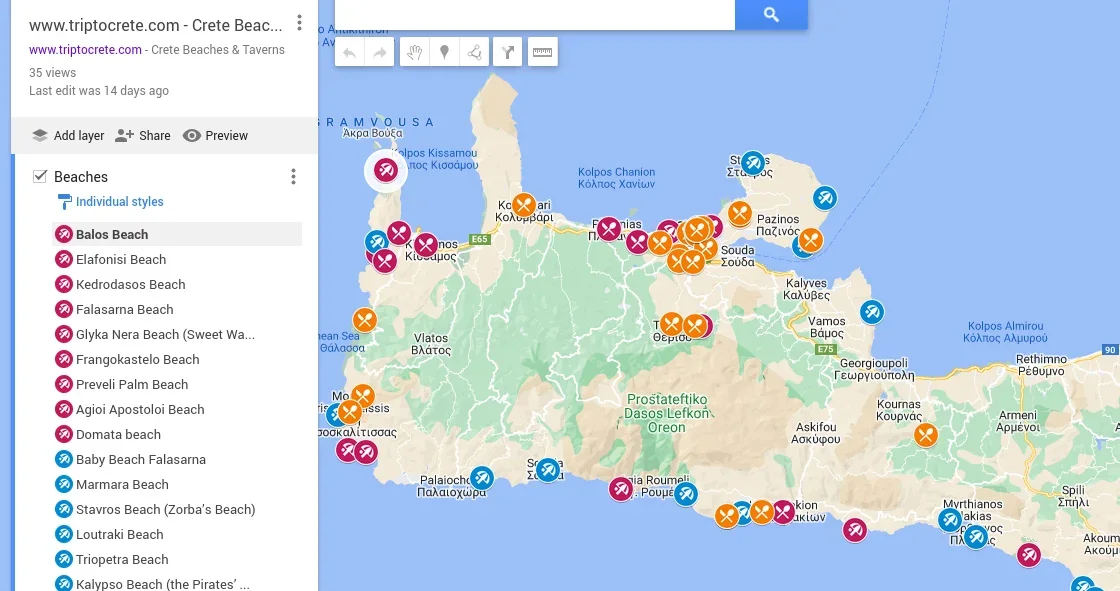
Western Crete is a paradise of dramatic coastlines, crystal-clear turquoise waters, and authentic Greek culture that has…
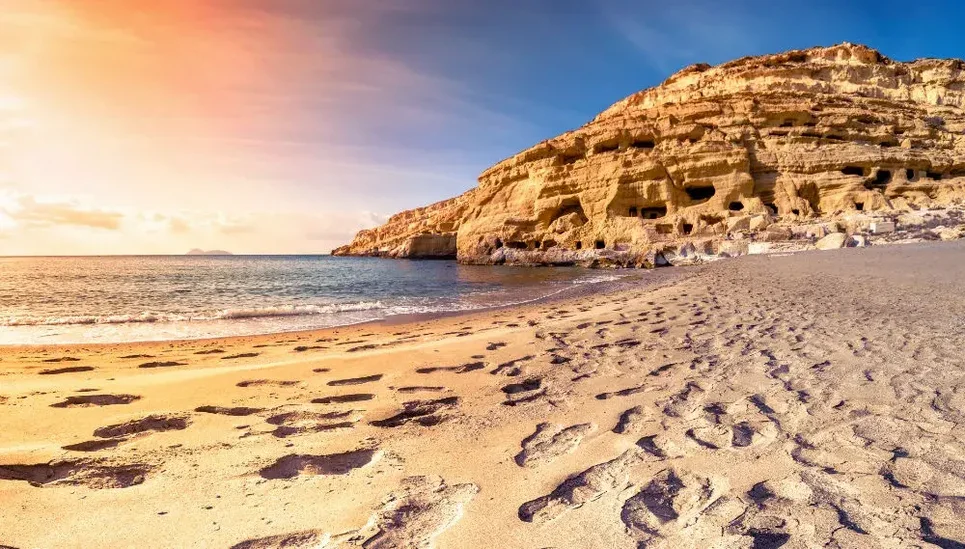
Matala Beach is not just a beach; it's a journey through time, where the echoes of ancient civilizations merge with the…
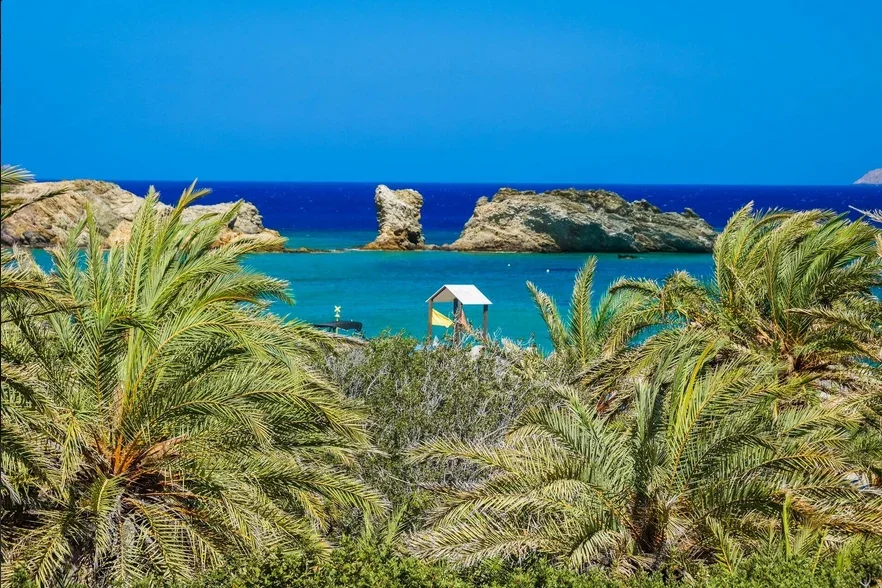
Exploring Vai Beach, Crete Nestled on the far eastern tip of Crete is Vai Beach, often referred to as the "Palm Forest."…
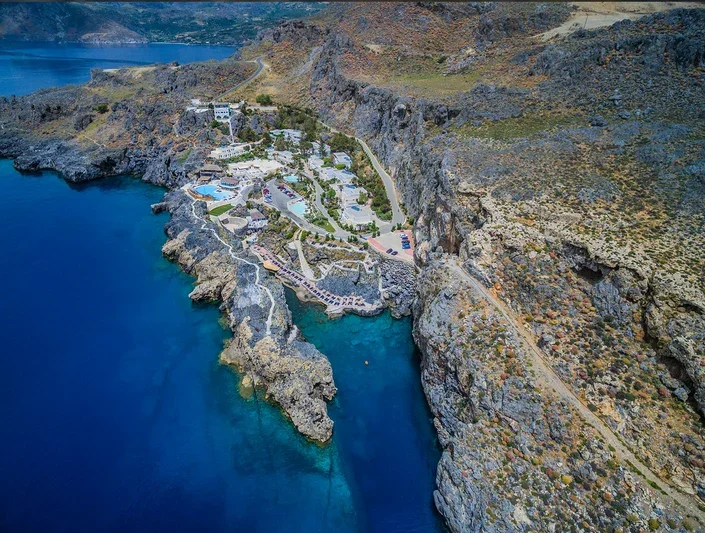
Escape to the Enchanting Cove Nestled on the southern shores of Rethymno in Crete lies Kalypso Beach, a stunning inlet also…
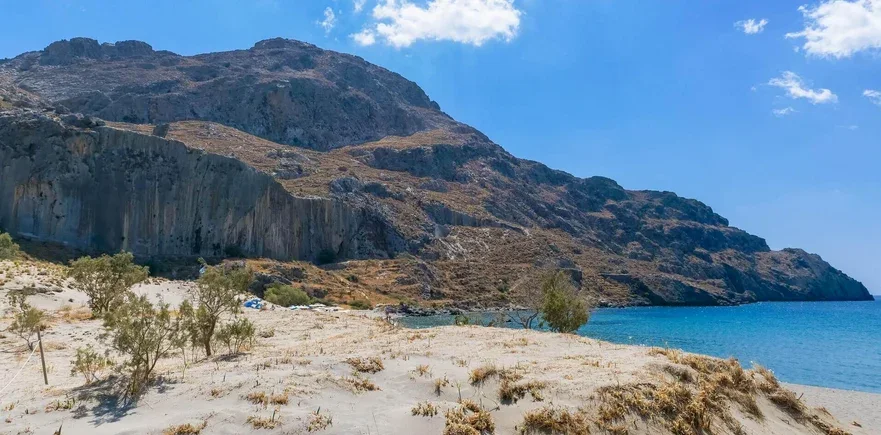
Nestled in the embrace of the southern coast of Crete lies a hidden gem that captures the essence of paradise – Plakias…
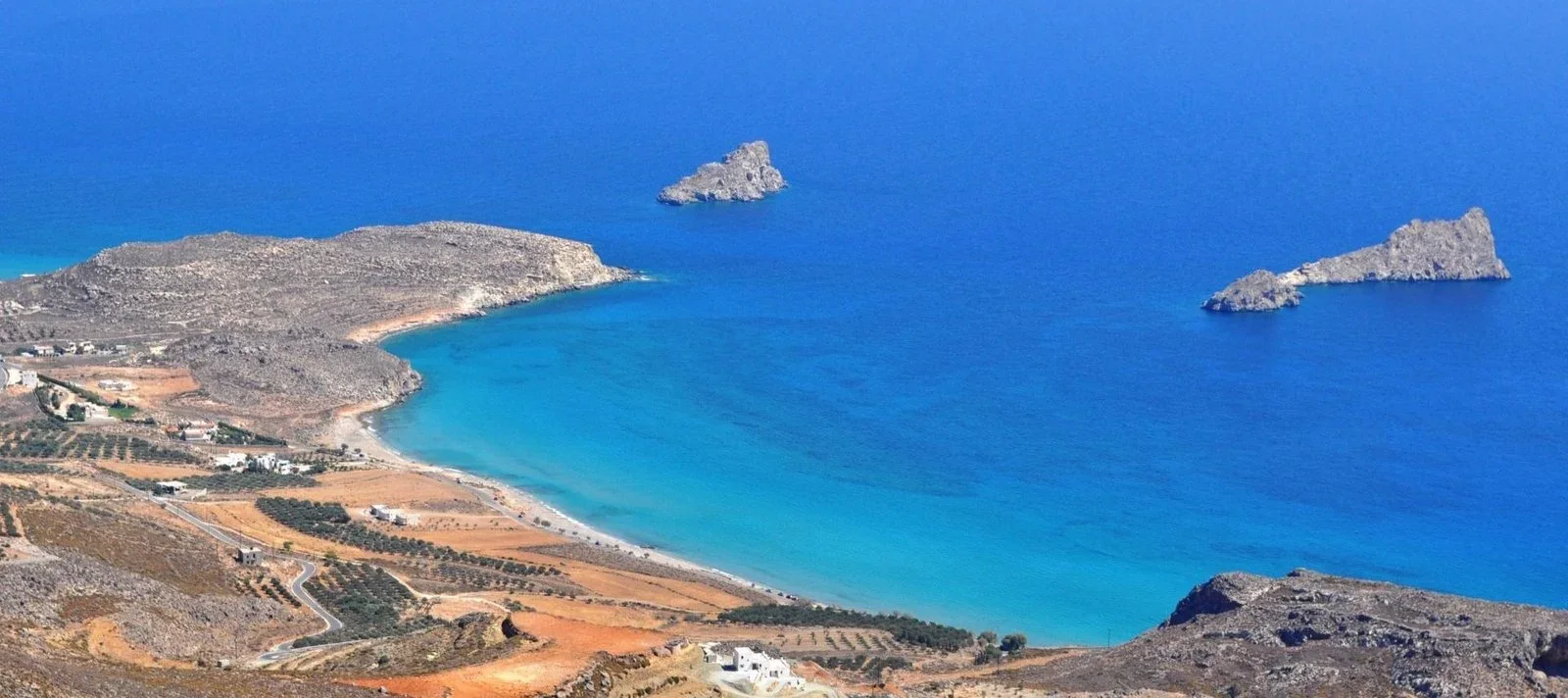
Nestled on the southeastern coast of Crete, the village of Xerokampos offers a serene escape from the bustling tourist hubs.…
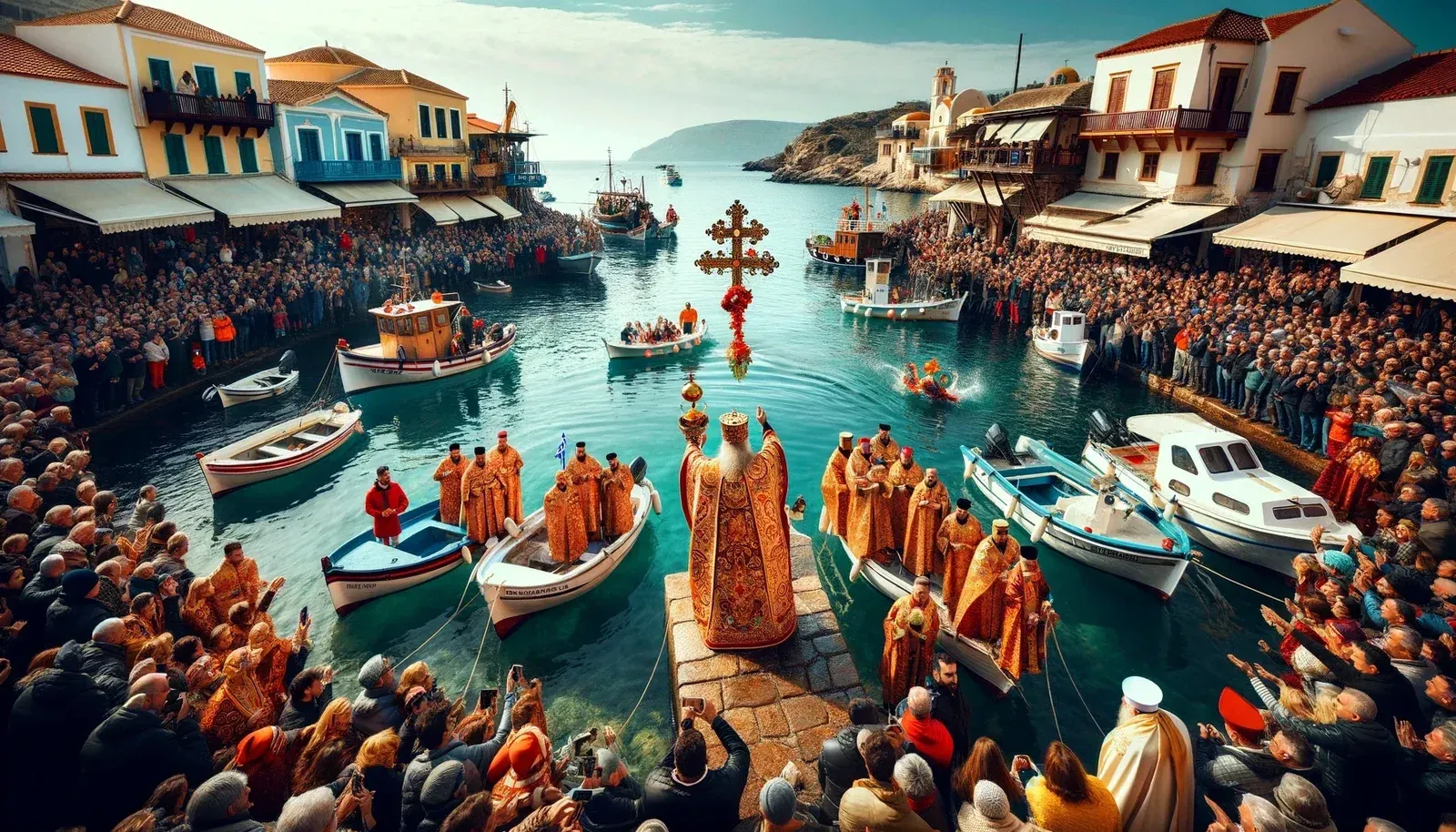
January 6th in Greece: A Blend of Sacred Revelations and Age-Old Traditions As the festive fervor of Christmas fades, Greece…

Introduction : As the New Year approaches, many Greek families worldwide prepare to uphold a cherished tradition - baking…
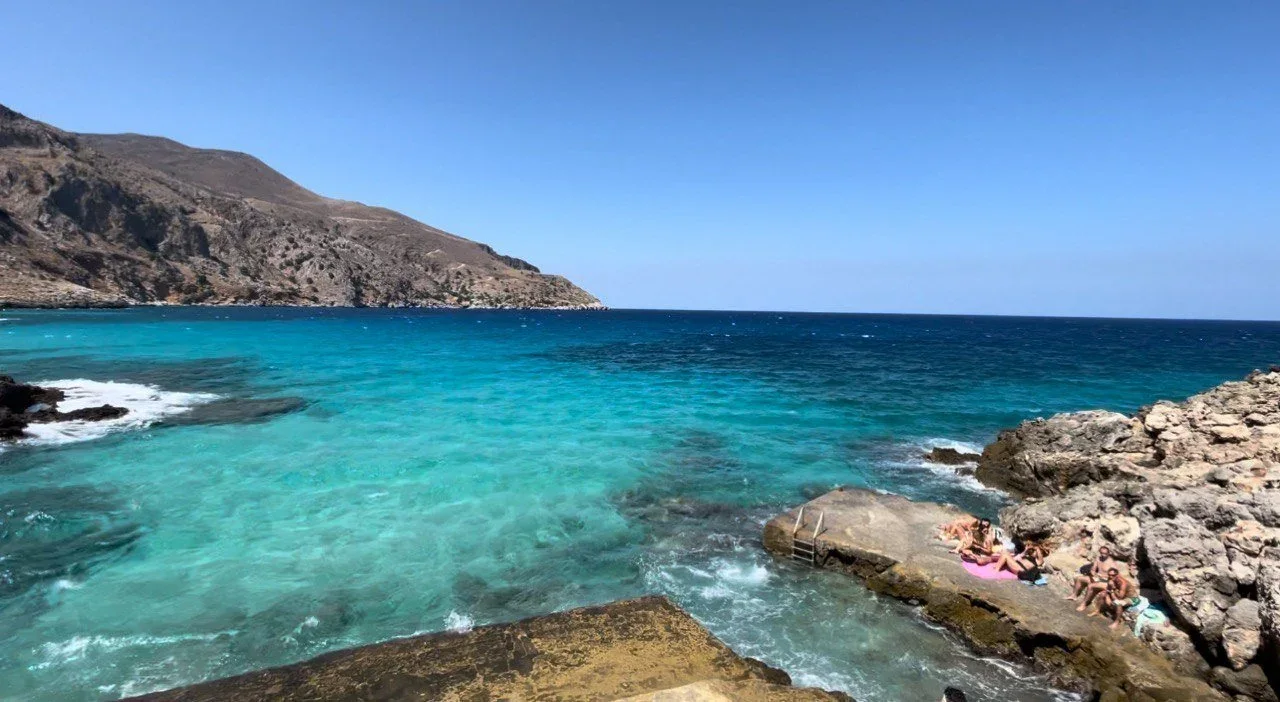
Ombros Gialos, alternatively spelled Omprosgialos, is a picturesque and tranquil beach located 26 kilometers east of Chania…
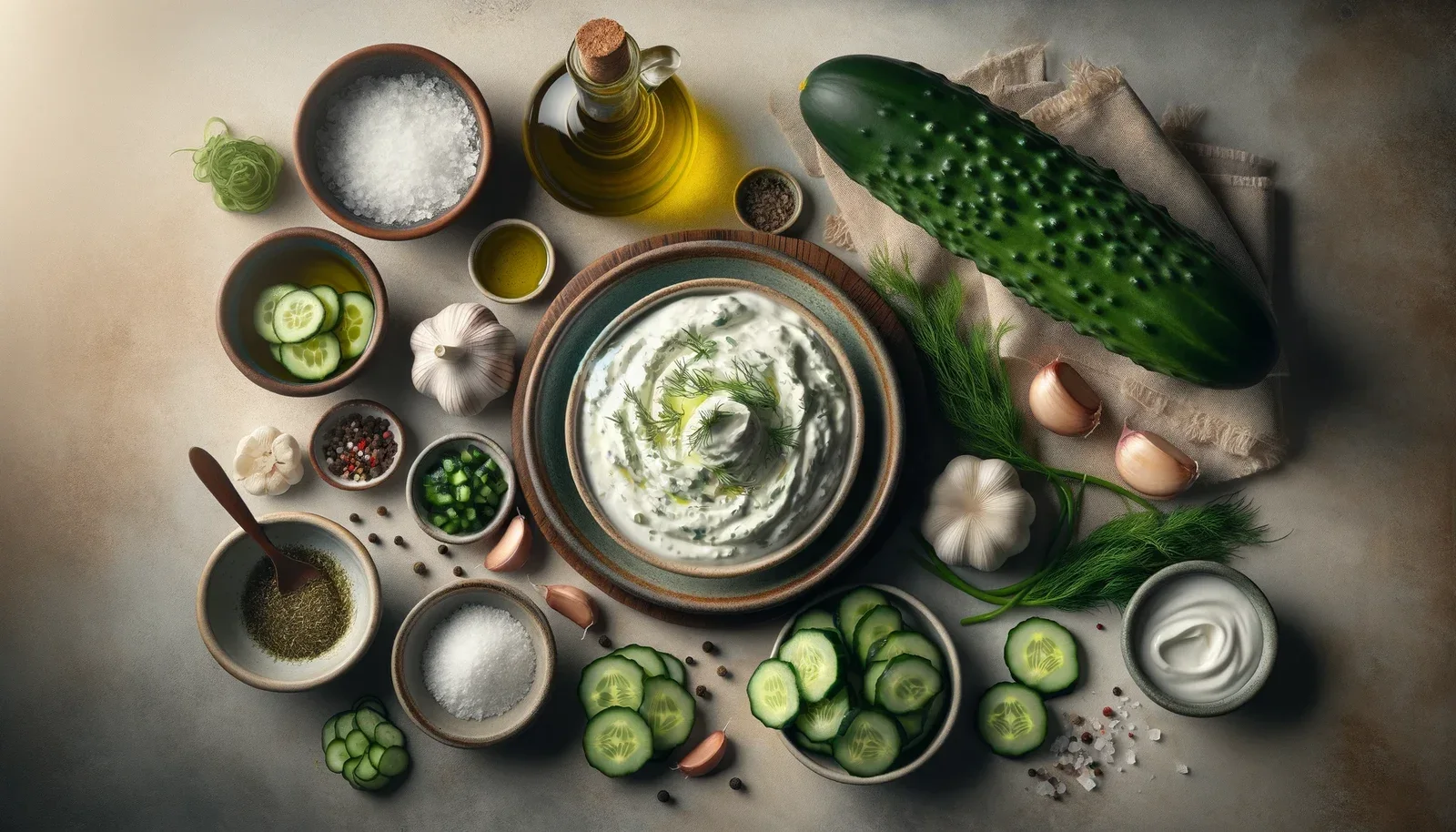
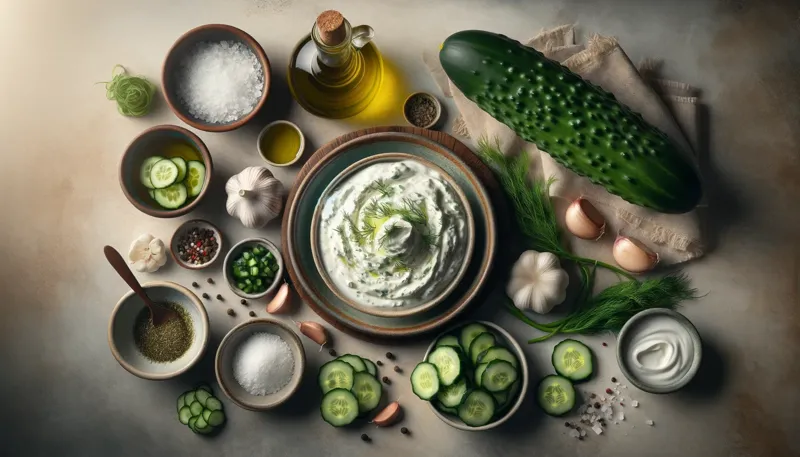
Hello, food enthusiasts! Today, we bring a slice of Greek culinary heaven to your kitchen with our traditional tzatziki…
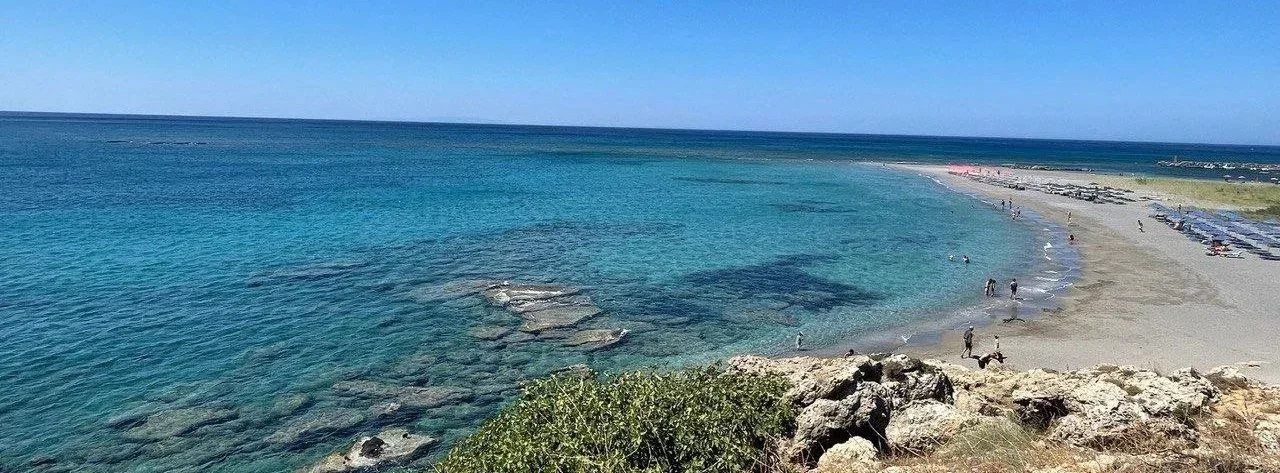
Fragokastelo, known as the castle of the Franks, stands out as one of the most renowned beaches in West Crete. This fame is…
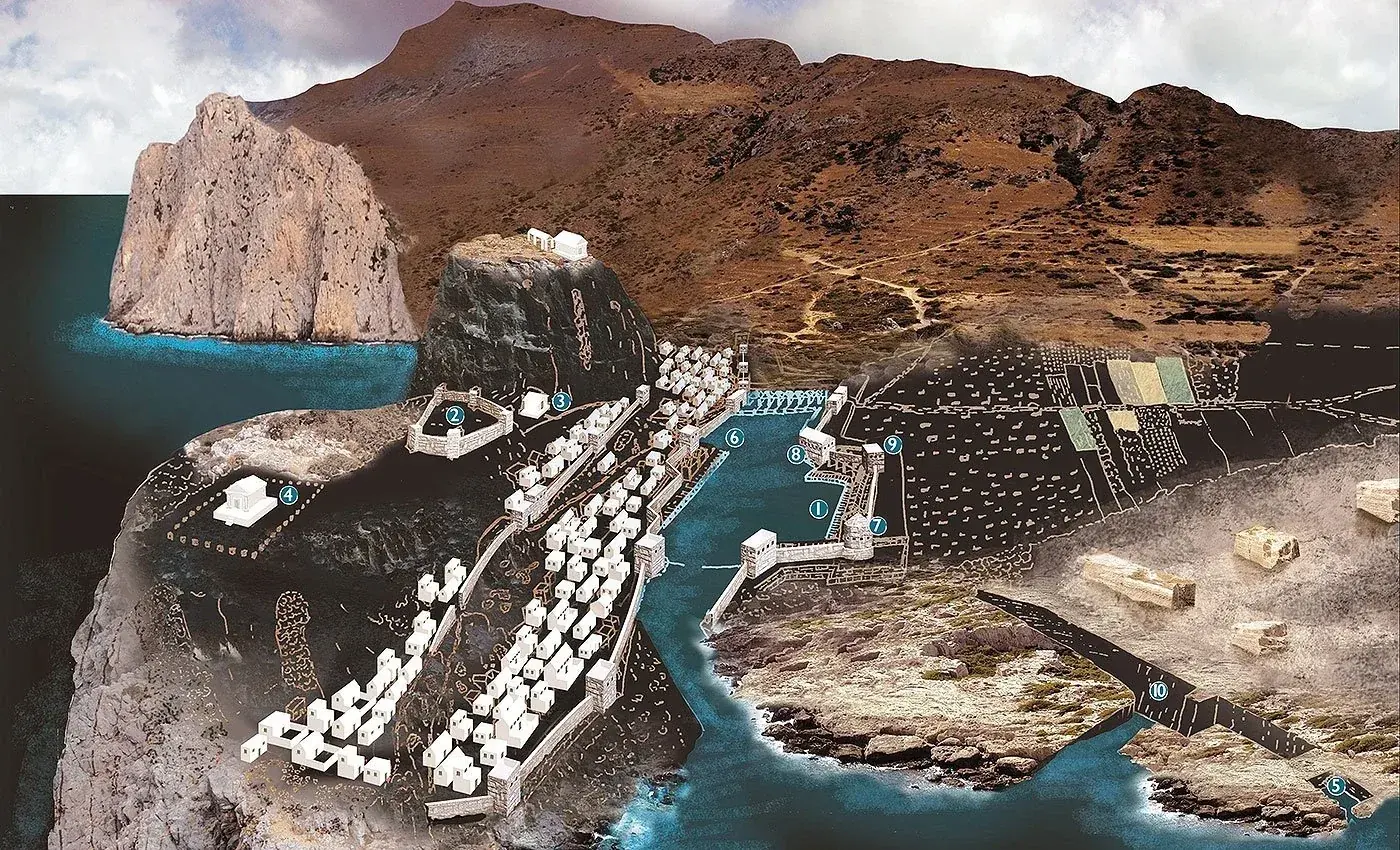
Falasarna was an ancient Greek city-state located at the western end of Crete.The area was inhabited from the Middle Minoan…
Stavros Beach, also known as Zorba's Beach, is a beautiful beach located in the northern region of Chania, Crete, Greece…
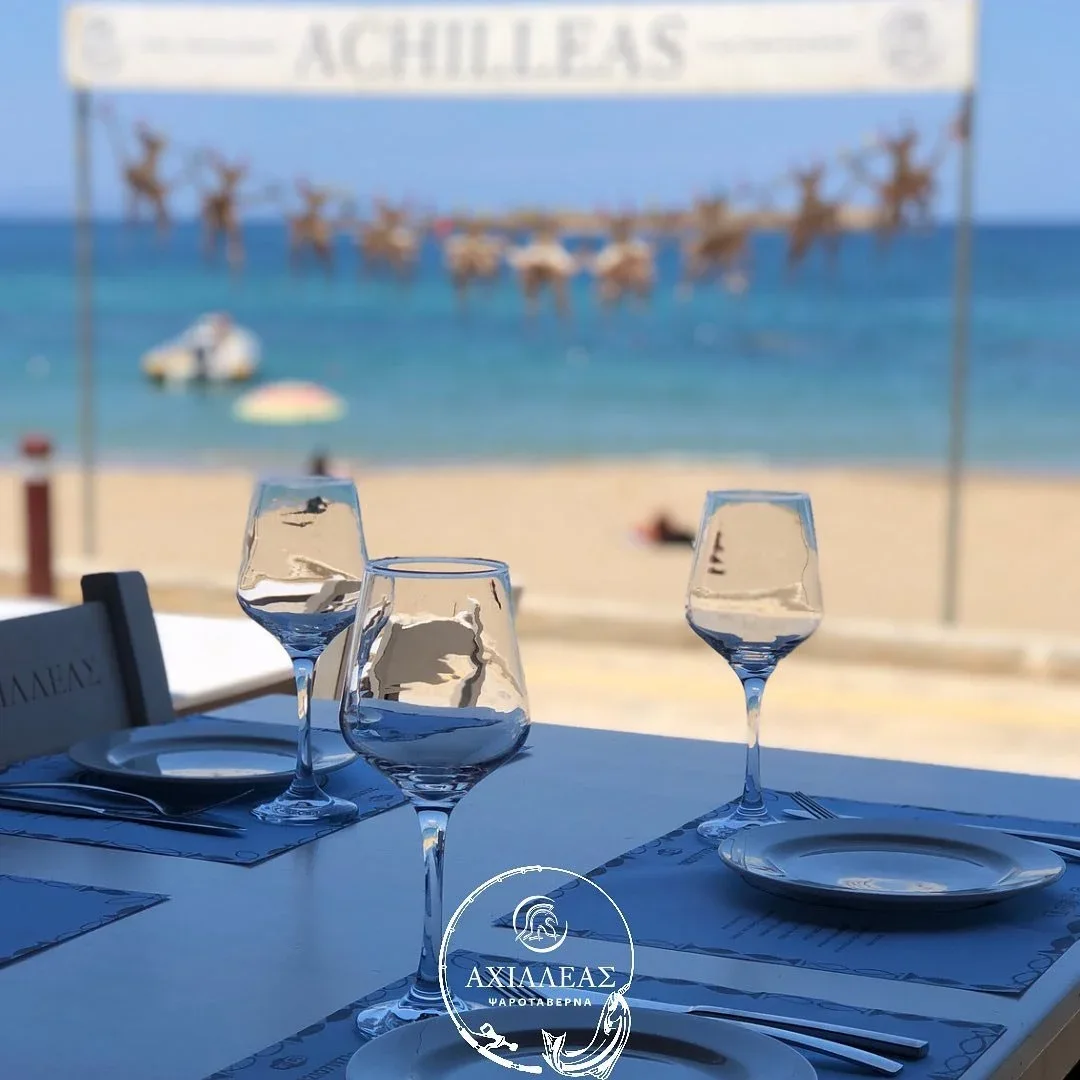
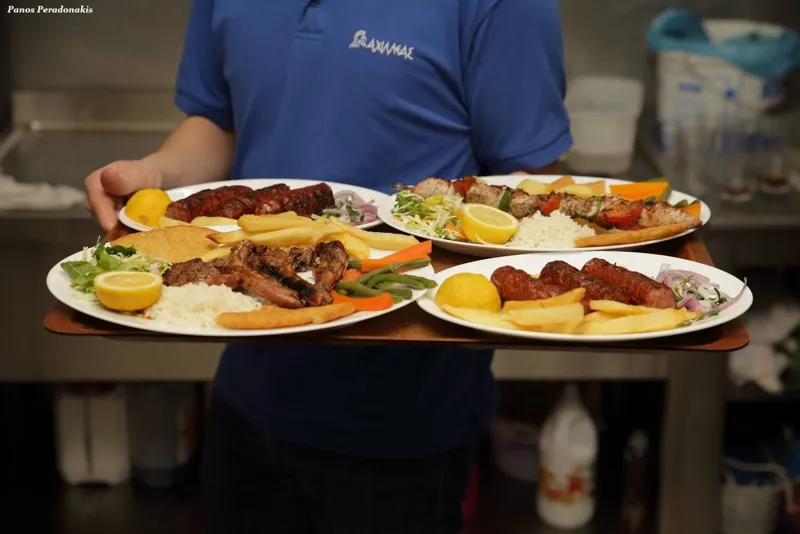
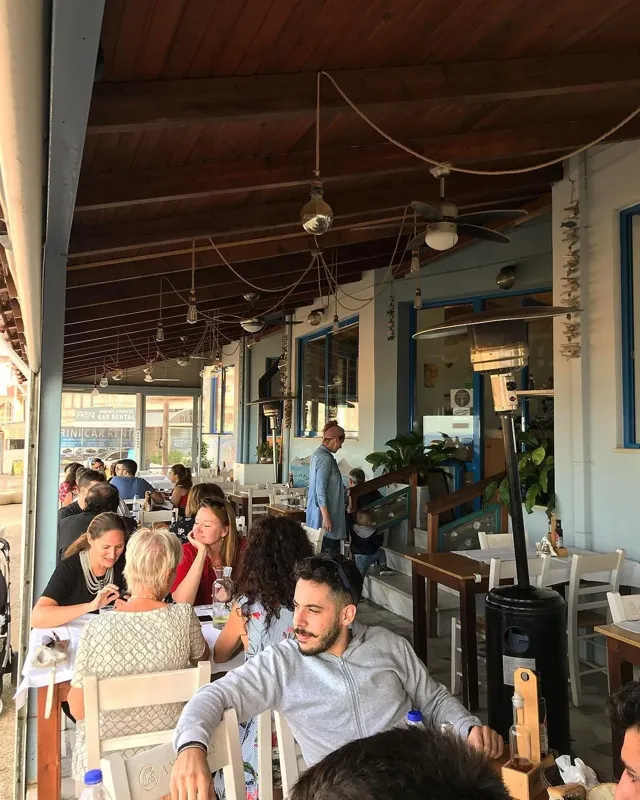
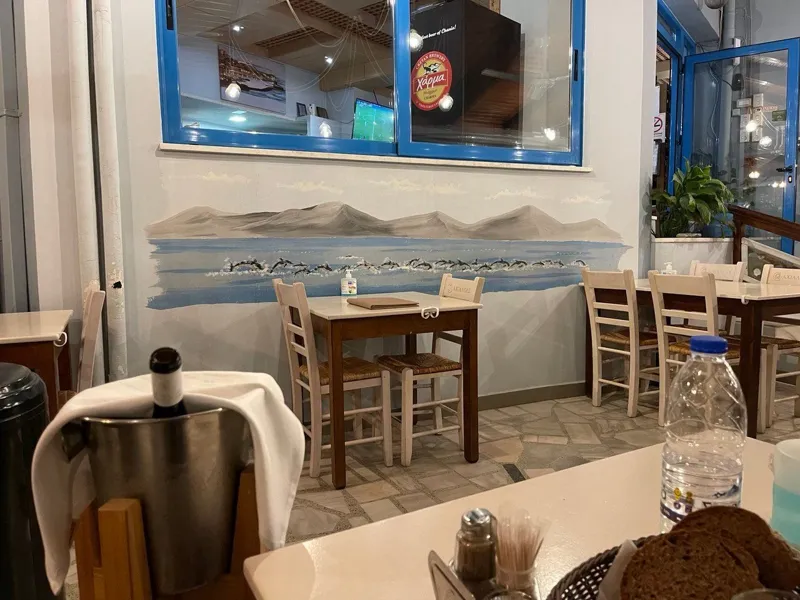
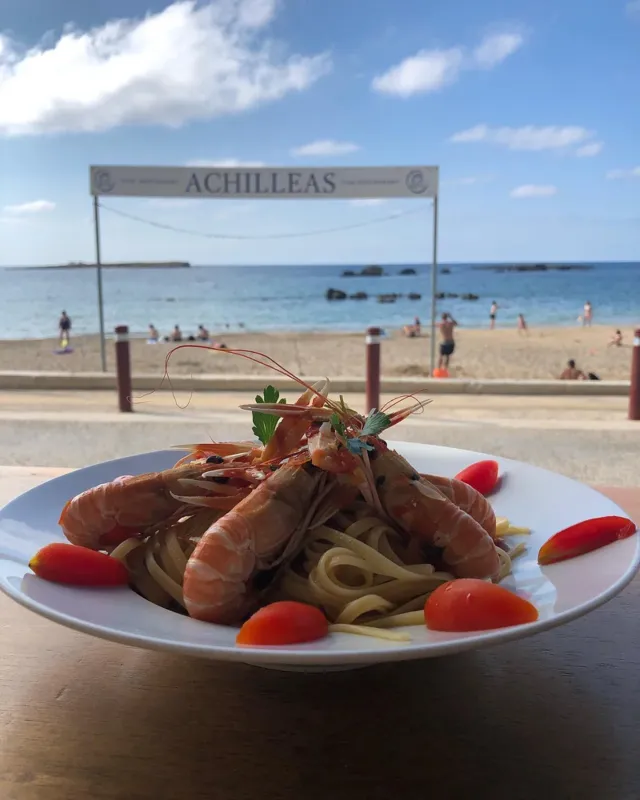
Located in Nea Chora Beach of Chania Town, Achilleas is a family-owned restaurant that offers an authentic taste of Cretan…
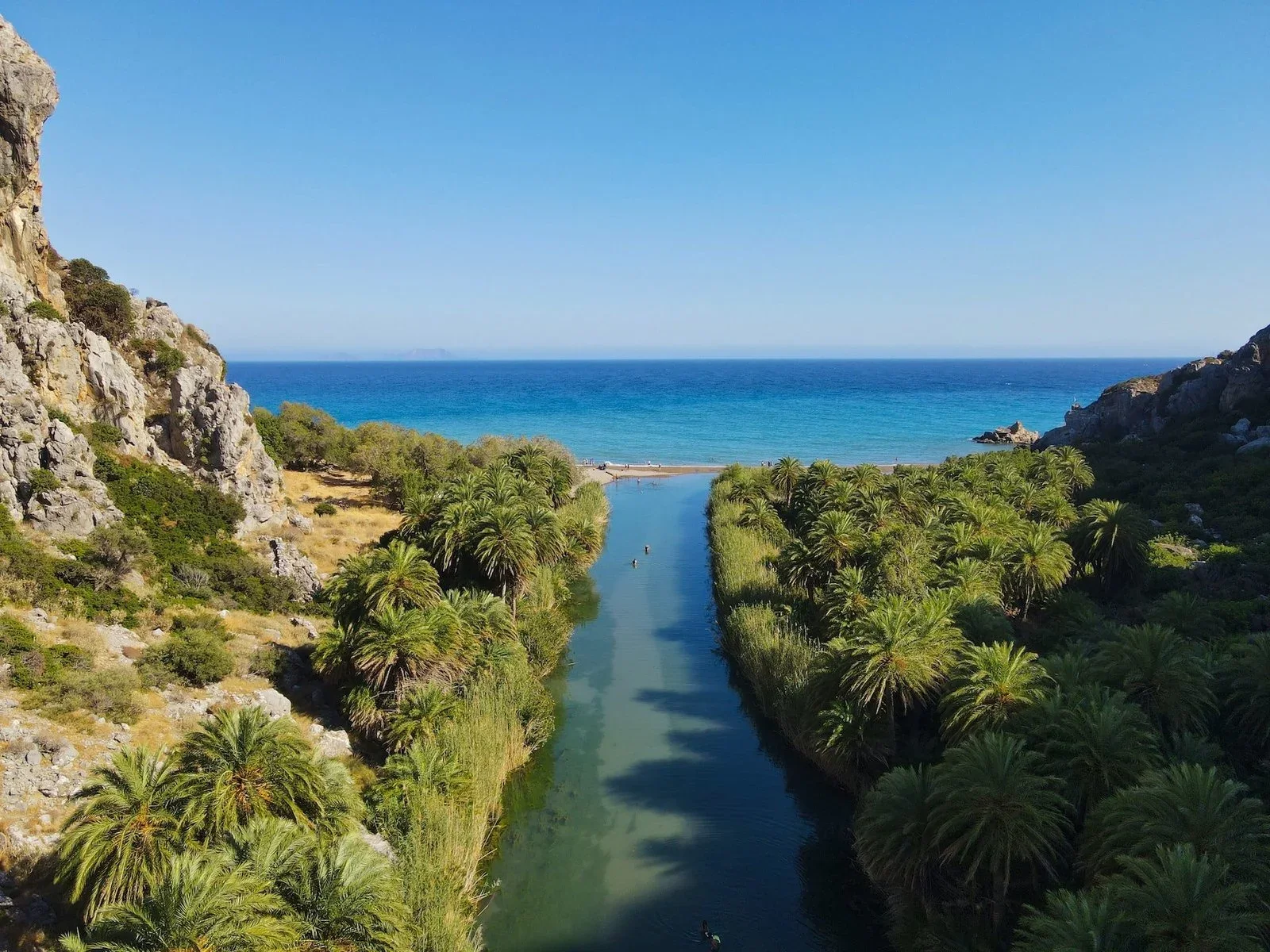
Located in the south coast of Crete Island, Preveli Beach is a one-of-a-kind destination, situated approximately 100 km from…
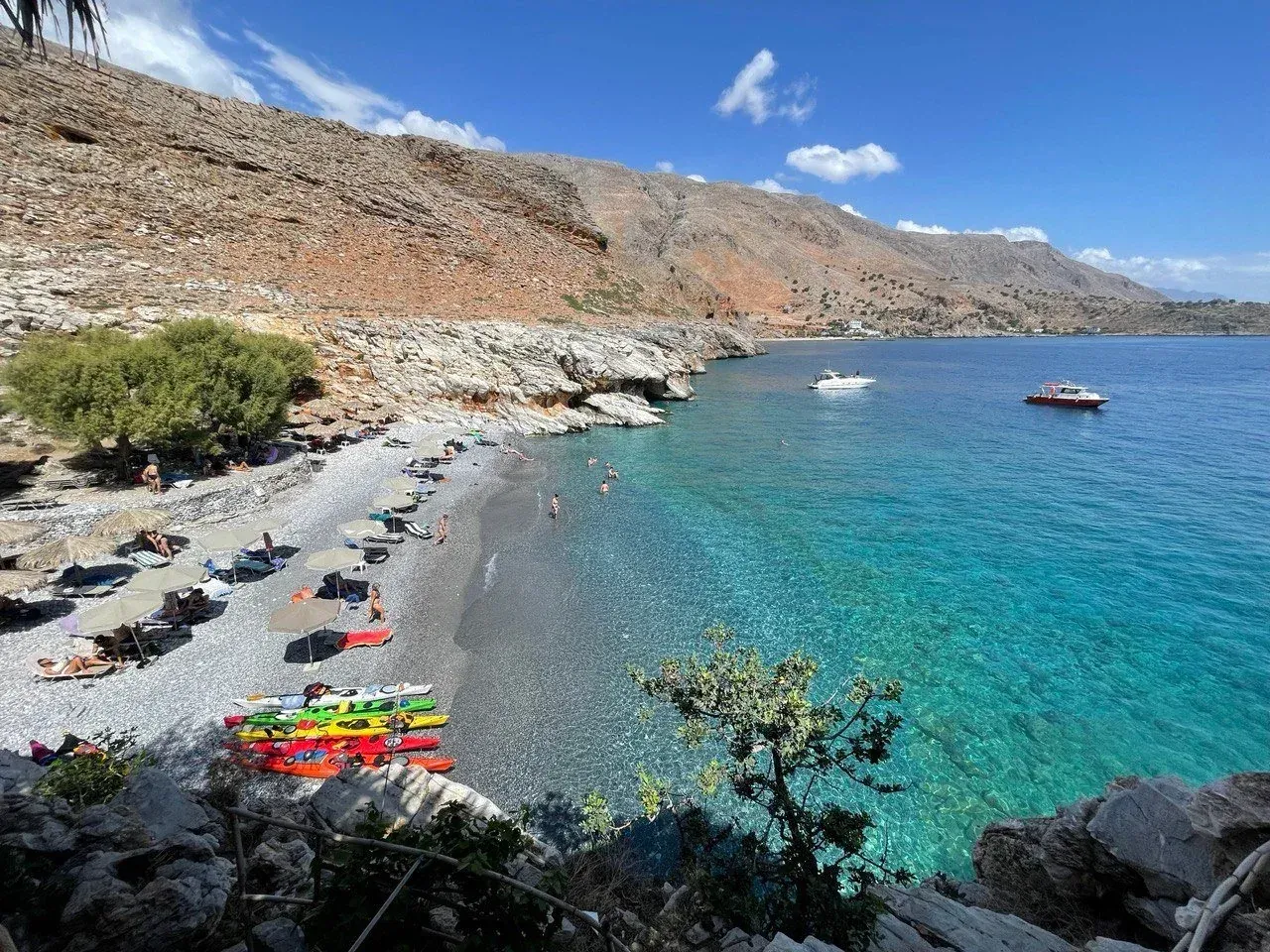
Marmara Beach, is a beautiful and secluded small pebbly bay located in the Sfakia region of southern Crete, Greece. The…
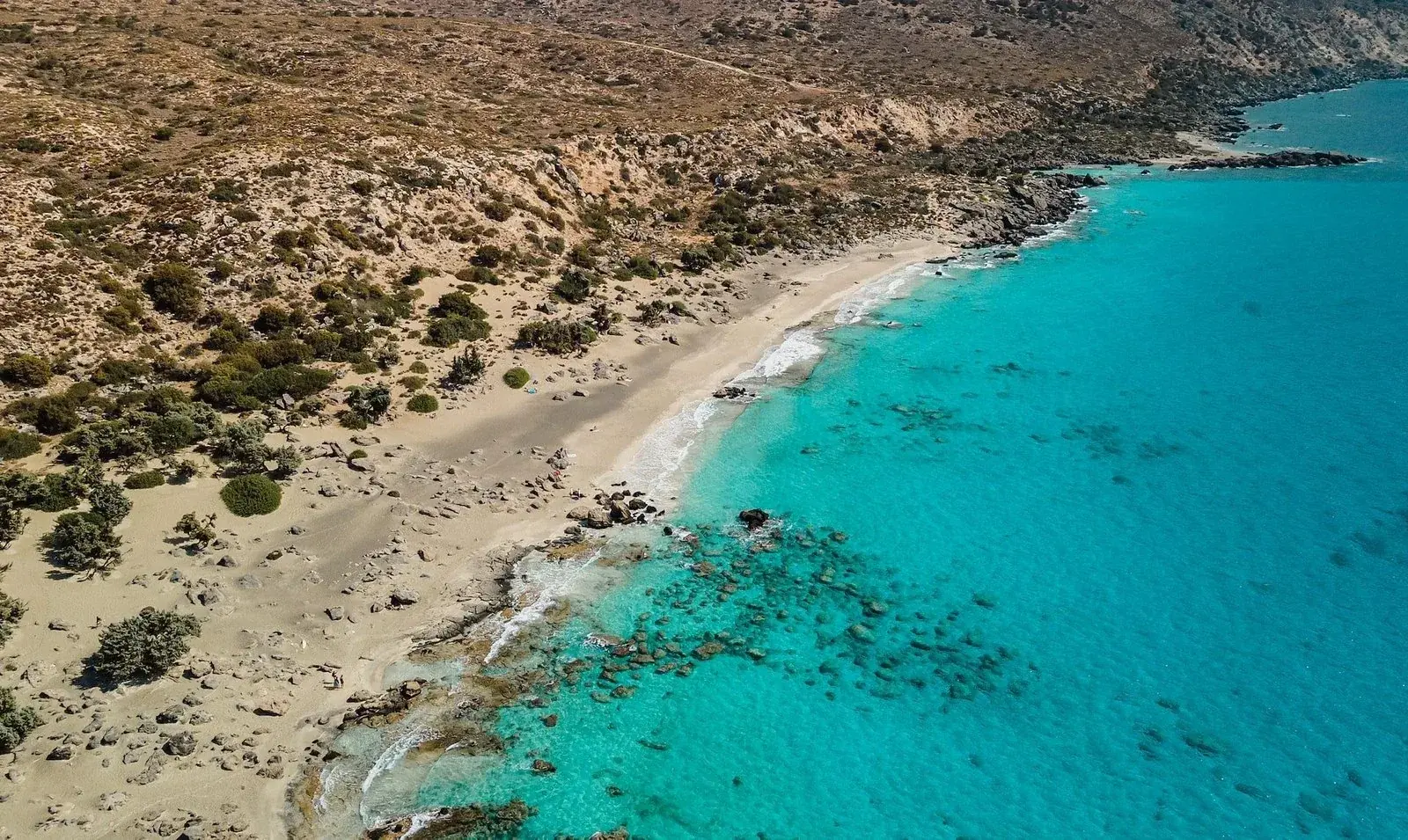
Kedrodasos Beach is a secluded and unspoiled beach located on the southwestern coast of Crete, Greece, approximately 76 km…
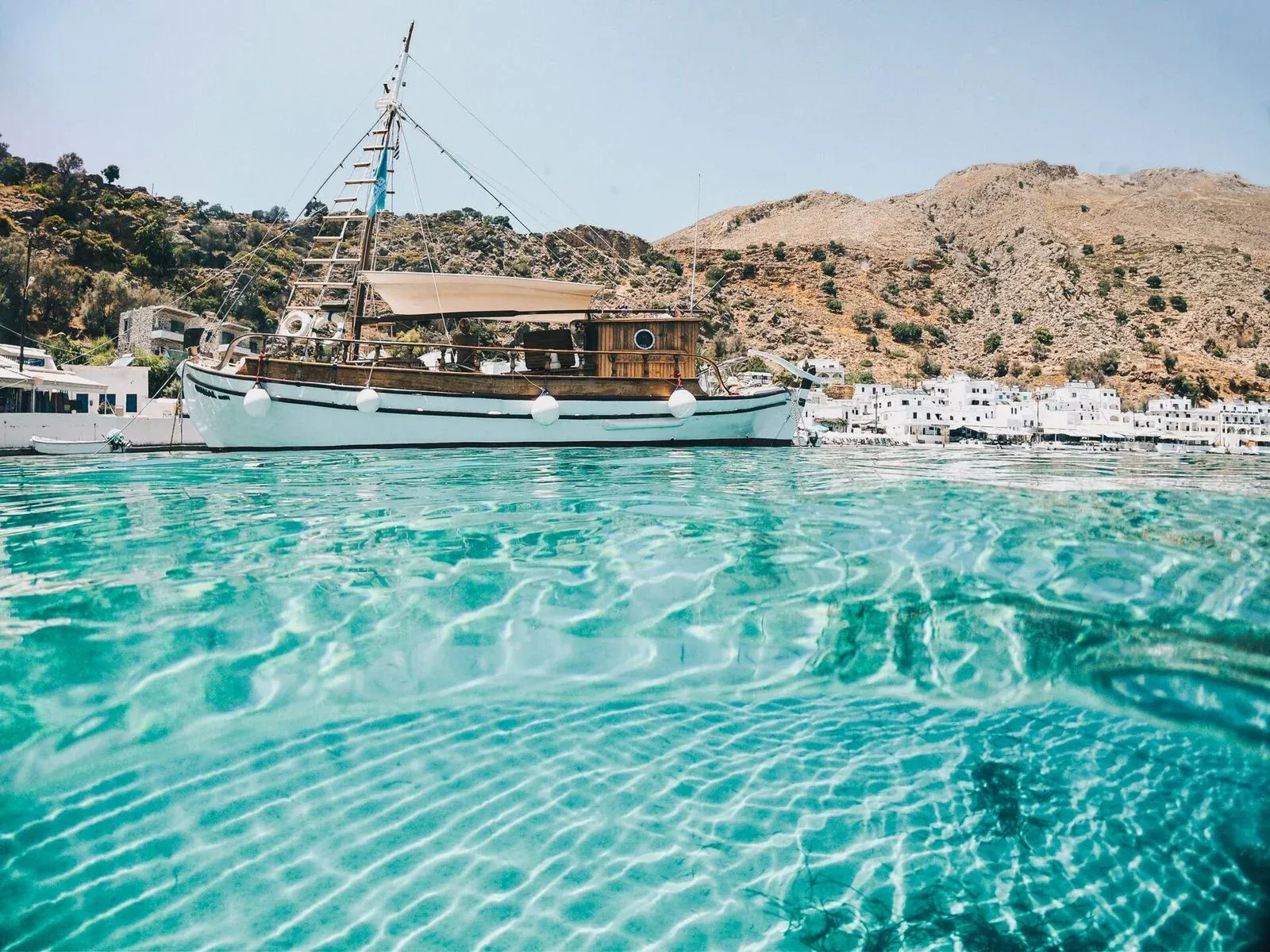
Loutro: A Hidden Gem in Sfakia, Crete, Greece with a Rich History Loutro, a small village located in the region of Sfakia on…
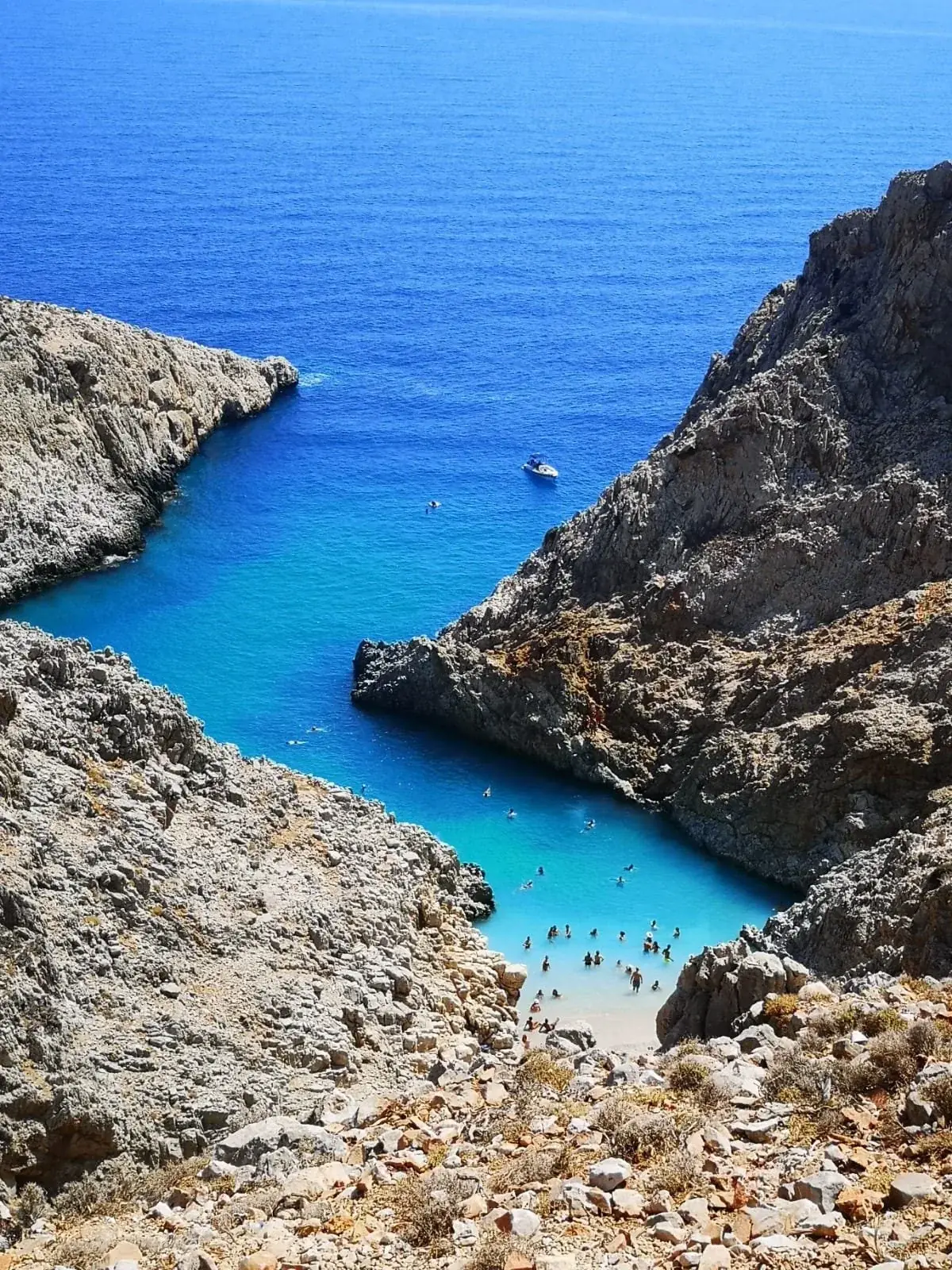
Seitan Limania, also known as "Satan's Harbor," is located about 20 kilometers northeast of Chania city and can be reached…
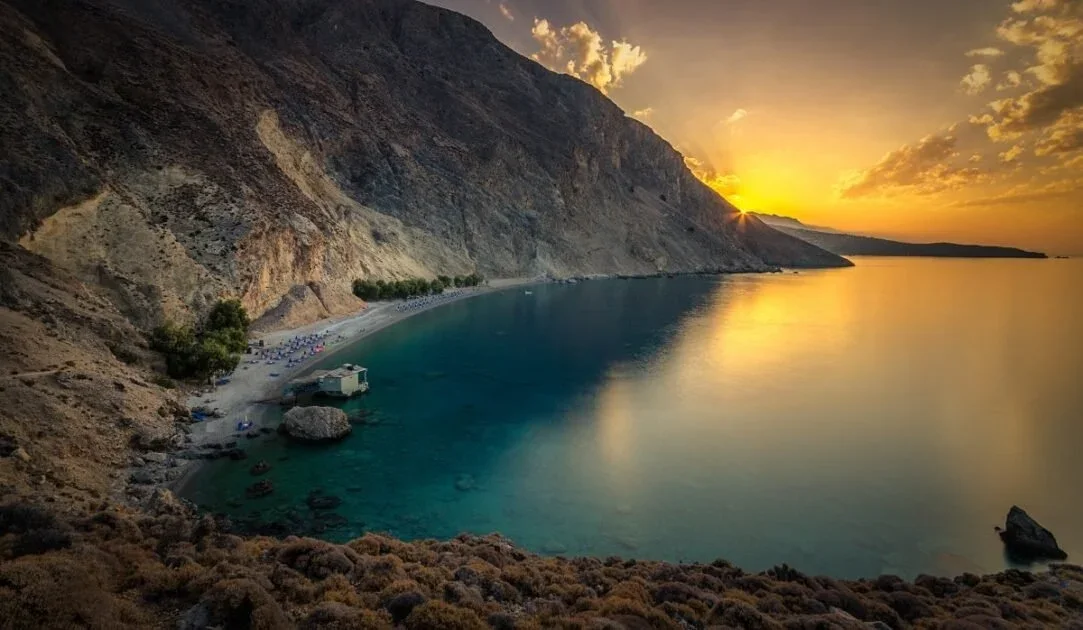
Glyka Nera beach, meaning sweet waters in Greek, is a stunning beach located in southern Crete, surrounded by the deep-blue…
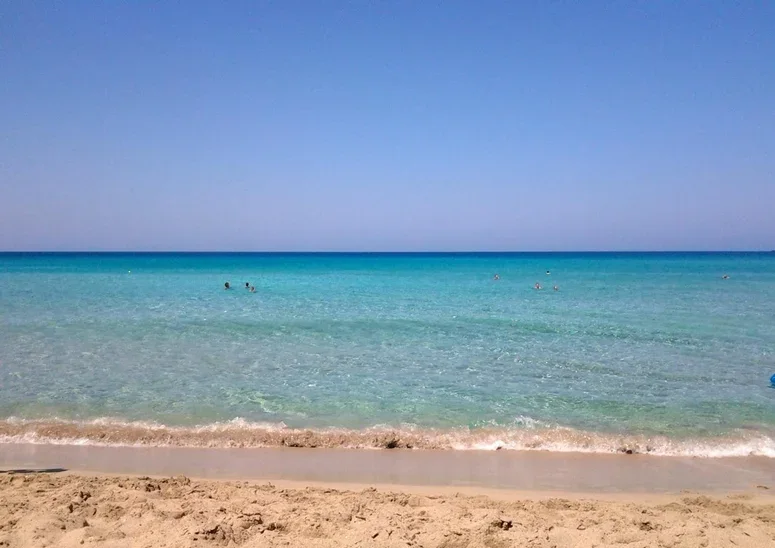
Falasarna Beach: A Treasure of Chania, Crete Falasarna Beach, located on the western coast of the island of Crete, is a…
Balos Beach is a natural paradise located on the northwest coast of Crete, in the regional unit of Chania. About 17…
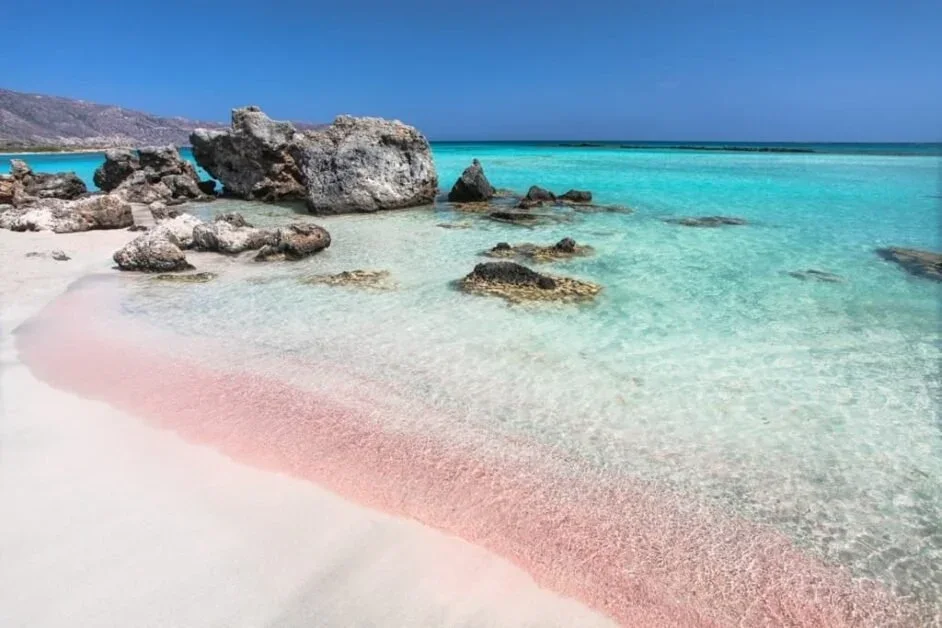
Elafonissi Beach is a true gem on the island of Crete, boasting some of the most stunning natural scenery in all of Greece.…
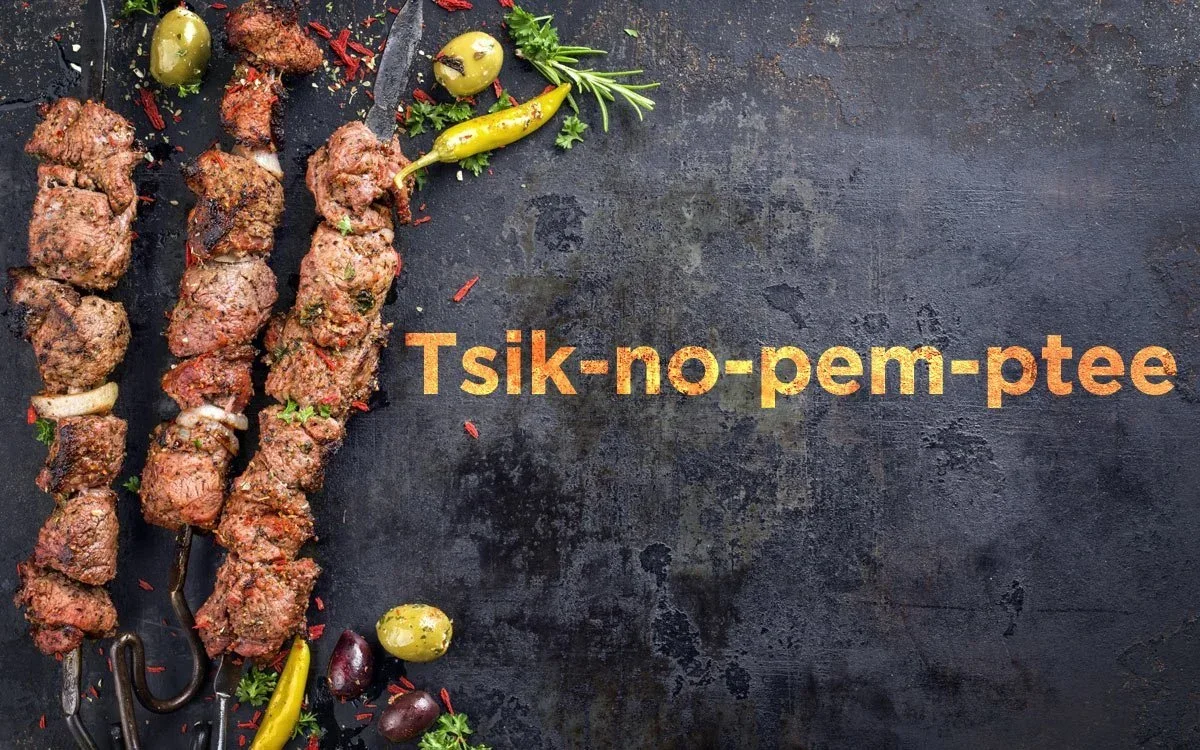
Tsiknopempti is the Thursday during Carnival. It takes place 11 days before the start of Greek Orthodox Lent that starts…
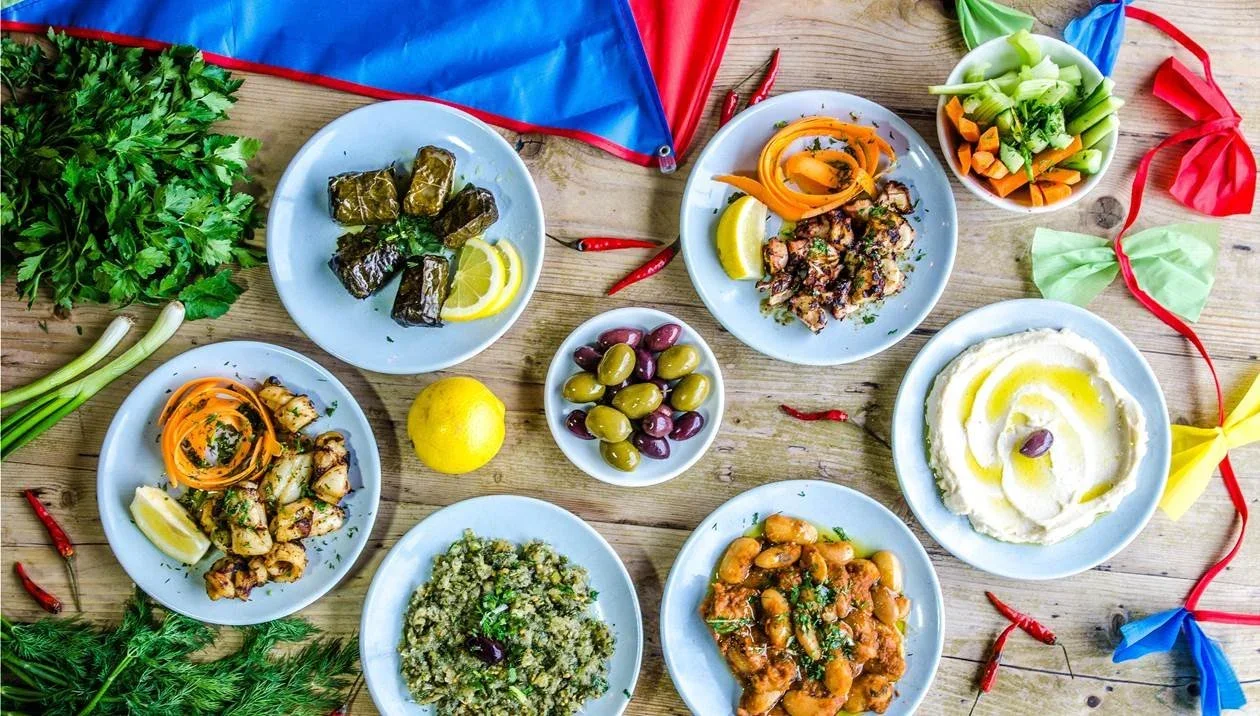
The name might sound weird but really, it is not that Greeks clean up their residences on this special celebration . If you…
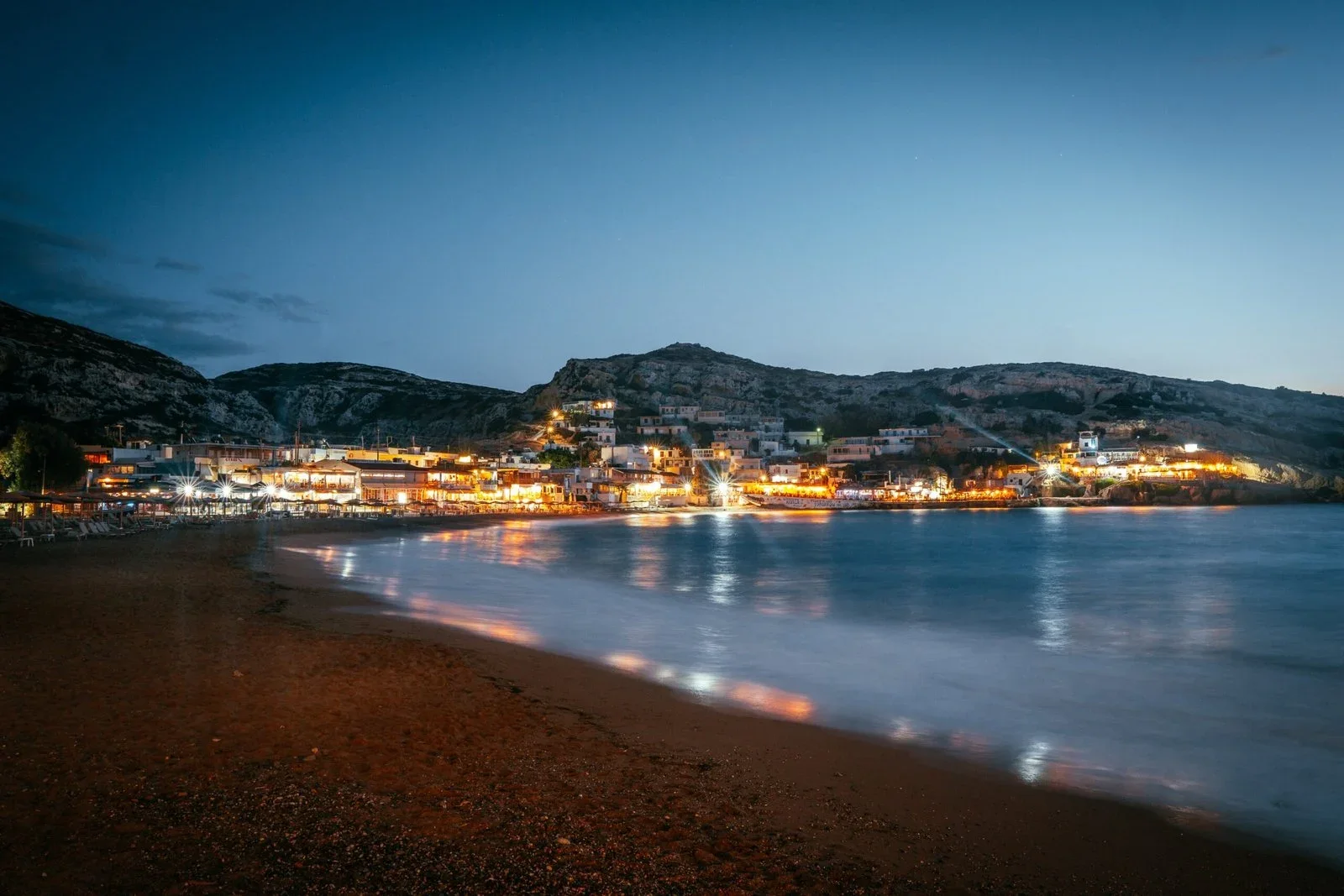
Located οn the southern side of the Aegean Sea, Crete, in Greece, is the biggest of all Greek islands. Its beauty, though…
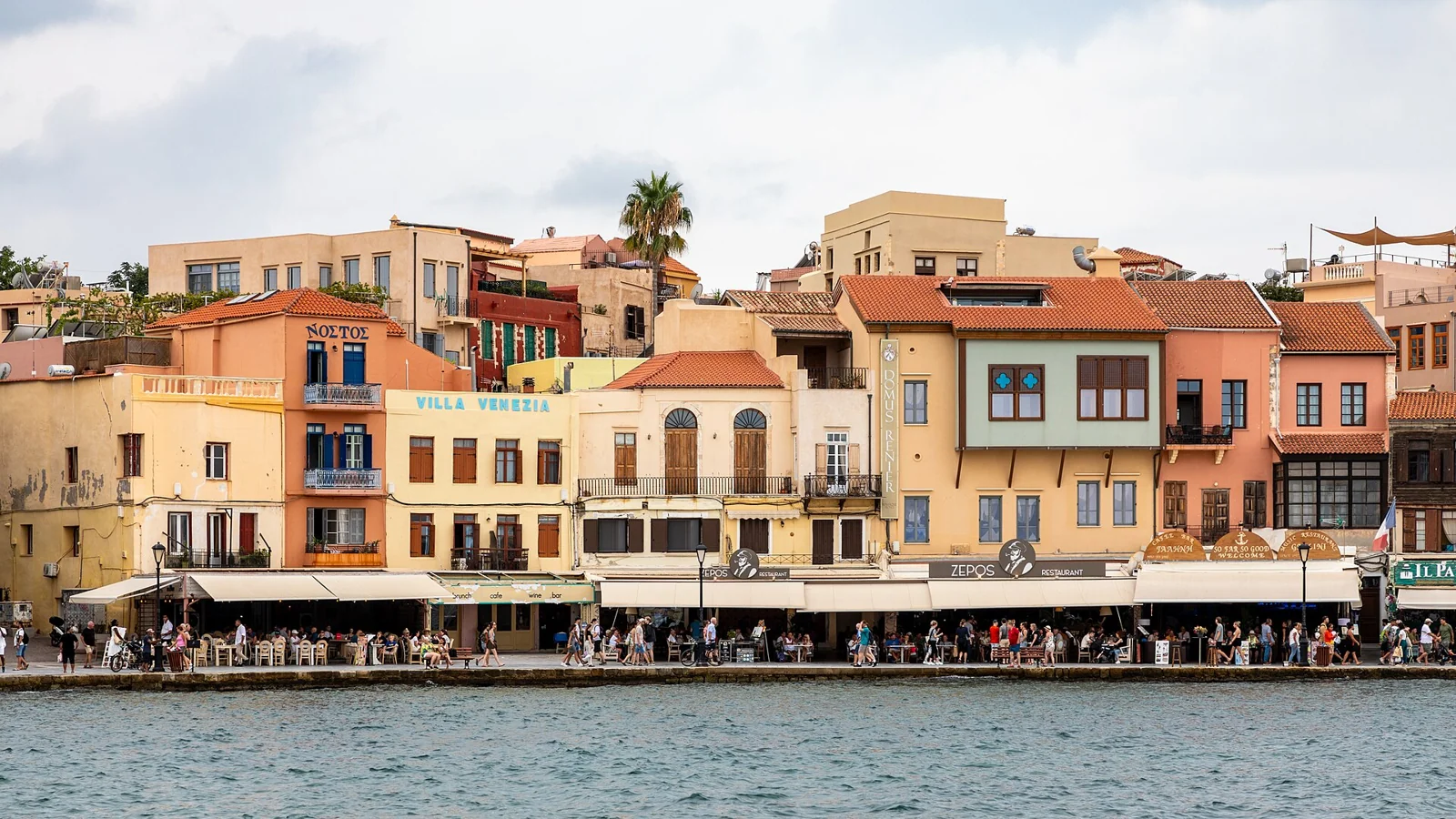
Crete island is the largest of all Greek islands and the fifth-largest island in the Mediterranean Sea. With a rich…
Situated near the two major archeological sites of Crete, Knossos Palace and Phaistos Palace, Heraklion is the perfect base…
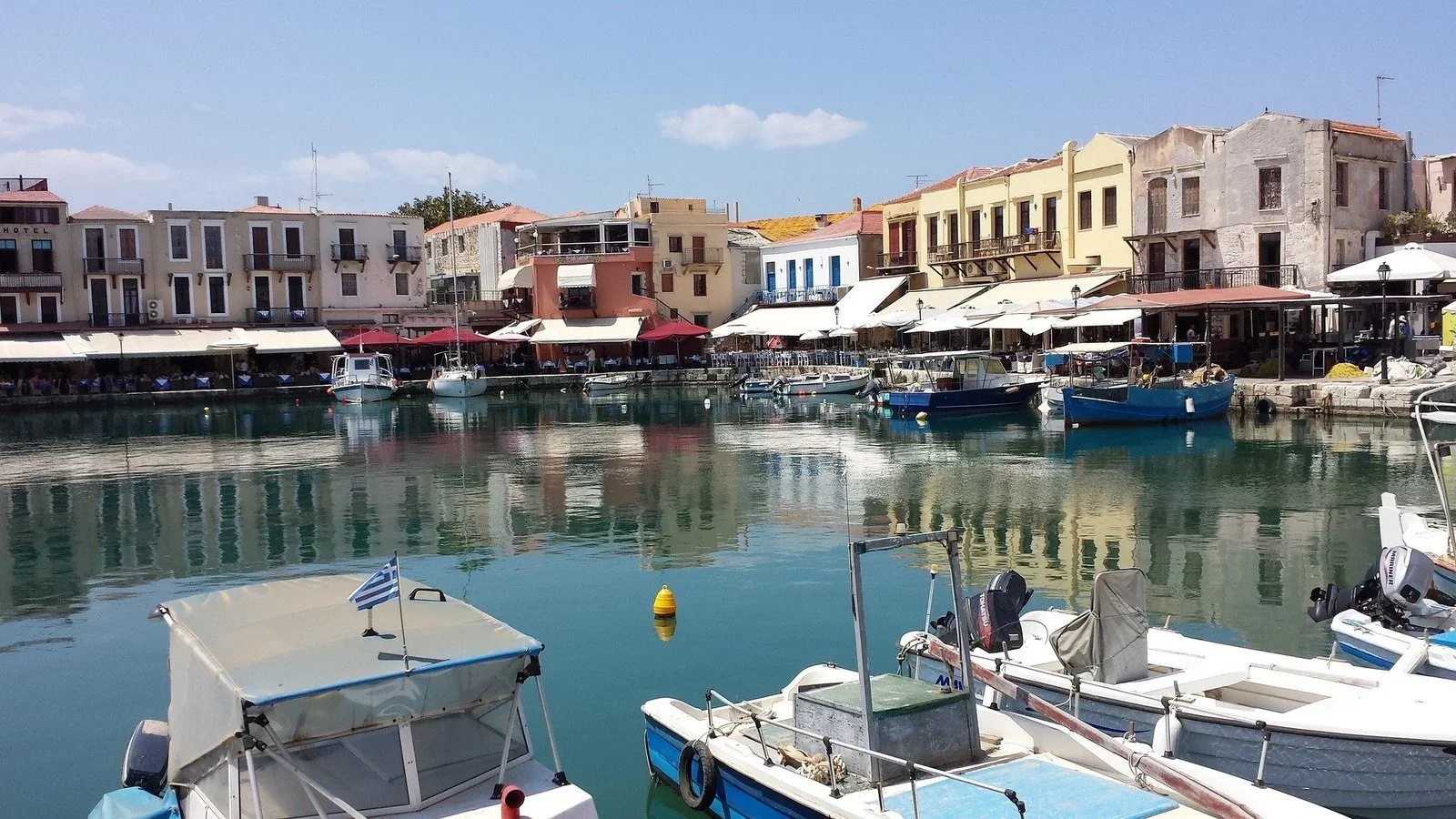
Full of beautiful beaches, archaeological sites, Byzantine churches, quaint villages and cosmopolitan resorts, Rethymno is…
As one of the least touristy regions to visit in Crete, Lassithi combines it all: from picturesque villages, to exotic…
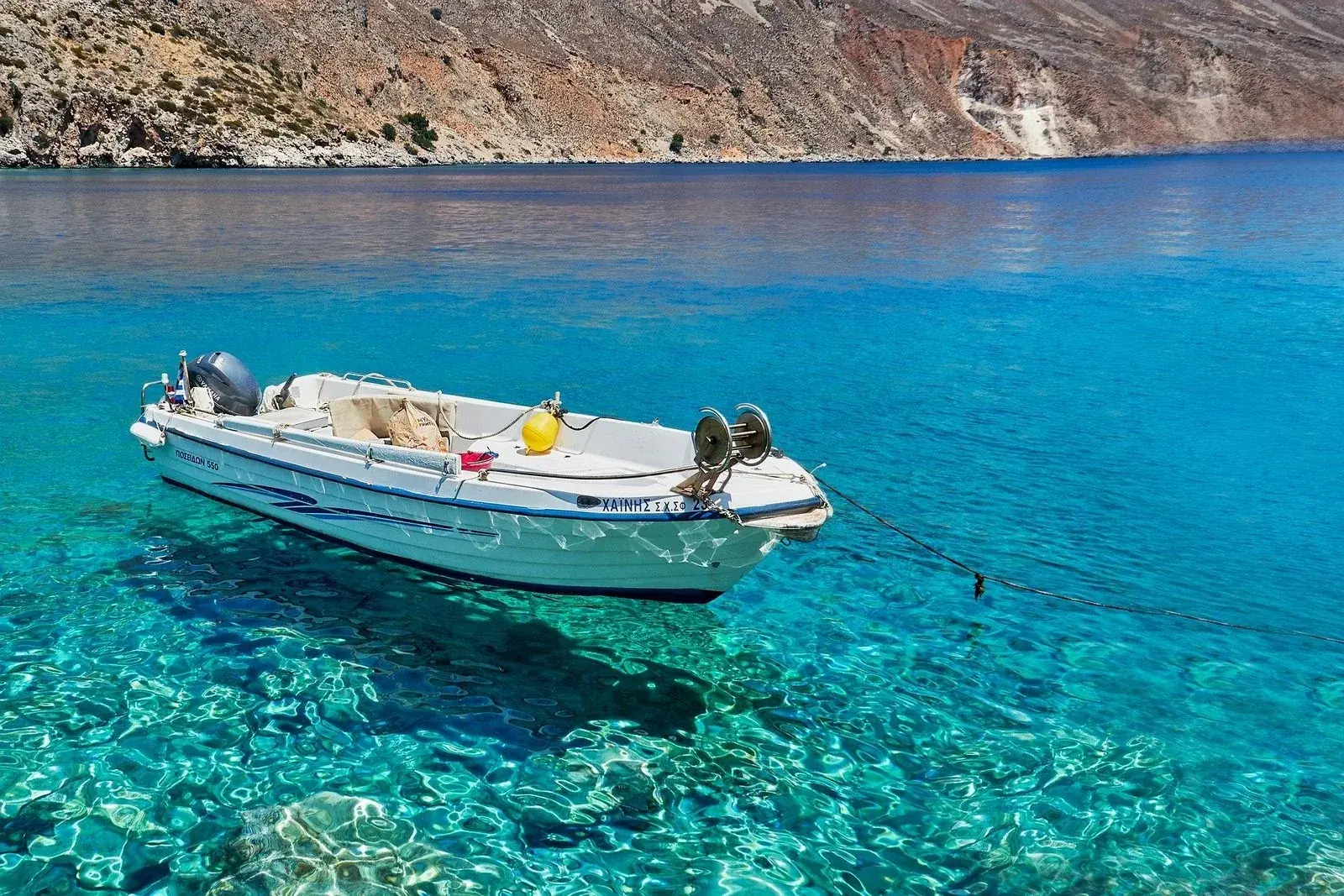
Sfakia Chania : The unspoilt and historical village of Sfakia is built on the hill slopes, overlooking the natural bay. It…
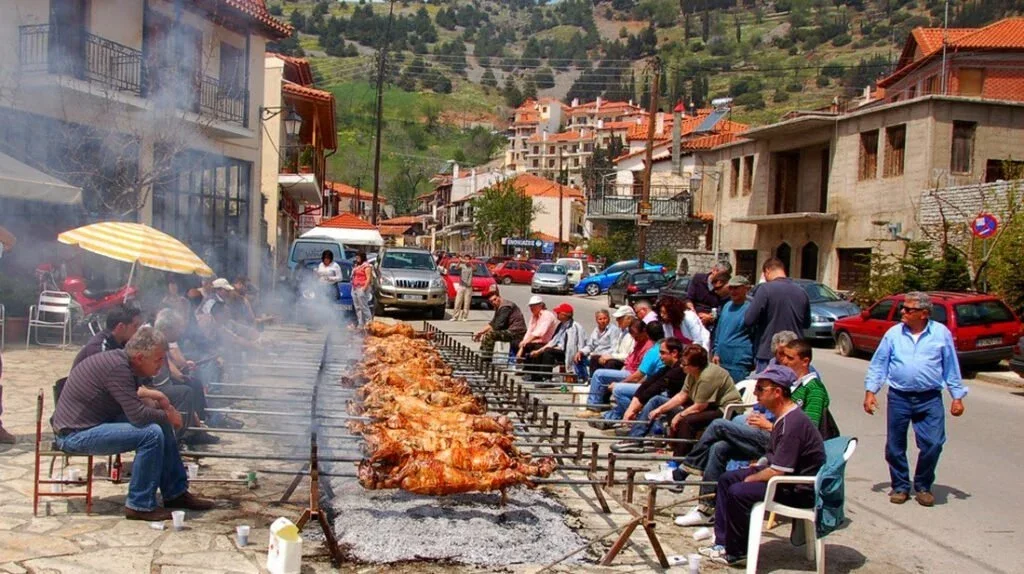
The Orthodox Easter is the most significant holiday in Greece, even more so than Christmas! It is the biggest…
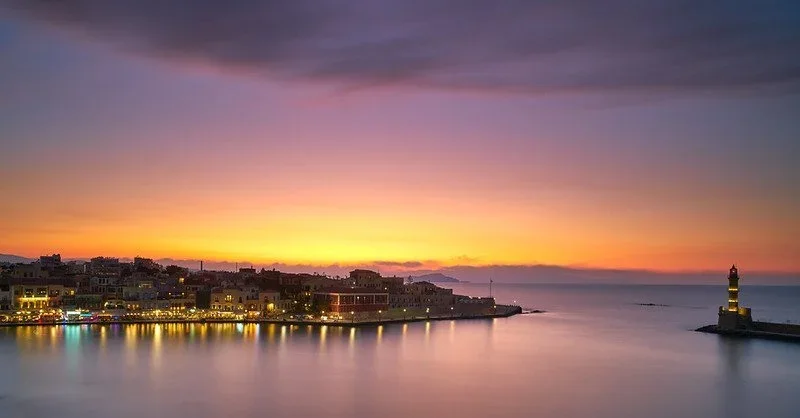
Chania town is vivid with a strong pulse. Sitting down at a café et the old harbor, you can take in all the noises, smells…
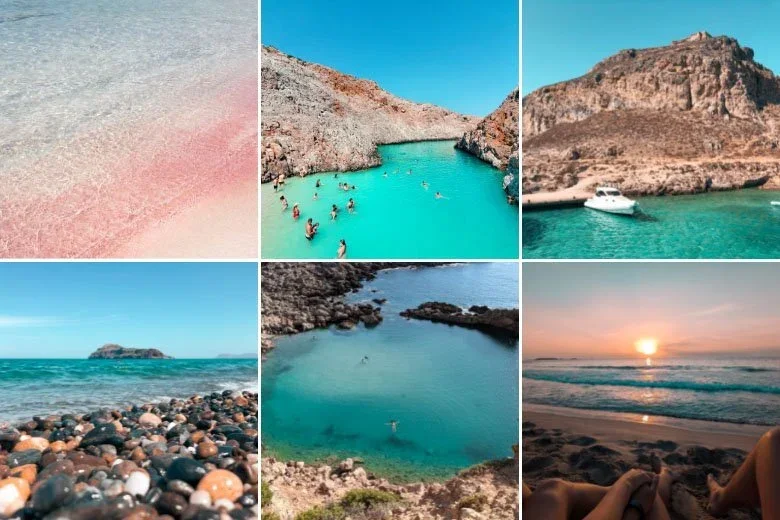
Balos Beach: Known for its turquoise waters and breathtaking surroundings, Balos Beach is a must-visit for those who want to…
Finding a place to have lunch or dinner in Chania is easy. Taverns and restaurants are everywhere: in the labyrinths of…
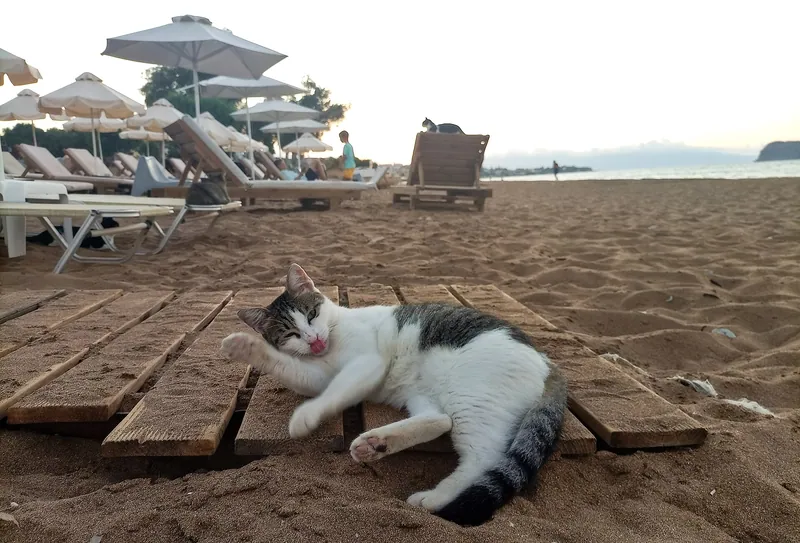
Stalos beach, 7 km west of Chania between Kalamaki and Agia Marina: shallow sandy water, Blue Flag, full facilities and Pano Stalos village above.
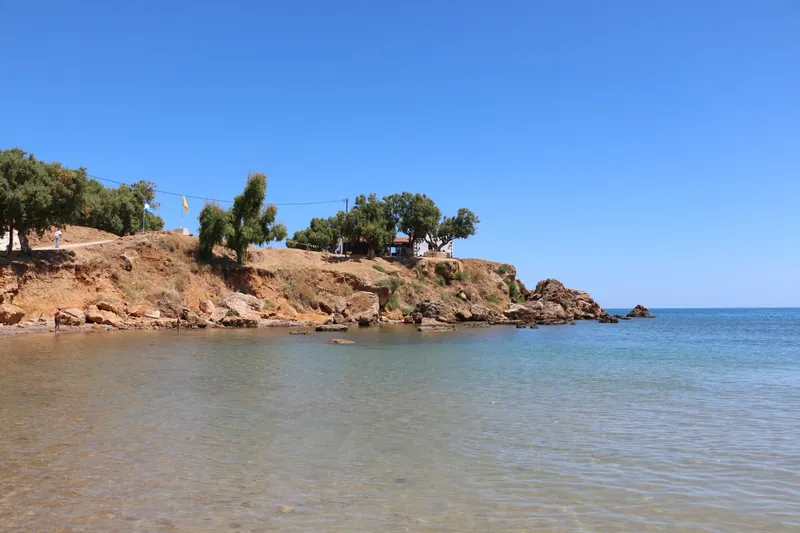
Glaros beach at Kato Daratsos, 5 km west of Chania: fine sand, shallow water, tamarisk shade and full facilities, with sheltered Agii Apostoli next door.
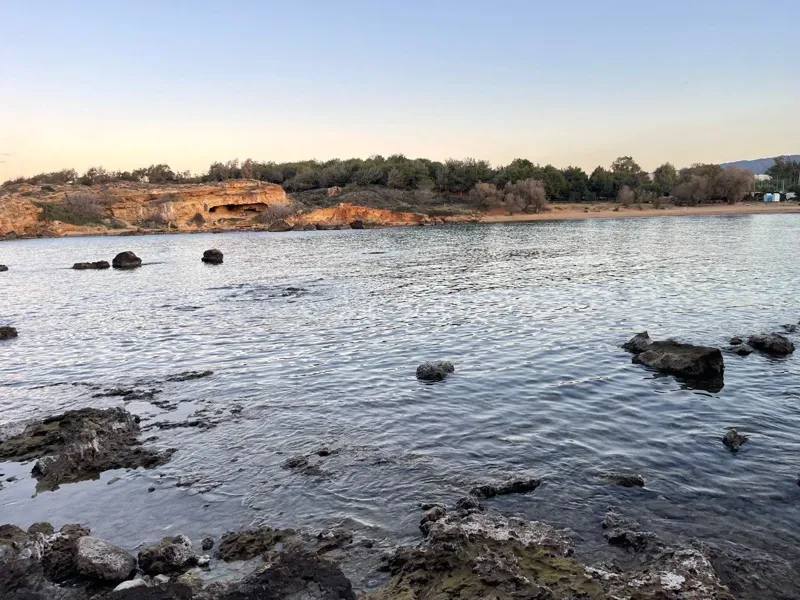
Kalamaki beach at Galatas, 6 km west of Chania: fine sand, shallow water, beach bars and frequent buses, with a small cove at its western end.
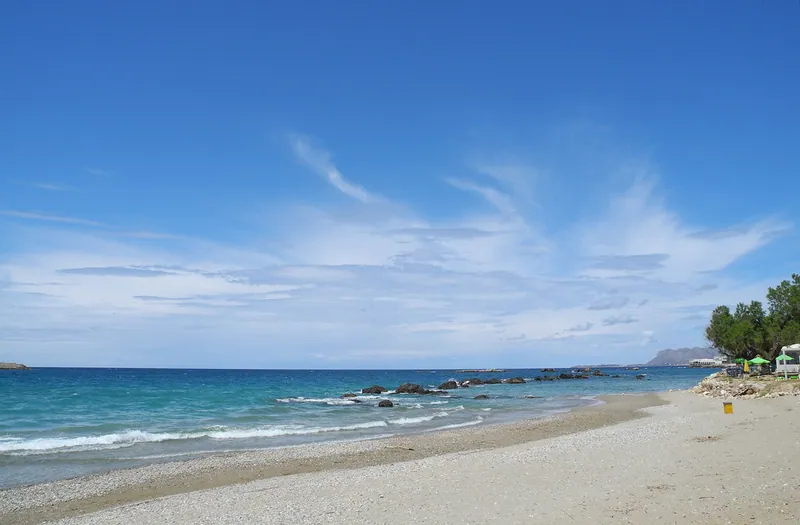
Kladissos beach, 3 km west of Chania's harbour: a long, mostly sandy strand by a small river wetland, lightly organised and quieter than beaches further west.
Kyani Akti between Kalami and Kalyves: a long sandy beach with shallow water, sunbeds, easy parking and views over Souda Bay to Itzedin fortress.
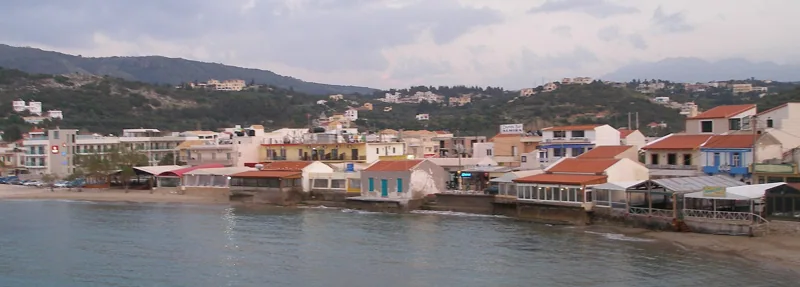
Kera beach just east of Kalyves on the road to Almyrida: a small sandy cove below a steep slope, unorganised and easy to miss.
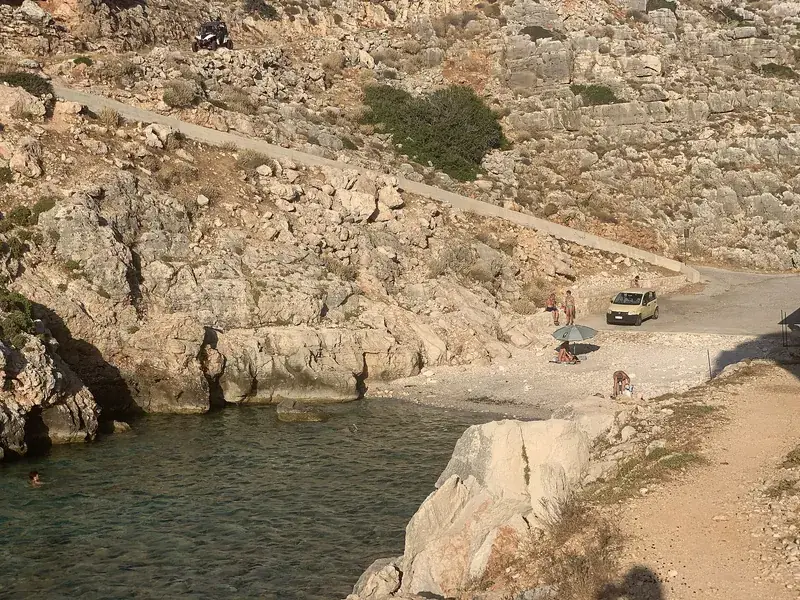
Koutalas cove below Kokkino Chorio on Cape Drapanos: small, pebbly and unorganised, with a rocky sea bed, great snorkelling and the Elephant Cave nearby.
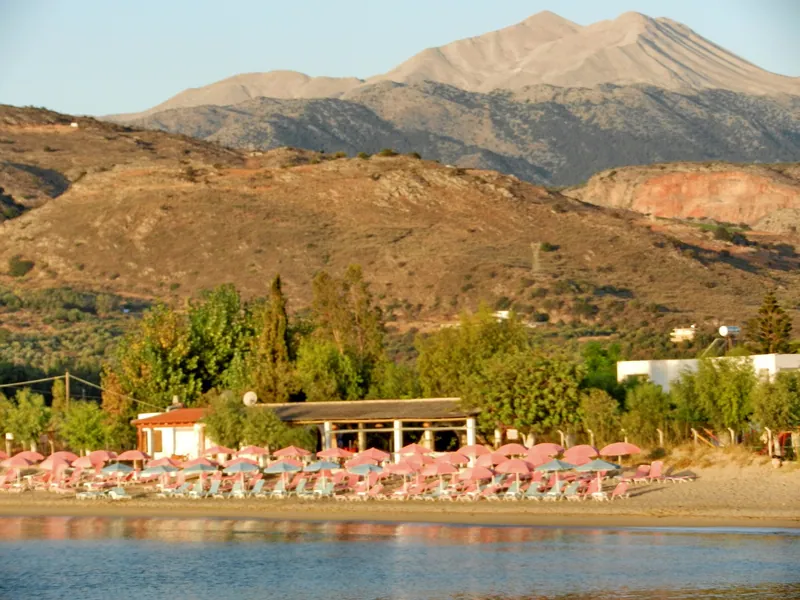
Kalivaki beach at the west end of Georgioupolis bay: sand between the Almyros and Boutakas rivers, cooler water, better wind shelter and full facilities.
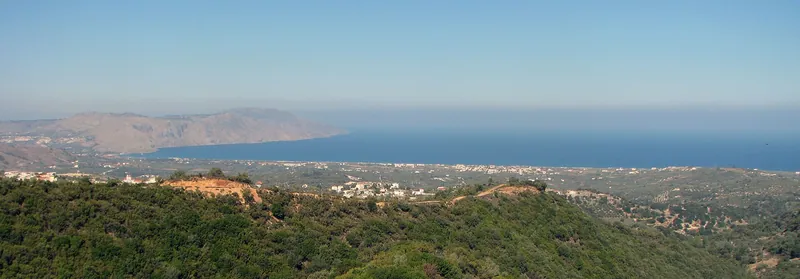
Kavros beach, 4 km east of Georgioupolis: a long sandy strand with dunes and tamarisks, quieter than Georgioupolis, but open to wind and waves.
Rapaniana beach, 4 km east of Kolymbari: sand and fine pebbles on the long west Chania coast, quiet, clean and lightly organised, with turtle nesting.
Voulolimni, the 'White Lake' near Chrysoskalitissa: a calm natural rock pool connected to the sea, unorganised, a few km north of Elafonisi.
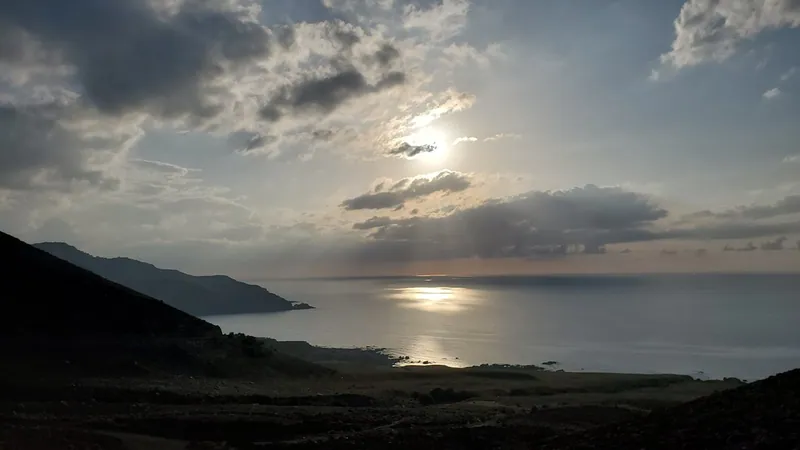
Sfinari beach, 30 km south of Kissamos: sand and pebbles in front of a green valley, tamarisk shade, a few tavernas and big west-coast sunsets.
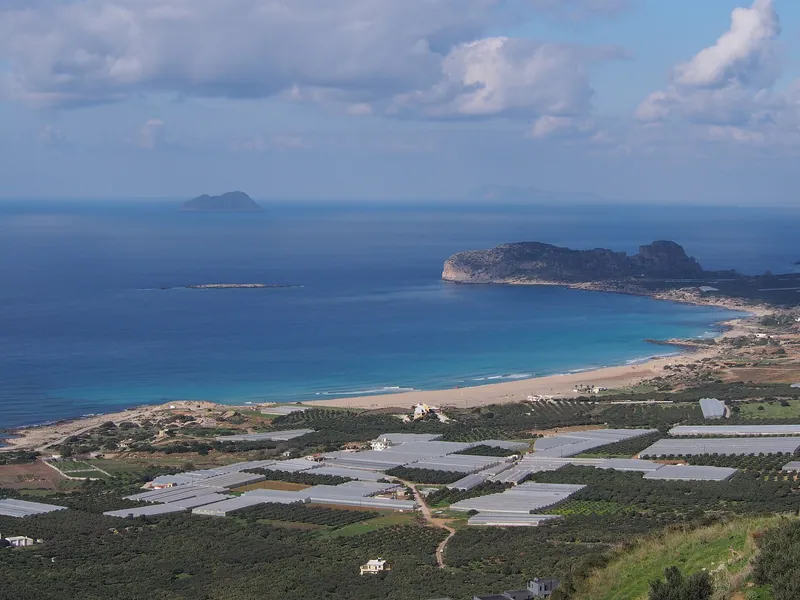
Falasarna's main beach, Pachia Ammos: about 1 km of pale sand 17 km west of Kissamos, organised but spacious, with waves on westerly days and famous sunsets.
Psilos Volakas, 1.5 km west of Paleochora: a fine-pebble cove sheltered by a big rock, with snorkelling, a small canteen and a pavement to walk from town.
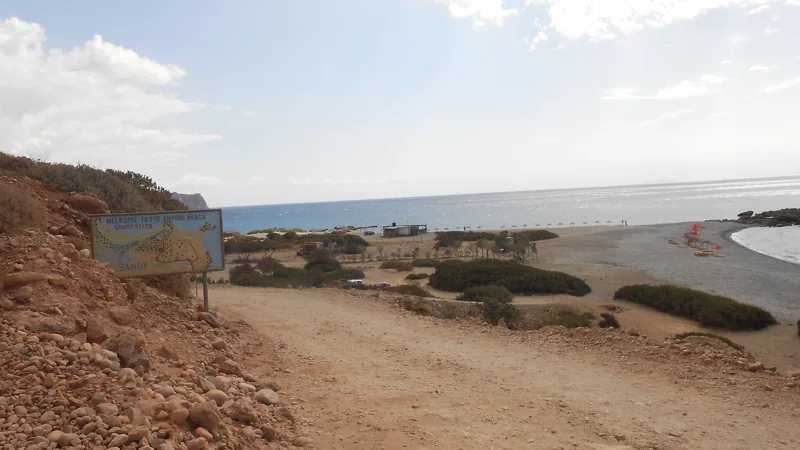
Grammeno peninsula 5 km west of Paleochora: sheltered sandy Houma under protected junipers on one side, open Alonaki on the other, with a campsite and tavernas.
Halikia, Paleochora's pebble beach on the east side of the peninsula: round pebbles, clear calm water, Blue Flag, a short walk from the harbour.
Keratides beach beyond Halikia in Paleochora: quiet pebbles and calm water next to the campsite, a good alternative when the west wind hits Pahia Ammos.
Plakaki, the westernmost of the Karavopetra coves near Paleochora: fine pebbles, calm sheltered water and a quiet atmosphere right off the Koundoura road.
Trochalou, 300 m west of Psilos Volakas near Paleochora: a small, quiet beach of large pebbles and rocks, unorganised, good for snorkelling.
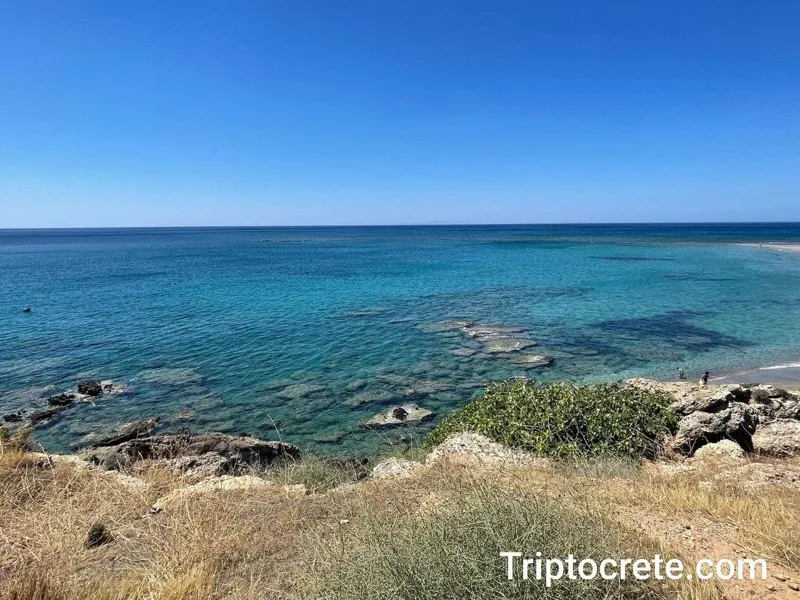
Ammoudi near Chora Sfakion: small pebble coves 1.5 km east of town, deep clear water, sculpted rocks for shade and an easy track from Sfakia.
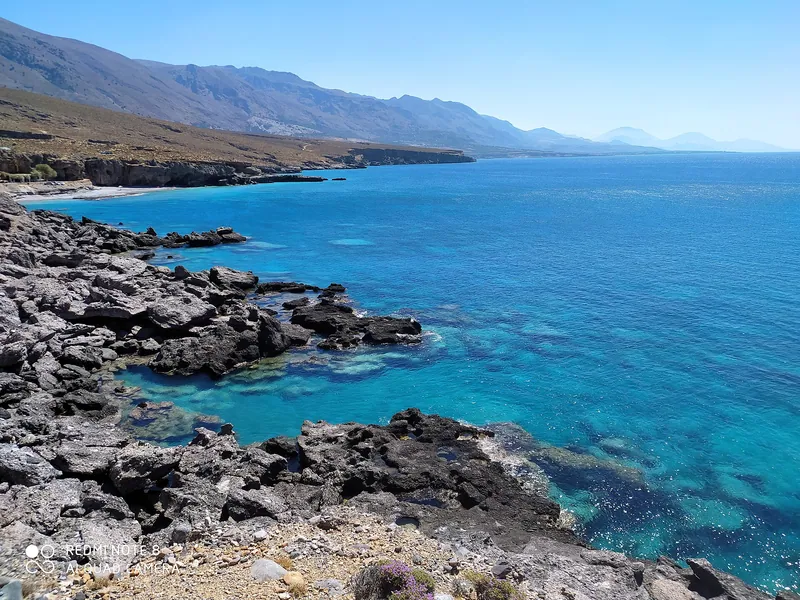
Filaki beach 3 km east of Chora Sfakion: pebbles, deep clear water and one of Crete's few officially naturist-friendly beaches, beside a naturist hotel.

Lykos beach west of Loutro: a secluded rocky bay between Finikas and Marmara on the E4 coastal path, with clear water and small tavernas nearby.
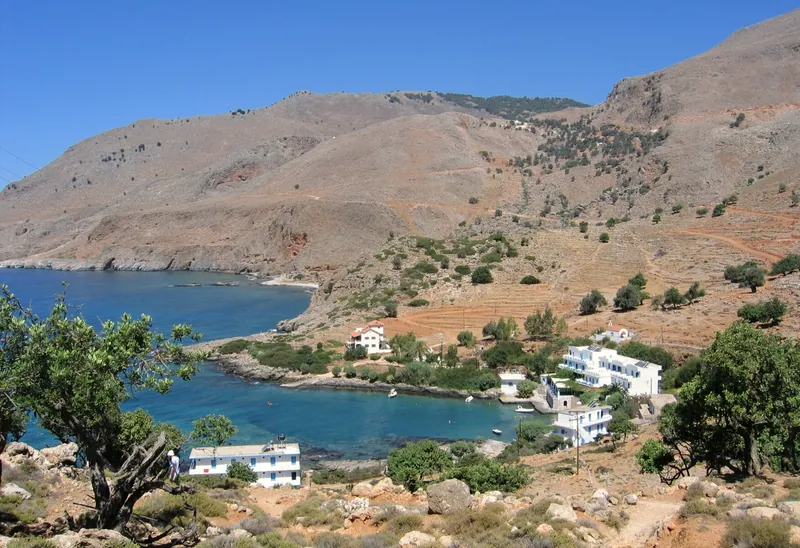
Finikas, 700 m west of Loutro: a small pebble harbour beach with a taverna and rooms, reached by boat, the E4 path or a dirt road from Livaniana.
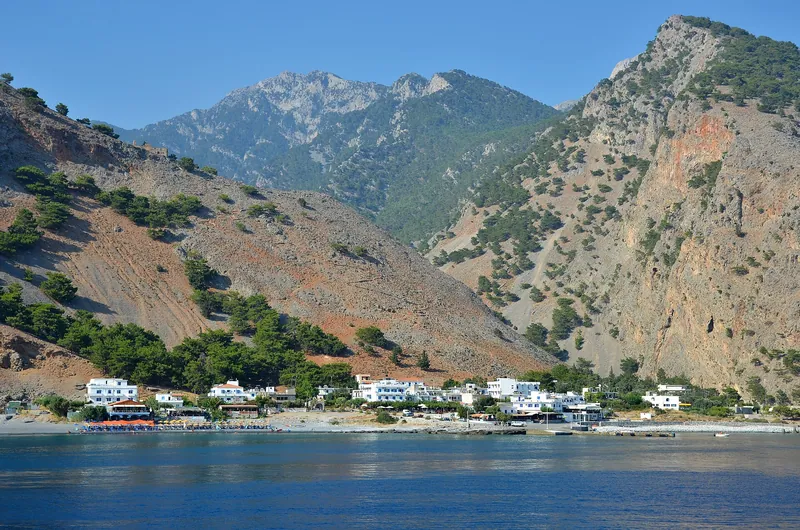
Agia Roumeli beach at the exit of the Samaria Gorge: dark pebbles, deep calm water, ferries, tavernas and nearby coves you can walk to.
Domata beach between Sougia and Agia Roumeli: no road, reached by boat or a demanding E4 hike, with fine pebbles, pines, deep clear water and no facilities.
Ligres, 51 km south of Rethymno: a long unorganised beach under Mount Siderotas, with a year-round waterfall at its west end and Triopetra 2.7 km south.
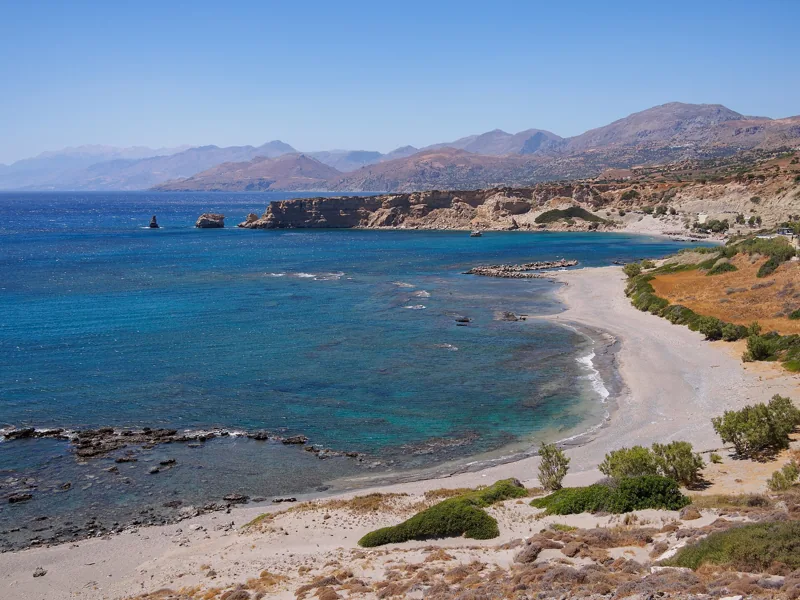
Agia Fotini below Kerames, 49 km south of Rethymno: small pebble coves between boulders, a fish taverna with rooms, a river grove and ancient Kionia.
Pahia Ammos on the Kerames coast: secluded coarse sand under a huge sandhill, 100 m east of Glima, unorganised and quiet, reached by dirt track and a walk.
Podare, the first beach on the dirt track south-east of Agia Fotini below Kerames: coarse sand and rocks, a few rooms, good snorkelling, unorganised.
Glima on the Kerames coast: a secluded, unorganised sandy beach where the dirt track from Agia Fotini ends, with rooms for rent by the parking area.
Peristeres near Rodakino: two pebble coves with carob shade and sea caves at Cape Kastelos, where kidnapped General Kreipe was taken off Crete in 1944.
Agia Marina below Argoules, between Frangokastello and Rodakino: sand and pebbles, carob shade, a chapel and a year-round stream, reached only by dirt track.
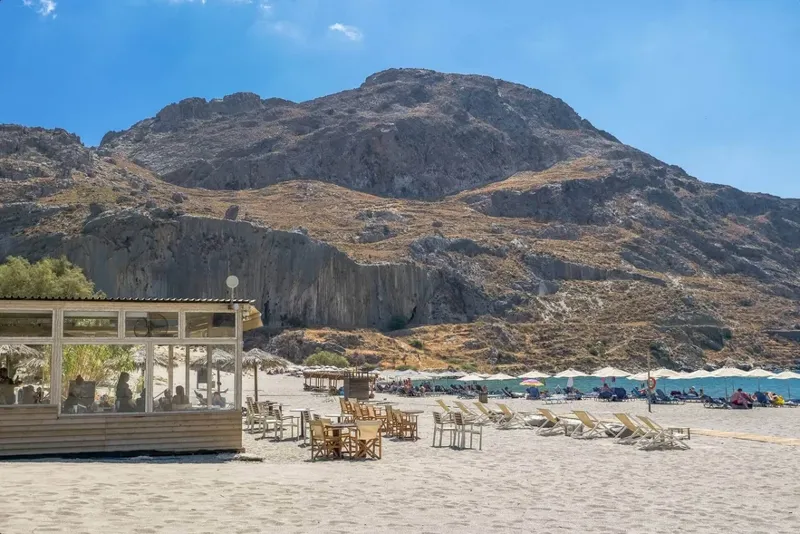
Fotinari near Plakias: two small pebble coves in a green bay between Plakias and Souda beach, reached by stone paths from the road, with good snorkelling.
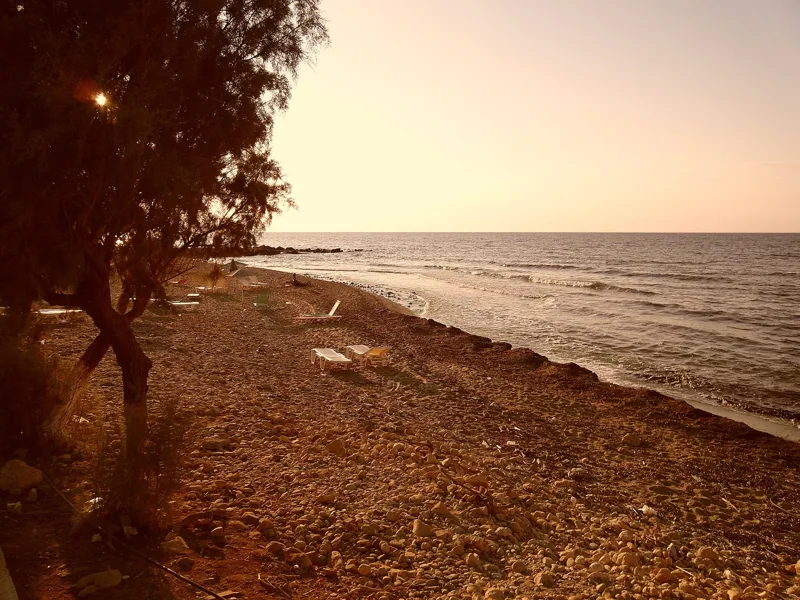
Skaleta beach, 12 km east of Rethymno: part of 3 km of golden sand with sunbeds and tavernas, turtle nests, and sea caves towards Geropotamos.
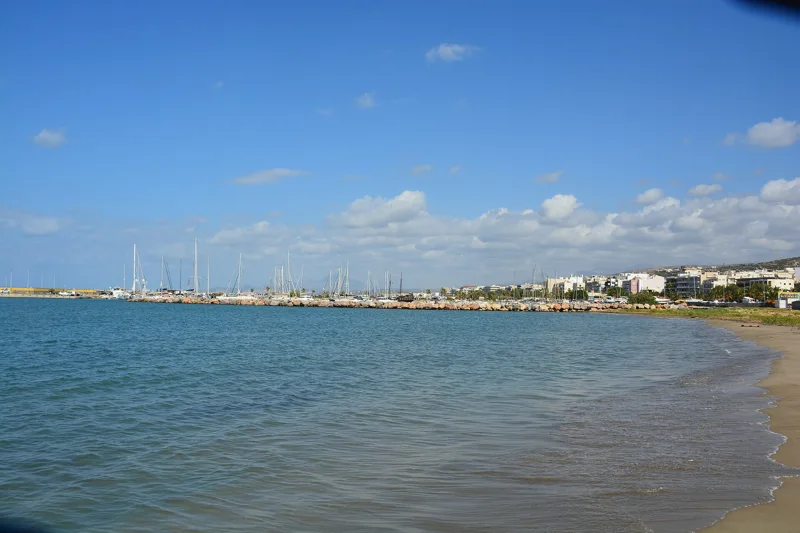
Rethymno's town beach: a long, wide sandy beach starting by the marina east of the old town, with full facilities, a busy promenade and protected turtle nests.
Livadi, the first and longest of Bali's four beaches: organised sand at the entrance to the village, a little more open to the wind than the other coves.
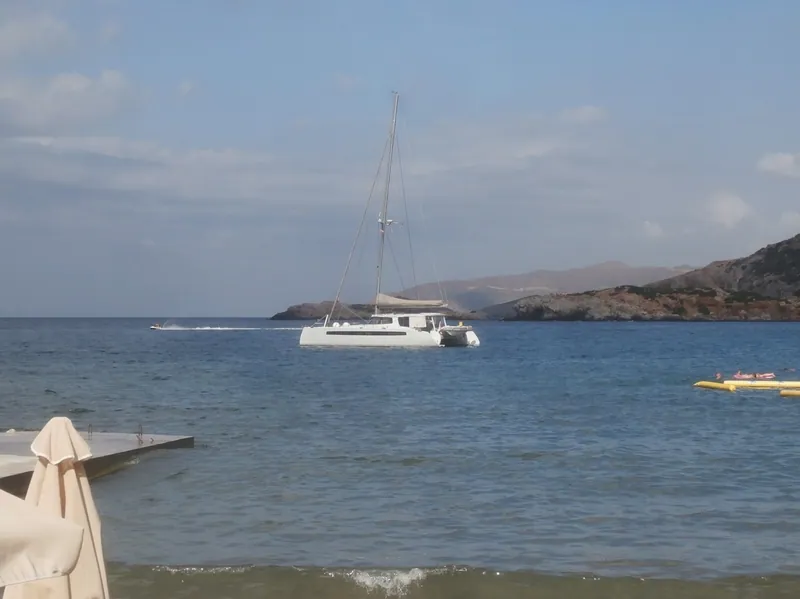
Varkotopos beach in the centre of Bali: an enclosed bay of sand and gravel with very shallow water, ideal for young children, and full facilities.
Karavostasi, the northernmost and smallest of Bali's four beaches: a sandy cove in a sheltered bay, often called the prettiest, but busy because it is small.
Limani, Bali's harbour beach 30 km east of Rethymno: sand next to the fishing harbour, shallow cool water, restaurants on the quay and boats to nearby beaches.
Small Triopetra, the bay south of Triopetra's three rocks: sand and rock, tavernas, rooms and a little harbour, and more sheltered than the big beach.
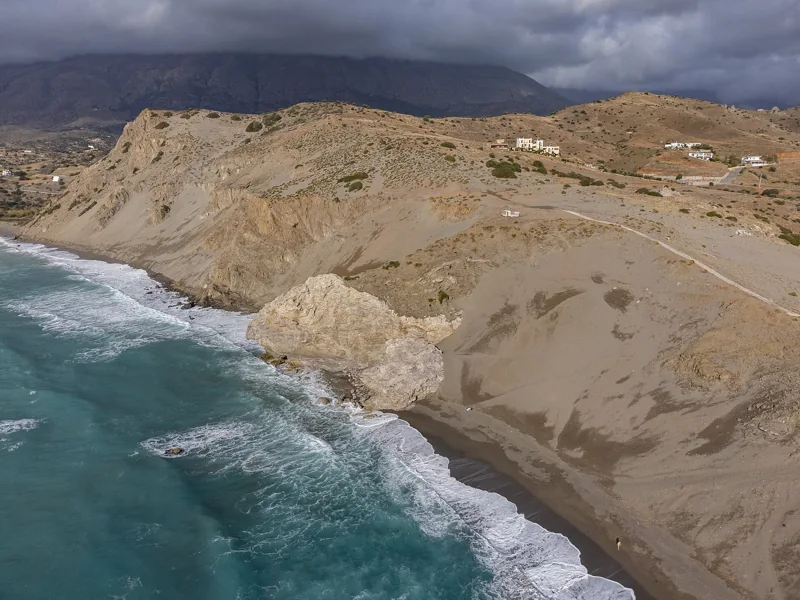
The sandhills beach at Agios Pavlos: a big bay of sand dunes and cliffs below Cape Melissa, reached on foot down the dunes, with deep water and sunset views.
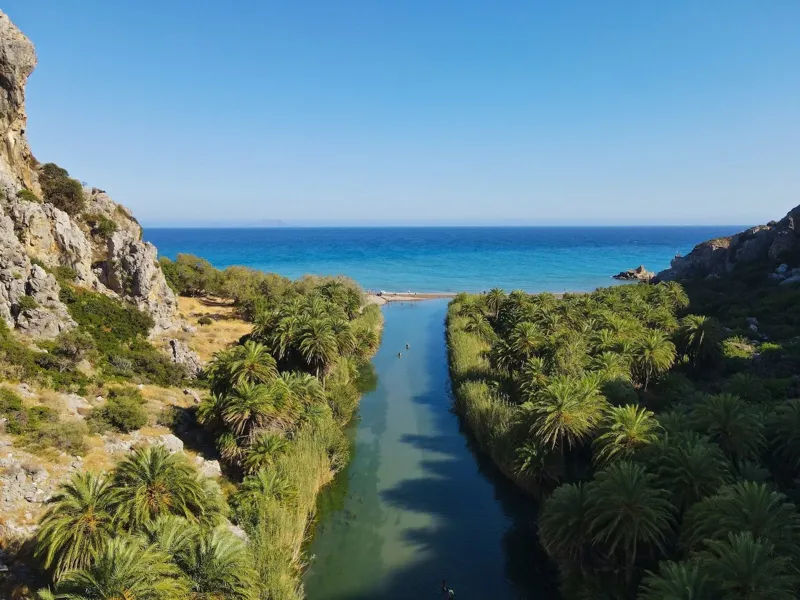
Gialopotama, 4 km south of Kerames: an unorganised sandy beach where a small stream meets the sea, with boulders at its east end and a few rooms on the hill.
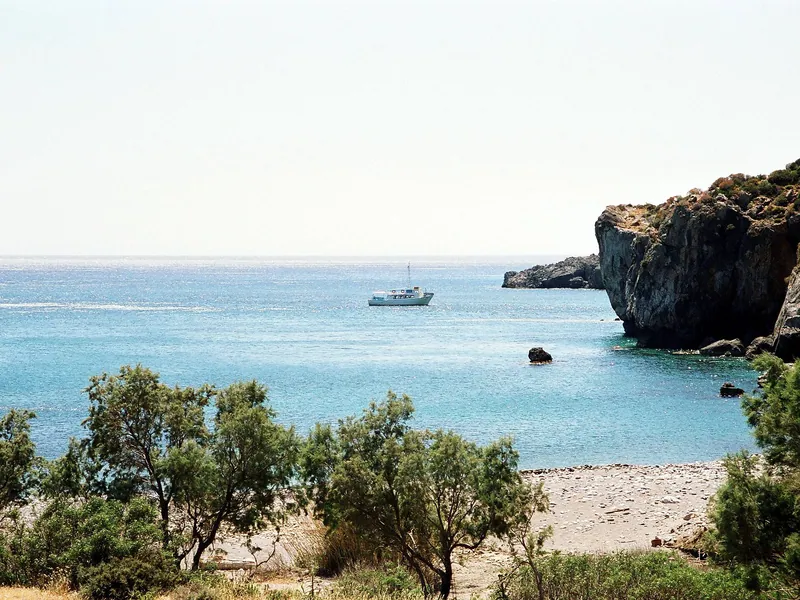
Drimiskiano Ammoudi: the end of the paved road east of Preveli, with parking, a short trail to Preveli palm beach and 3 km of quiet coves to the east.
The Pefkias coves between Souda beach (Plakias) and Rodakino: pebbly bays with a small palm colony, reached by dirt track or boat, no facilities.
Polyrizos beach on the Rodakino coast: small fine-sand beach with shallow calm water, olive-tree shade, some sunbeds and tavernas in the little settlement.
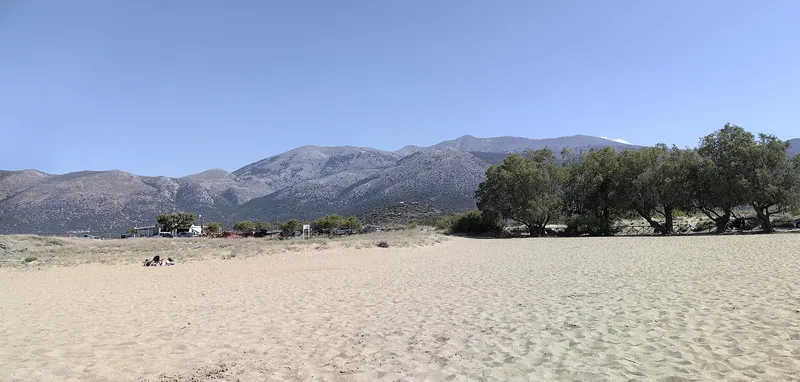
The Sarandaris coves between Cape Sarandaris and Hersonissos harbour: small sandy and rocky coves sheltered from north-west winds, walkable from town.
Kalamaki beach on Messara Bay, 4 km north of Matala: 2.5 km of fine sand with tavernas, turtle nests and a walk south to Minoan Kommos.
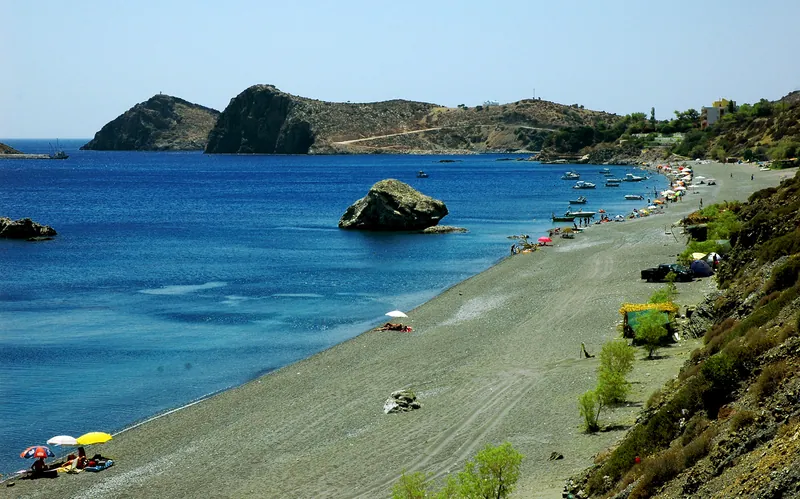
Kaloi Limenes, 75 km south of Heraklion: calm bays almost all year, sandy Psili Ammos, pebbly Makria Ammos, St Paul's chapel and the oil tanks on Mikronisi.
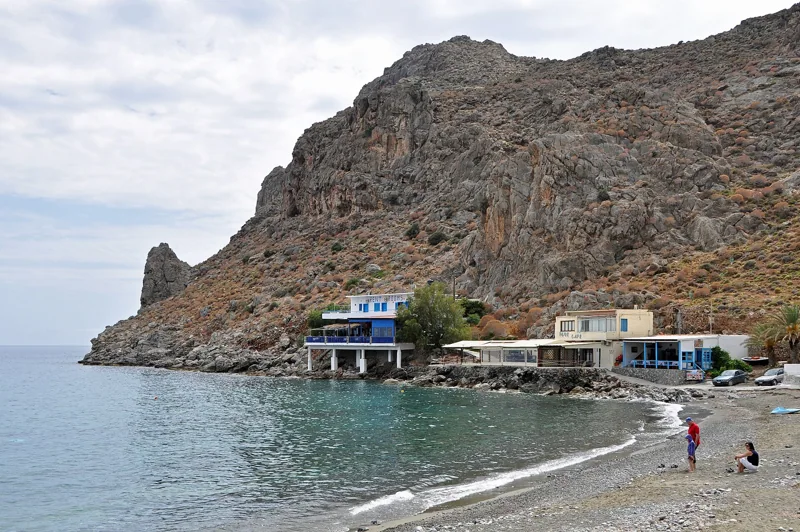
Trachoulas, 4 km east of Lentas: a grey-pebble cove at the end of a short gorge walk, deep clear water, small caves for shade and no facilities.
Agios Nikitas, 65 km south of Heraklion: a remote fine-pebble cove 230 steps below a cave monastery, reached by 15 km of rough dirt road through the Asterousia.
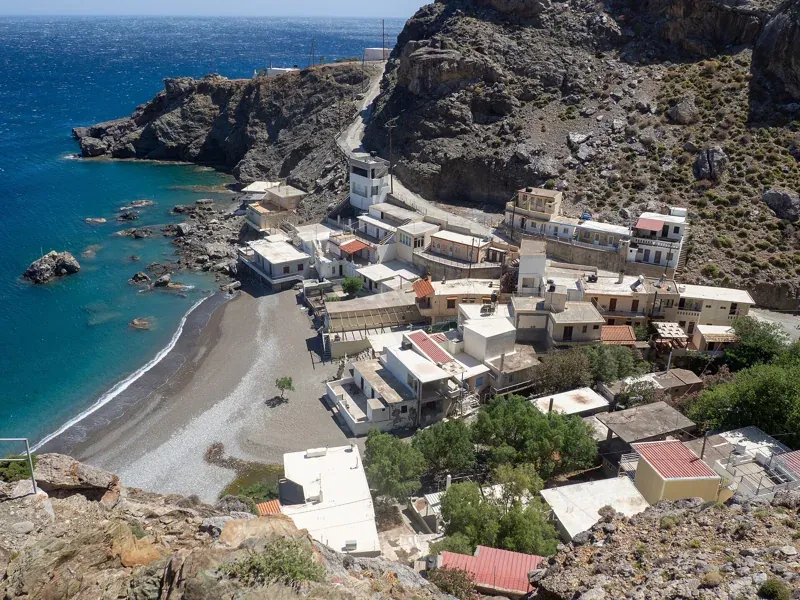
Maridaki, 65 km south of Heraklion: a fine-pebble beach with a spring, old plane trees, a small taverna and rooms, 20 minutes on foot from Tsoutsouros.
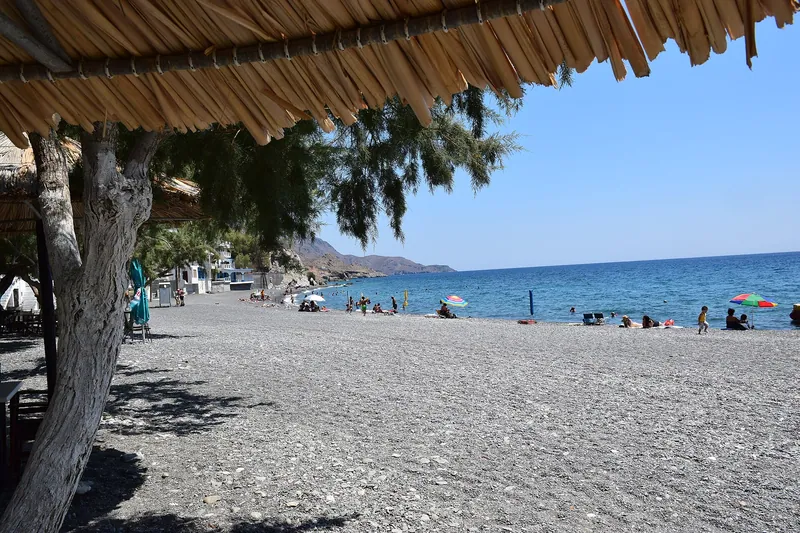
Treis Ekklisies, 64 km south of Heraklion: a long coarse-sand beach below the Asterousia, reached by a winding road from Paranymfi, with tavernas and rooms.
Psari Forada, 9 km east of Ano Viannos: a dark sand-and-pebble beach with tavernas, a mini market and the hidden Thiofilo cove behind its cape.
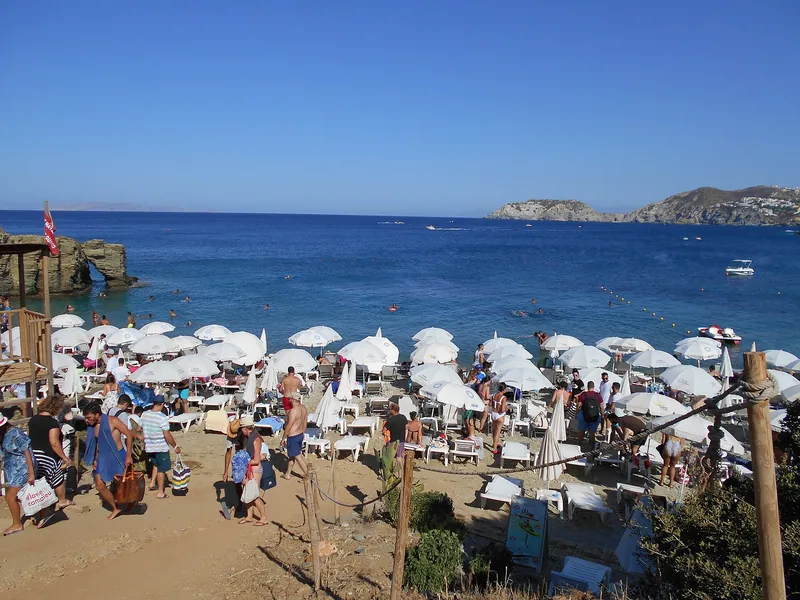
Lygaria bay, 1 km east of Agia Pelagia, 21 km west of Heraklion: coarse sand, turquoise water sheltered from north-west winds, organised, busy at weekends.
Mononaftis, 1 km north of Agia Pelagia: an east-facing pebble cove sheltered from north winds, with a rocky sea bed for diving and snorkelling.
Psaromoura, 500 m north of Agia Pelagia: an east-facing pebble cove behind a folded rock, sheltered from north-west winds, with deep clear water and a canteen.
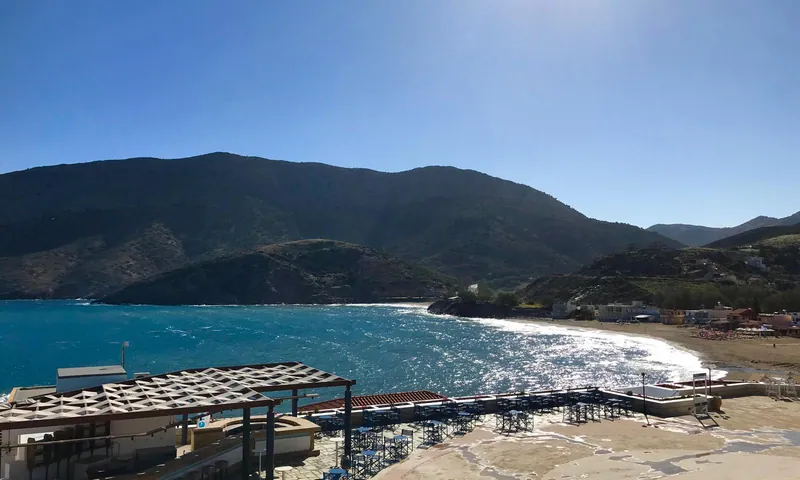
Fodele beach, 26 km west of Heraklion: sand at the mouth of the Fodele river, organised west end, quieter east end, and El Greco's village 3 km inland.
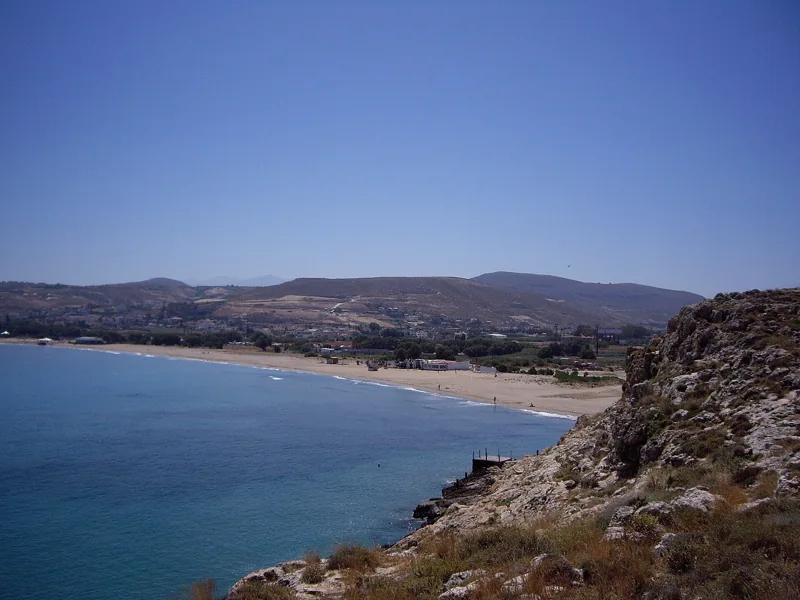
Amnissos beach, 9 km east of Heraklion: about 1 km of soft sand at the east end of Karteros bay, by the Minoan port of Knossos, with planes passing overhead.
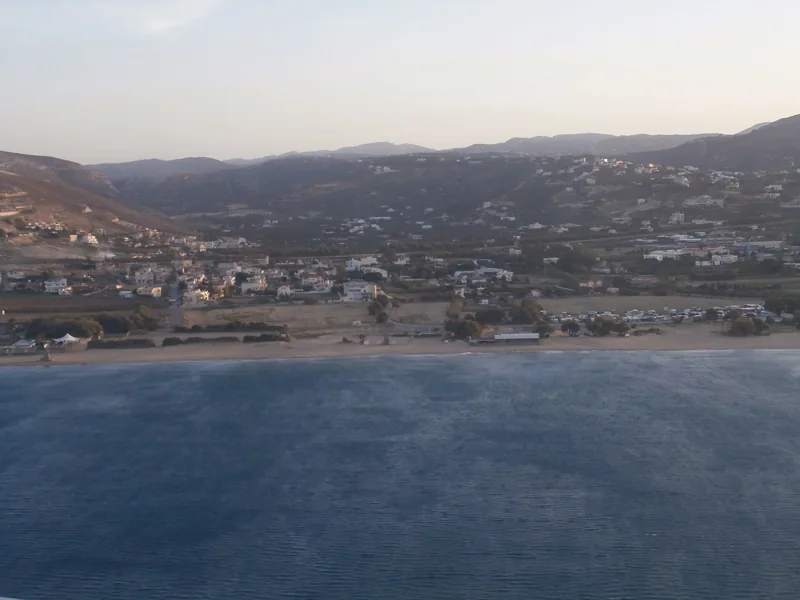
Karteros bay, 7 km east of Heraklion: 3.5 km of golden sand from Florida next to the airport to Tobruk, with organised sections, beach bars and fish tavernas.
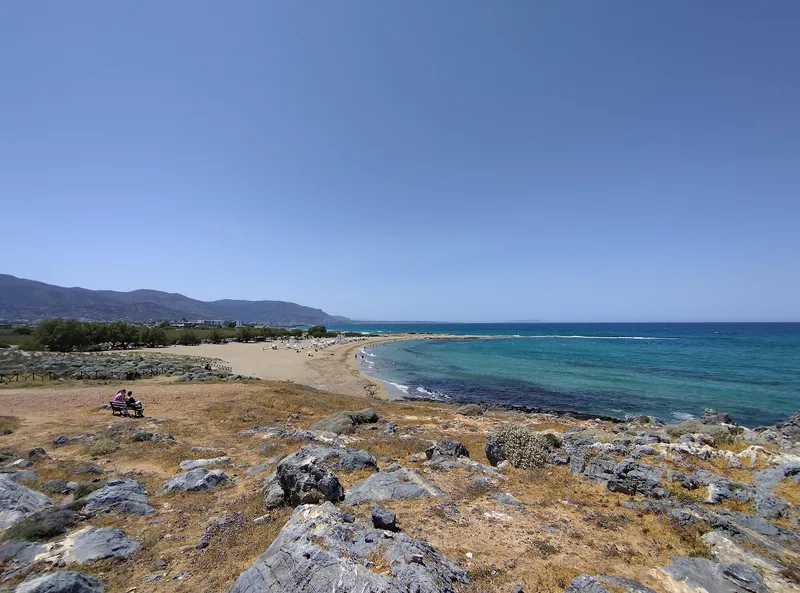
Potamos beach east of Malia: long shallow sand by a wetland, about 1 km from the Minoan palace, quieter than Malia's main beach but still organised.
Kitroplatia, 200 m from Lake Voulismeni: a small sand-and-pebble beach under tamarisks in front of a café-lined square in central Agios Nikolaos.
Ammoudara, 6 km south-east of Agios Nikolaos: a small sandy beach with shallow calm water, full facilities and Blue Flag, busy with families.
Gargadoros, 1 km south of Lake Voulismeni in Agios Nikolaos: an organised pebble beach and a small sandy cove either side of a pier, with a taverna.
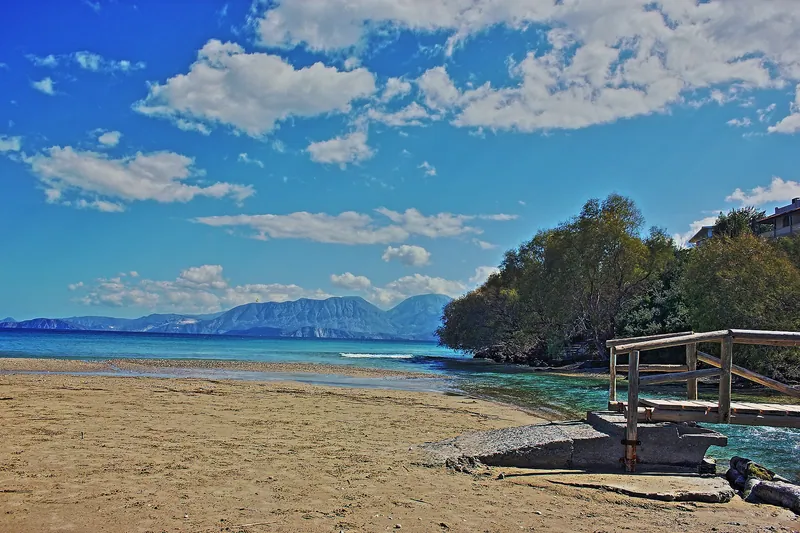
Almyros, 2.5 km south of Agios Nikolaos: the town's most popular sandy beach, shallow and calm, beside a protected wetland where a cold river meets the sea.

Havania, on the north edge of Agios Nikolaos towards Elounda: a small organised sandy beach with pine shade, Blue Flag, and traces of an Ottoman harbour.
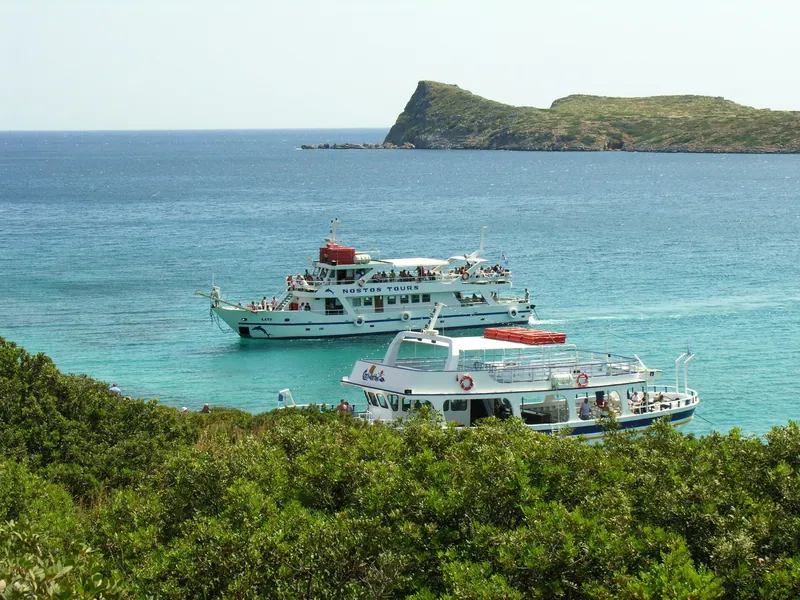
Kolokytha cove on the Spinalonga peninsula opposite Elounda: white sand and shallow turquoise water, reached by causeway, a dirt track and a short walk.
Plaka, 16 km north of Agios Nikolaos: clear pebble beaches facing Spinalonga island, tavernas on the water and short boat rides to the former leper colony.
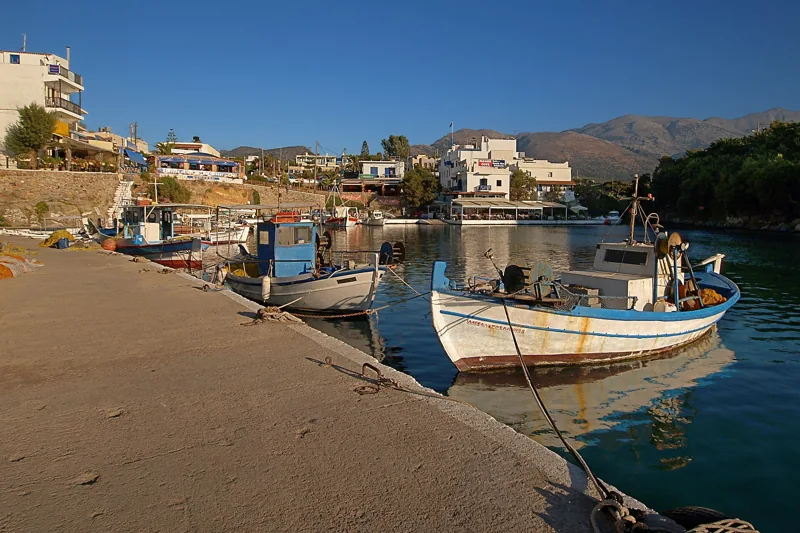
Sissi's tiny harbour beach, 41 km east of Heraklion: the only spot in the village sheltered from waves, framed by the narrow harbour and its cafés.
Milatos, 16 km east of Hersonissos: a small sandy harbour beach, a pebbly main beach, cliff coves, fish tavernas and the historic Milatos cave nearby.
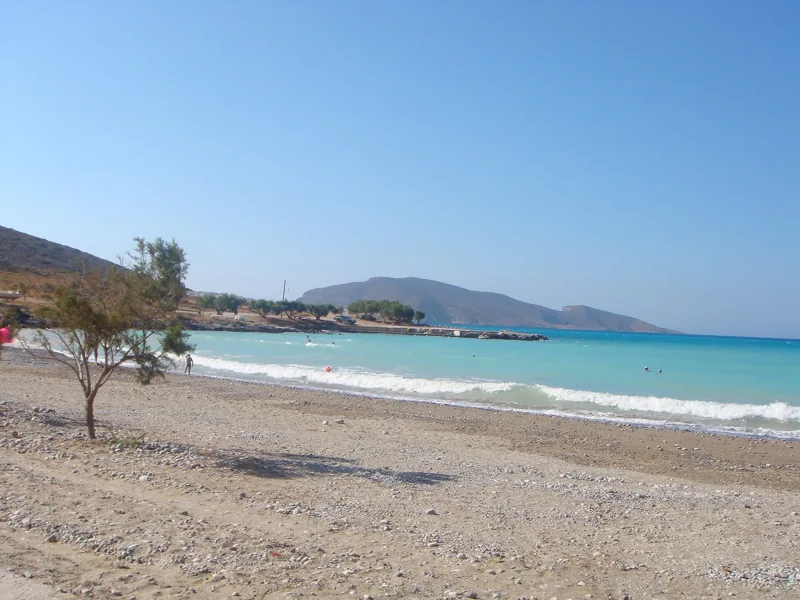
Tholos, 4 km north of Kavousi on Mirabello Bay: pebbles and sand, cool spring-fed water, tavernas and rooms, opposite the Minoan islet of Psira.
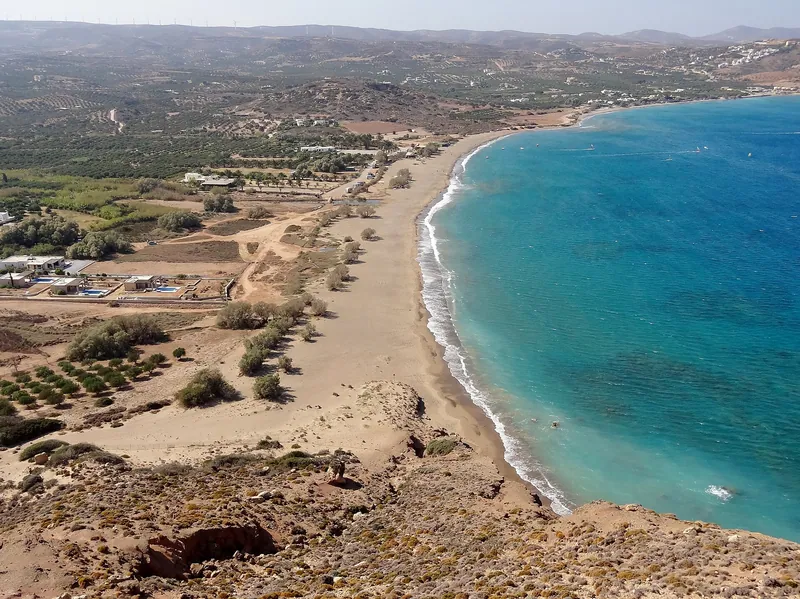
Kouremenos, 1 km east of Palekastro: over 1.5 km of fine sand and shallow water, famous for steady summer north-westerly winds and a windsurf centre.
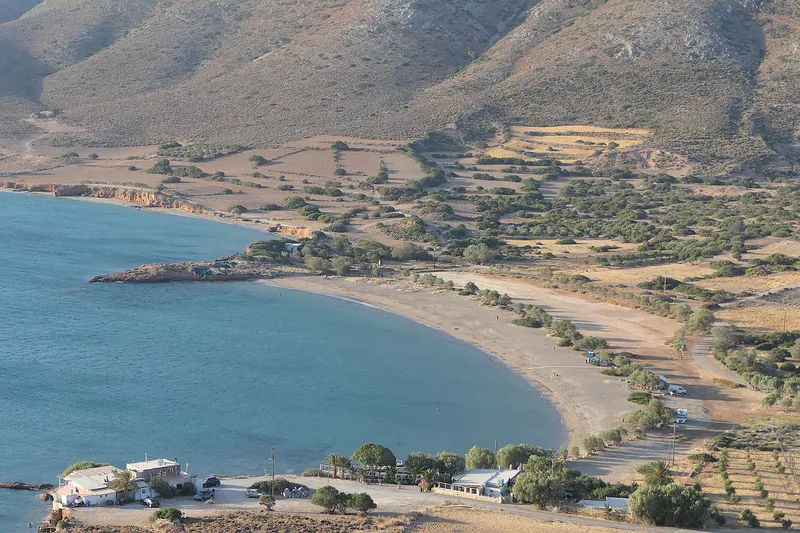
Chiona beach, 2 km east of Palekastro: whitish sand, shallow calm water, tamarisk shade and fish tavernas, next to the Minoan town of Roussolakos.
Itanos (Erimoupolis), 1 km north of Vai: three small sandy coves around an ancient city, turquoise water, palms, no facilities, and ruins under the sea.
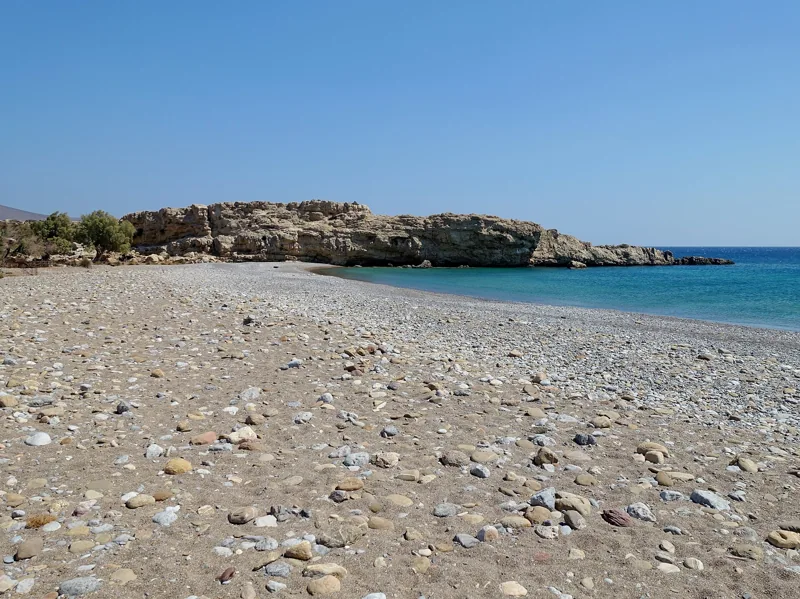
Karoumes, 29 km south-east of Sitia: a remote pebble beach reached only on foot through the 3.5 km Chochlakies gorge, calm, shaded and with no facilities.
Kato Zakros, 40 km east of Sitia: a calm pebble bay with tavernas, 200 m from the Minoan palace of Zakros, at the end of the Gorge of the Dead.
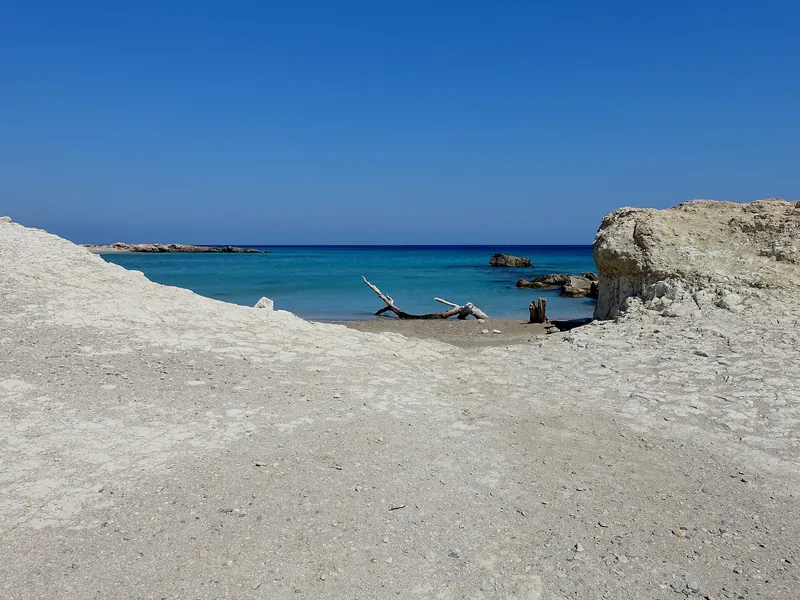
Argilos at Xerokampos, 47 km south of Sitia: a quiet sandy beach with clay used as a natural spa, shallow water and Hellenistic ruins on the hill above.
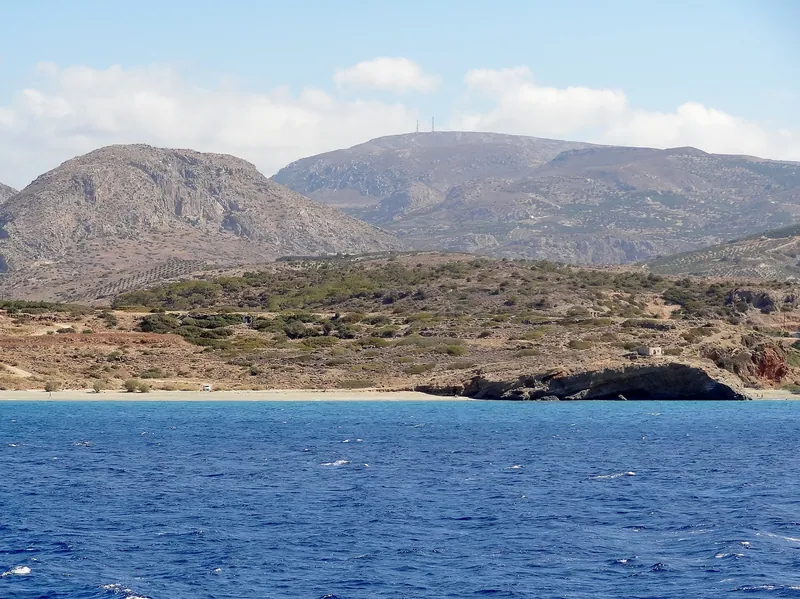
Diaskari, 4 km east of Makrigialos: a long beach of coarse light sand with a taverna at its west end, more seclusion further east and a Late Minoan site above.
Lagada, 6 km east of Makrigialos: a remote, quiet pebble beach in a valley of olive groves, open to south winds, with no facilities on the beach.
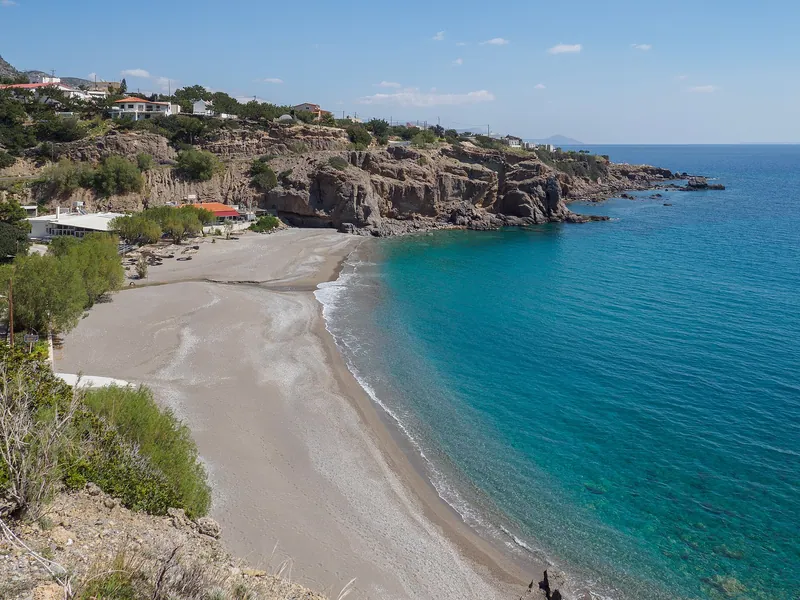
Achlia, 15 km east of Ierapetra: a small, usually calm cove with coarse sand, tamarisk shade, rooms and tavernas, at the mouth of the pine-wooded Achlia gorge.
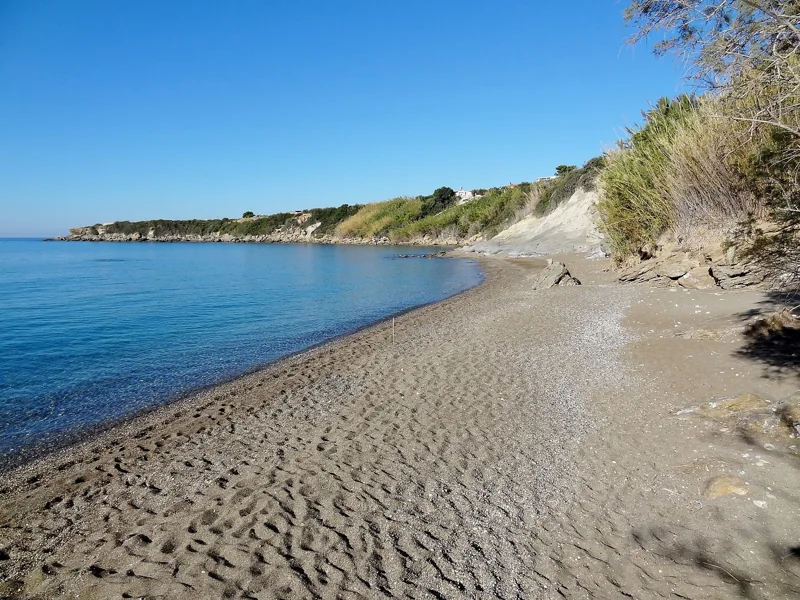
Ferma, 10 km east of Ierapetra: pebble bays below pine woods, reached by stairs from the hotels, with clear deep water, springs and a few date palms.
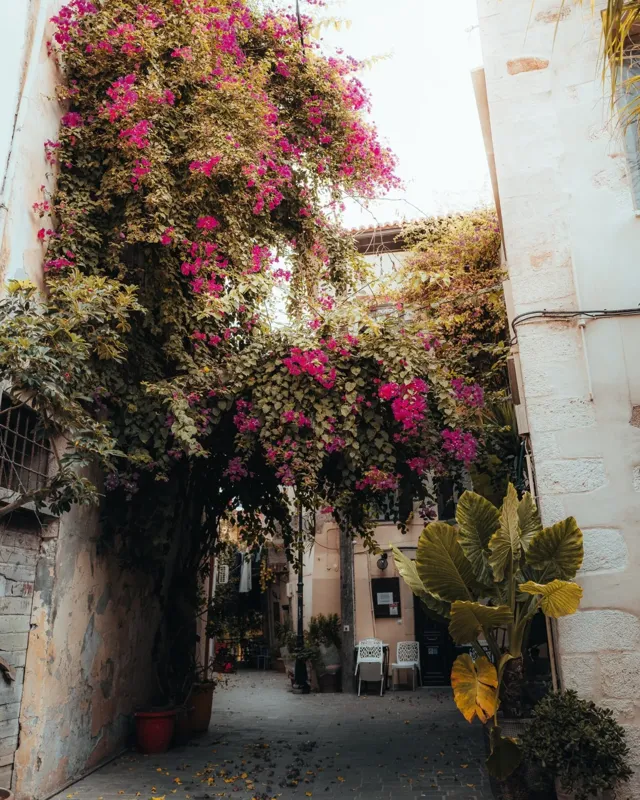
Tamam at Zambeliou 49 in Chania old town: Greek cooking with Asia Minor and Middle Eastern touches, in a former Turkish bath, with a long wine list.
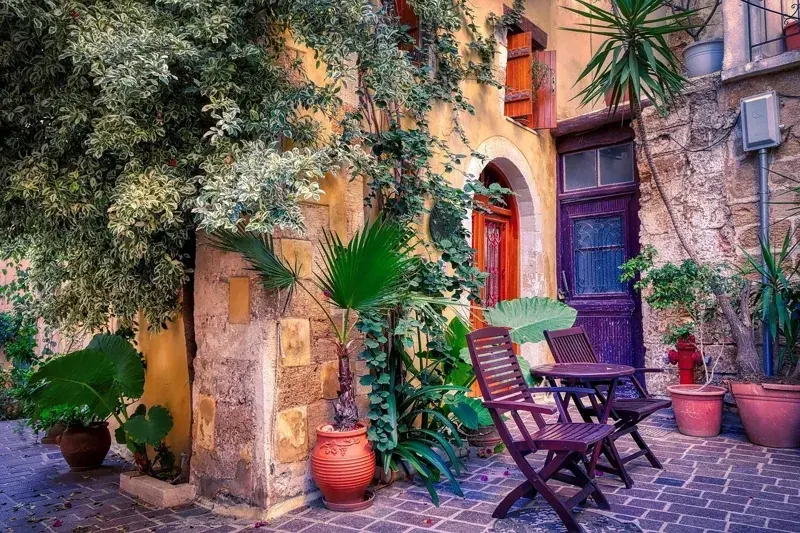
To Maridaki at Daskalogianni 33 in Chania old town: a small, busy seafood taverna with an open kitchen and a daily menu built on the fish catch.
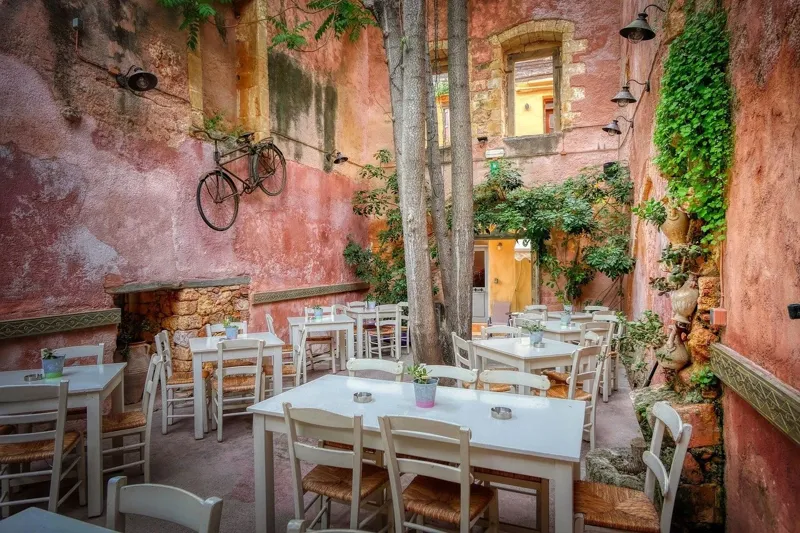
Semiramis at Skoufon 8 in Chania old town: a lantern-lit courtyard with live Greek music, Cretan and international dishes, open in the warmer months.
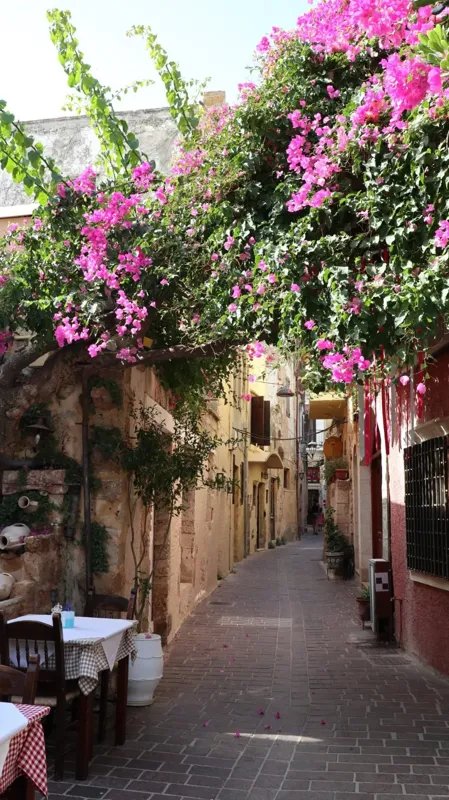
Ela taverna at Kondylaki 47, Chania old town: traditional Cretan food and live music in a roofless 17th-century Venetian building. Open in summer only.
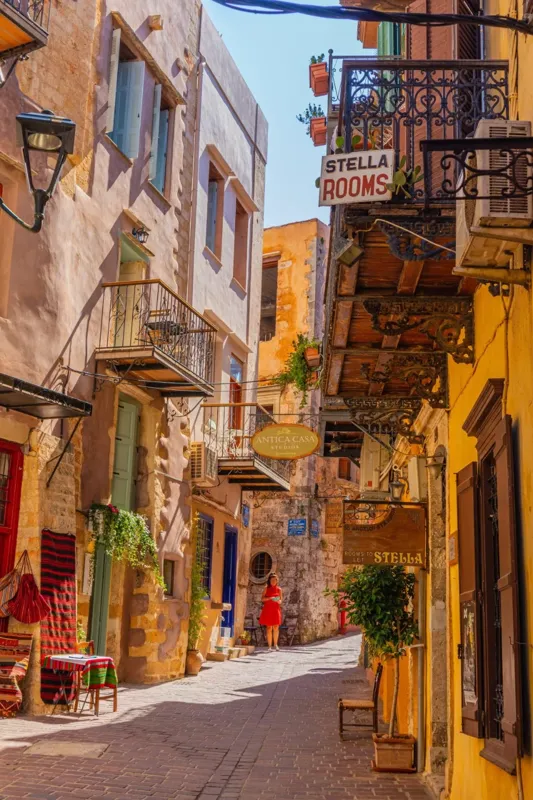
The Well of the Turk, Kalinikou Sarpaki 1–3 in Chania's Splantzia quarter: Greek, Turkish and Middle Eastern small plates on a terrace in the old town.
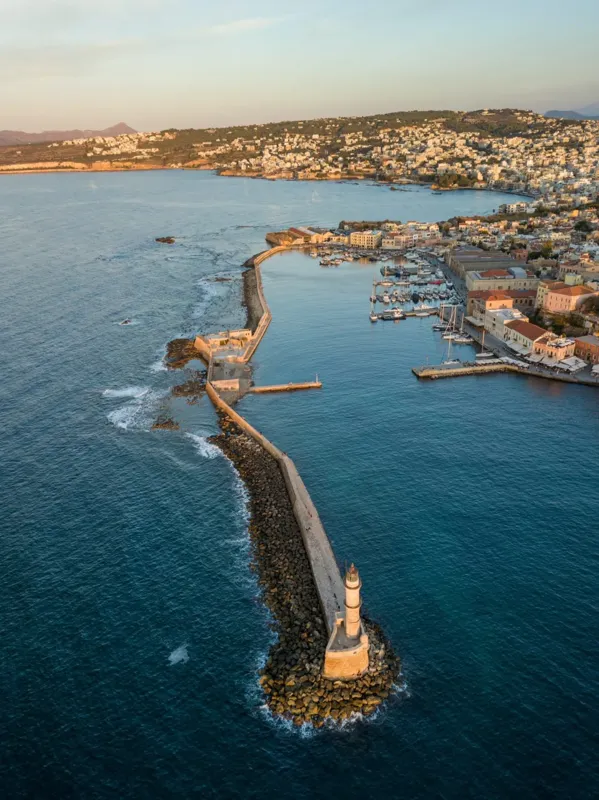
Kritamon wine restaurant at Kondylaki 38 in Chania old town: Cretan and Mediterranean dishes in a bougainvillea courtyard, steps from the harbour.
Dounias taverna in Drakona, 18 km from Chania: Stelios Trilyrakis cooks everything over wood fire in clay pots, with his own vegetables and animals. Book ahead.
Peskesi at Kapetan Charalampi 6–8 in Heraklion: traditional Cretan cooking with produce from its own farm at Haraso, in a restored mansion in the old town.
Ippokampos at Sofokli Venizelou 3 on Heraklion's waterfront: a classic seafood ouzeri near the Venetian harbour for fish, mezedes and ouzo.
Erganos at Georgiadou 5, near Kazantzakis park in Heraklion: traditional Cretan dishes in a homely setting, with vegetarian options and outdoor tables.
Giakoumis taverna in a passage off 1866 street in Heraklion: the oldest of a row of market tavernas, known for lamb chops and ready-cooked dishes.
Kritamon in Archanes, 15 km south of Heraklion: Cretan dishes on a tree-shaded patio off a cobbled lane near the main square, with a homemade dessert to finish.
Avli restaurant at Xanthoudidou 22 in Rethymno old town: modern Greek and Cretan cooking in a Venetian-era courtyard building. What to expect and how to plan.
Prima Plora on Rethymno's western seafront: modern Cretan cooking with largely organic produce, on platforms over the rocks with a view of the Fortezza.
Kyria Maria in Rethymno old town: a small family taverna near the Rimondi Fountain, serving simple Cretan home cooking. Tips for an old-town meal.
Cul De Sac in Rethymno old town: a modern café-bar for breakfast, light meals and cocktails, good for people-watching between sightseeing.
Zygos Urban Garden & Coffee, Agios Nikolaos: a garden café-restaurant over Lake Voulismeni for breakfast, brunch, bowls, souvlaki and homemade ice cream.
Zygos taverna in Kalo Chorio (Istron), near Agios Nikolaos: spit-roasted suckling pig and lamb, Cretan stews, house wine and live Cretan music on Friday nights.