- Region
- Rethymno
- Distance
- About 23 km from Rethymno
- Church façade
- 1587
- Visit
- 1–1.5 hours
The siege of 1866
During the Cretan revolt of 1866, nearly a thousand people, most of them women and children, took refuge in the monastery with a few hundred armed men. A large Ottoman army besieged it. On 9 November, when the gates were breached, the defenders set fire to the powder magazine rather than surrender, killing themselves and many attackers.
The event, associated with the abbot Gabriel Marinakis and with Kostis Giamboudakis, who is said to have lit the powder, shocked European opinion and strengthened support for the Cretan cause. It is commemorated every year on 8 November.
What you see
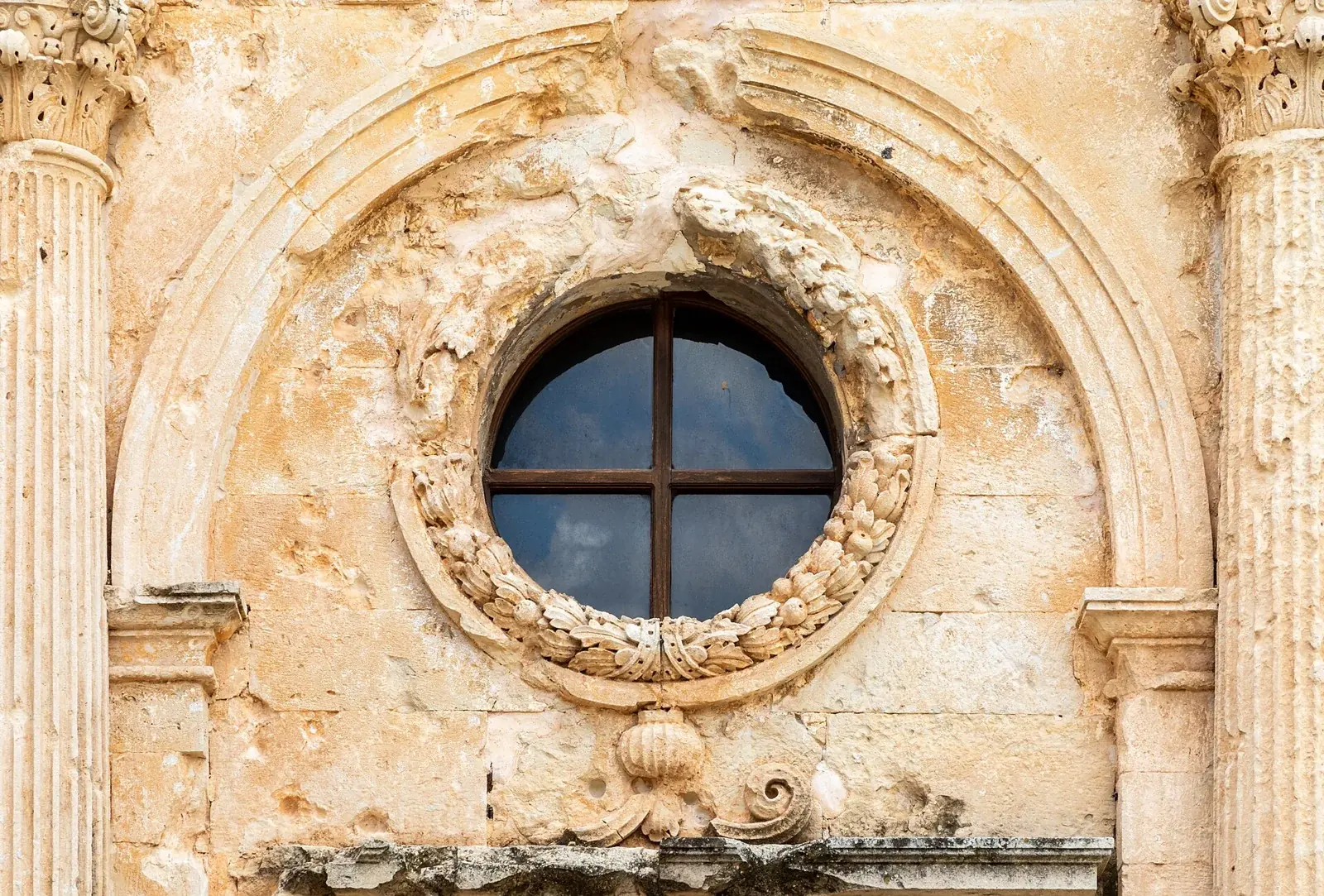
The two-aisled church has a richly carved Renaissance façade with columns and a bell gable. Around the courtyard are the monks' cells, the refectory, and the roofless powder magazine. A small museum shows icons, vestments and relics of the siege. Outside, an old windmill serves as an ossuary.
Visiting
A modest entry fee is charged. Dress respectfully: it is a working monastery and a memorial. Mornings are quieter than midday.
Combine it with
Ancient Eleutherna and its museum, and the pottery village of Margarites, are each a short drive away.
Questions before you go
Why is Arkadi monastery famous?
For the November 1866 siege, when defenders blew up the powder magazine rather than surrender.
How far is Arkadi from Rethymno?
About 23 km, roughly 30 minutes.
When is the Arkadi anniversary?
It is commemorated every year on 8 November.