- Raki
- Tsikoudia, grape-pomace spirit
- Served
- Small glasses, often cold
- Free raki
- Often offered after a meal
- Toast
- 'Yamas'
What raki is
Tsikoudia is distilled from the grape pomace left after winemaking, mostly in autumn, when villages hold distilling gatherings (kazanemata). It is strong, usually around 35–45% alcohol. Rakomelo is raki warmed with honey and spices.
Meze
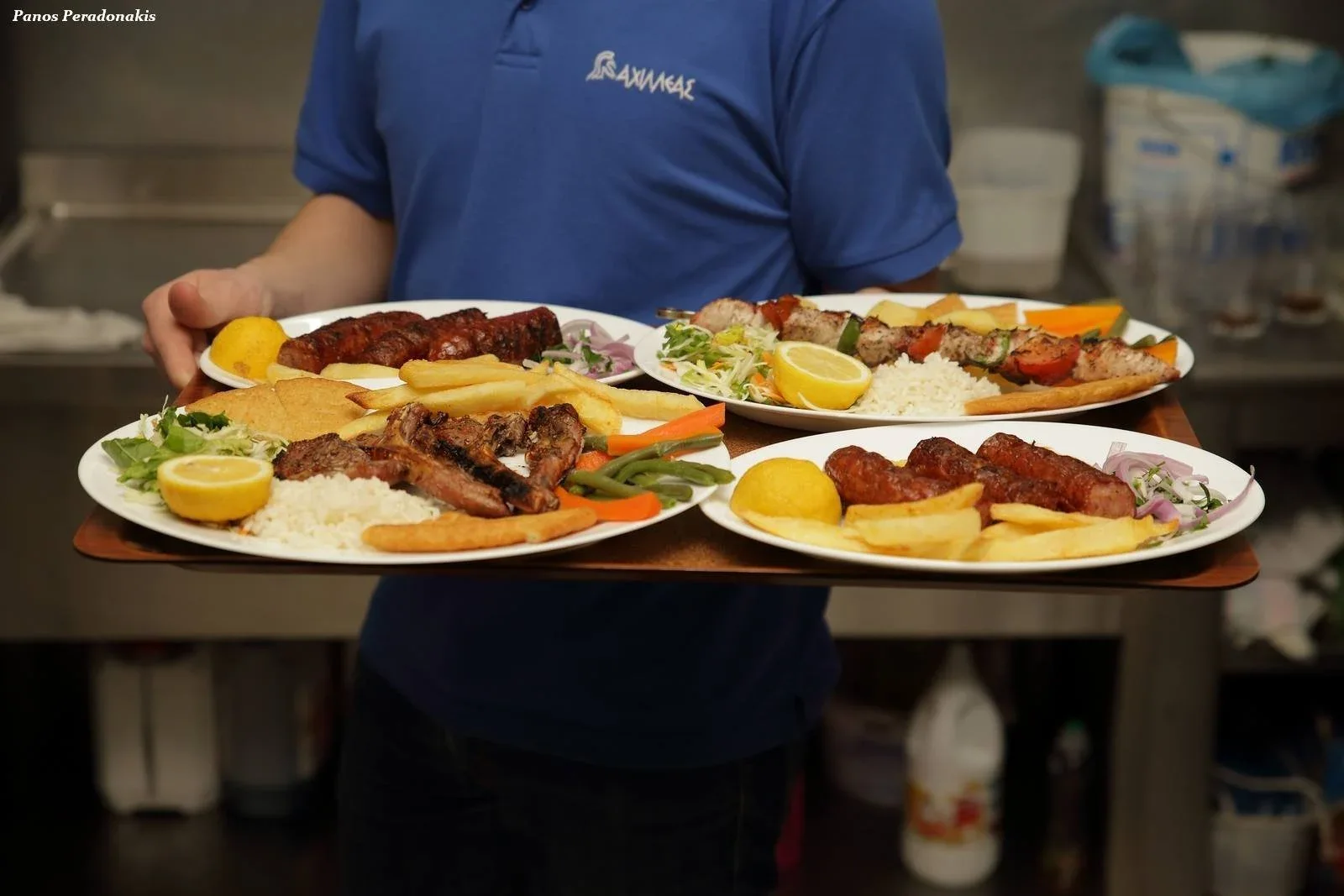
A meze table is a set of small shared plates: olives, cheese, dakos, fried courgettes, snails, sausages, grilled octopus. In a rakadiko, each new carafe may bring another small plate. Order a few and add more as you go.
Etiquette
Clink glasses and say 'yamas'. Sip; there is no expectation to keep up. If you have had enough, leave a little in your glass. When raki and dessert arrive unasked at the end of a meal, it is hospitality, not an extra charge.
Driving
If you are driving, it is fine to decline politely; nobody will be offended.
Questions before you go
What is Cretan raki?
Tsikoudia, a clear spirit distilled from grape pomace.
Is the raki after a meal free?
Usually yes; it is a gesture of hospitality.
Is it rude to refuse raki?
No. A polite refusal is fine, especially if you are driving.