- Region
- Mylopotamos, Rethymno
- Altitude
- 738 m
- Population
- About 2,240 (2021)
- Nearby
- Nida plateau, Ideon cave, Zoniana
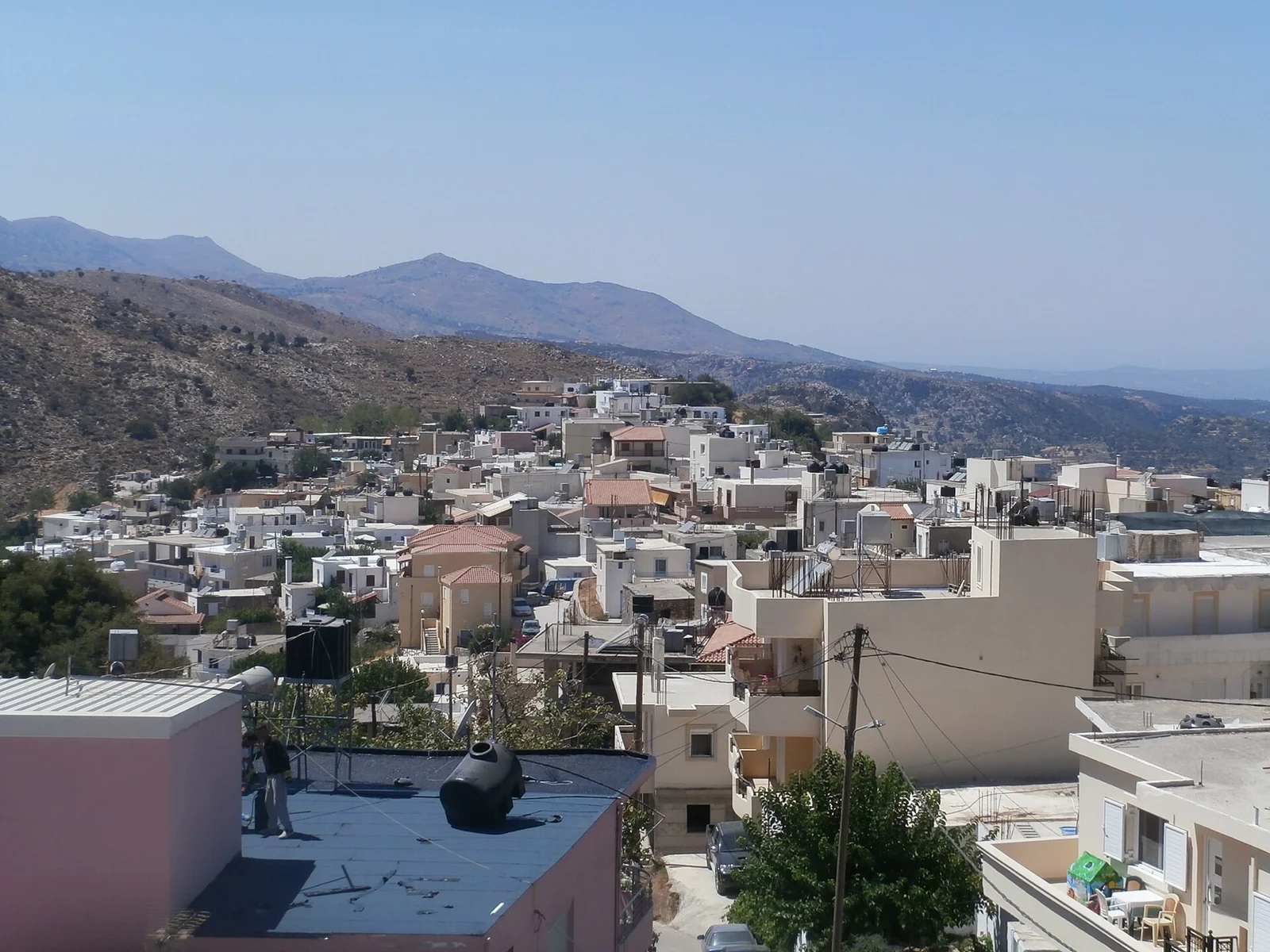
History
Anogia was a centre of the Cretan resistance during the Second World War and was linked to the 1944 abduction of General Kreipe. In reprisal, on 13 August 1944, German forces destroyed the village, burning around 800 houses and executing residents. It had also been burned in 1822. Anogia was awarded the War Cross in 1946.
Most of what you see today was rebuilt after the war.
Music
Anogia has produced some of Crete's best-known musicians, including Nikos Xylouris (1936–1980) and Psarantonis. Live lyra music in the cafés is part of village life rather than a show.
Food and crafts
Lamb grilled antikristo around an open fire, local cheeses and woven textiles are the things to look for. Many shops in the upper village sell weavings.
Up to Nida
A road climbs about 20 km to the Nida plateau, where the Ideon cave is associated with the childhood of Zeus. Stone shepherd huts called mitata dot the hills, and the Yakinthia cultural festival takes place on the plateau each July.
Questions before you go
Why is Anogia famous?
For its music, its resistance history and its mountain food.
What happened in Anogia in 1944?
German forces destroyed the village on 13 August 1944 in reprisal for resistance activity.
Can I drive from Anogia to the Ideon cave?
Yes, a road climbs to the Nida plateau, near the cave.