- Region
- Sfakia, south Chania
- Beach
- Dark pebbles, deep water
- Access
- Samaria Gorge on foot or ferry only
- Facilities
- Umbrellas, showers, tavernas, rooms
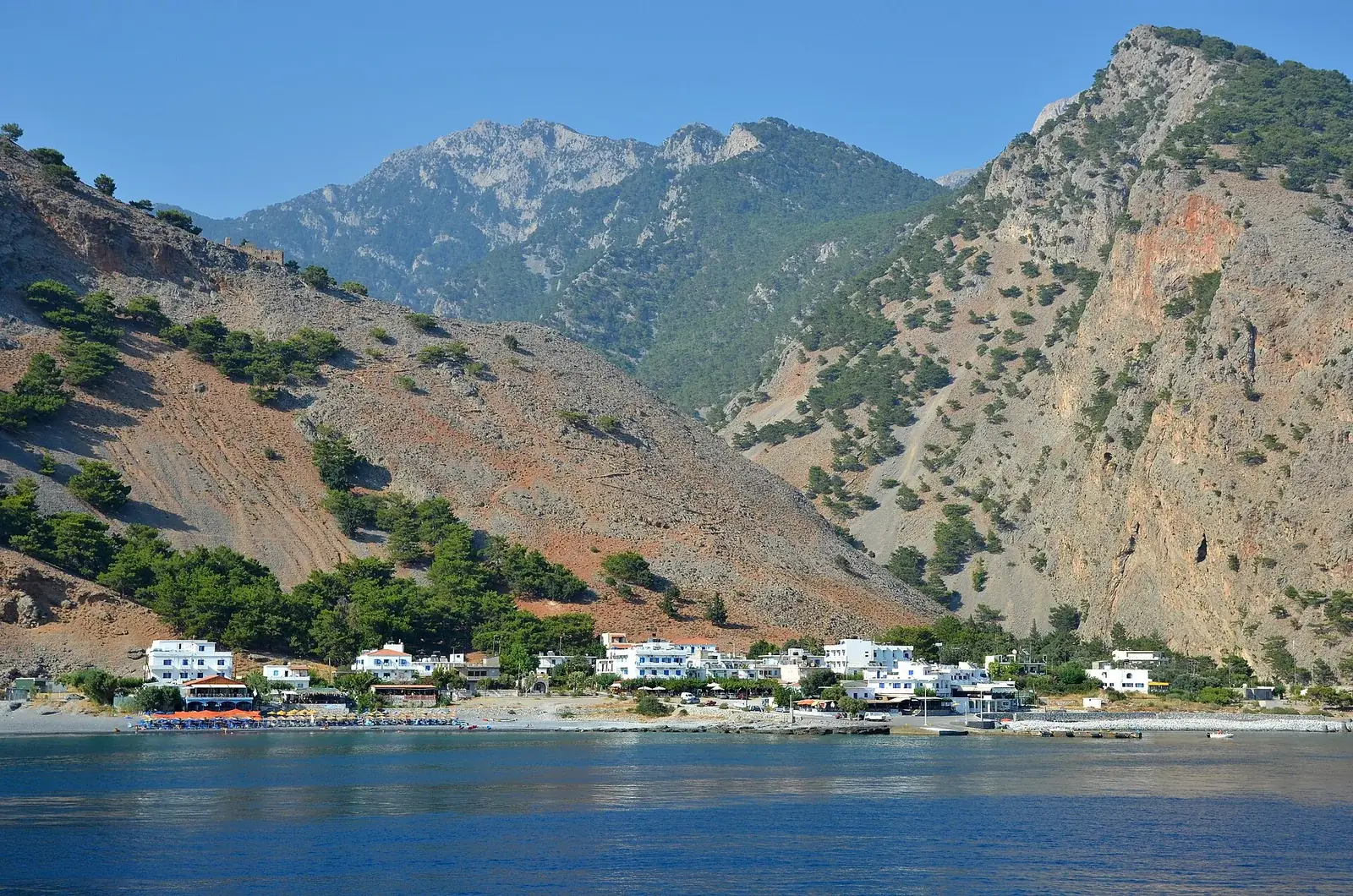
Why people stop here
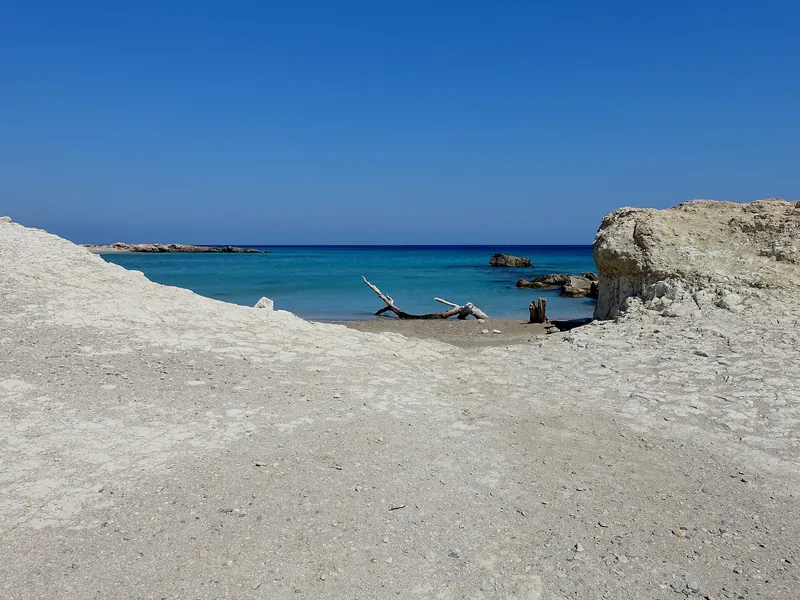
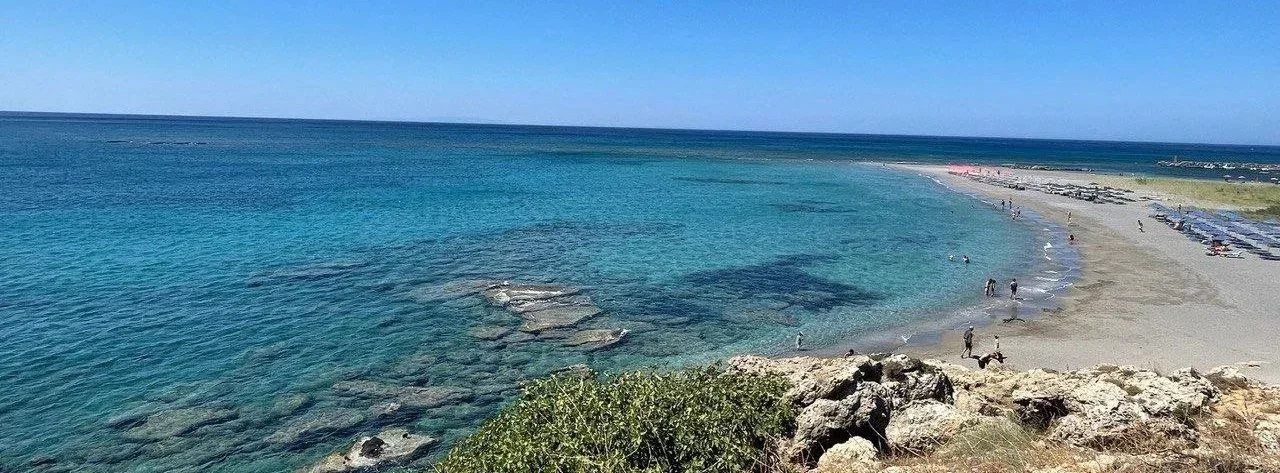
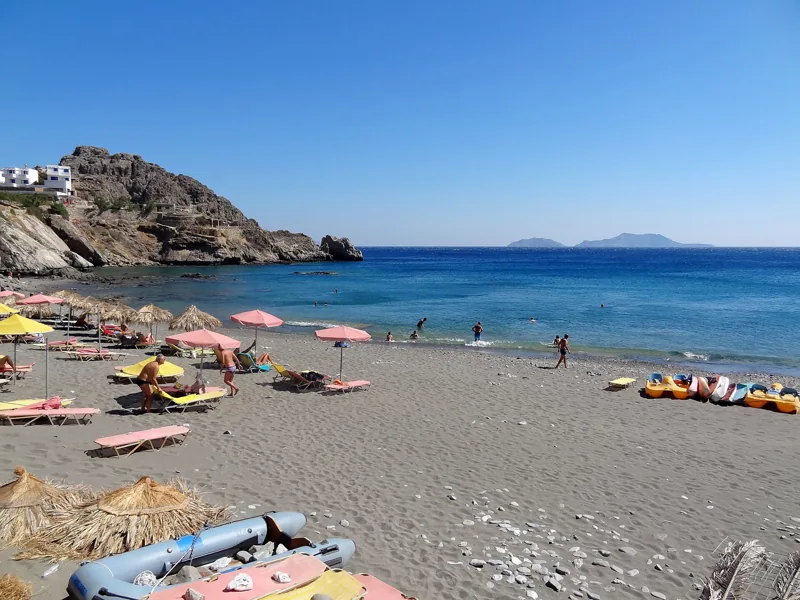
For most visitors Agia Roumeli is the reward after the 16 km Samaria Gorge walk. The main beach, Gialos, runs west of the small harbour: dark pebbles that get very hot by afternoon, and deep blue water that is usually calm.
Sunbeds, umbrellas and showers are set out in summer, and the tavernas behind the beach serve the hikers waiting for the afternoon boat. Water shoes help on the hot stones.
Getting there and away
There is no road into Agia Roumeli. You either walk down the gorge or arrive by the south-coast ferry, which links the village with Chora Sfakion and Loutro to the east and Sougia and Paleochora to the west.
If you come down the gorge, check the last ferry time before you start walking and leave a margin. Missing it means a night in the village.
Short walks from the beach
Mashali beach is just 200 m east, and the coves of Zeromouri and Kalogeros are under a kilometre away. Behind the village the Panagia Kera church, the ruins of ancient Tarra and two Ottoman forts on the hill are all within about 700 m.
With more time and stamina, the E4 coastal path leads east to the chapel of Agios Pavlos (about 3.5 km) and west to remote Domata beach.
Before you swim
The water deepens quickly off the pebbles, which makes for good snorkelling but is less suited to small children. On windy days the harbour side is more sheltered than the open western stretch.
Questions before you go
Can you drive to Agia Roumeli?
No. Agia Roumeli has no road connection. You reach it by walking the Samaria Gorge or by ferry from Chora Sfakion, Loutro, Sougia or Paleochora.
Is Agia Roumeli beach sand or pebbles?
Pebbles and fine pebbles, with deep, usually calm water. Wear water shoes in summer because the stones get very hot.
What else is near Agia Roumeli beach?
Mashali beach is 200 m away, the Panagia Kera church and the Ottoman forts are within 700 m, and the E4 path continues east to the chapel of Agios Pavlos.